Endangered
Acropora solitaryensis
Acropora solitaryensis
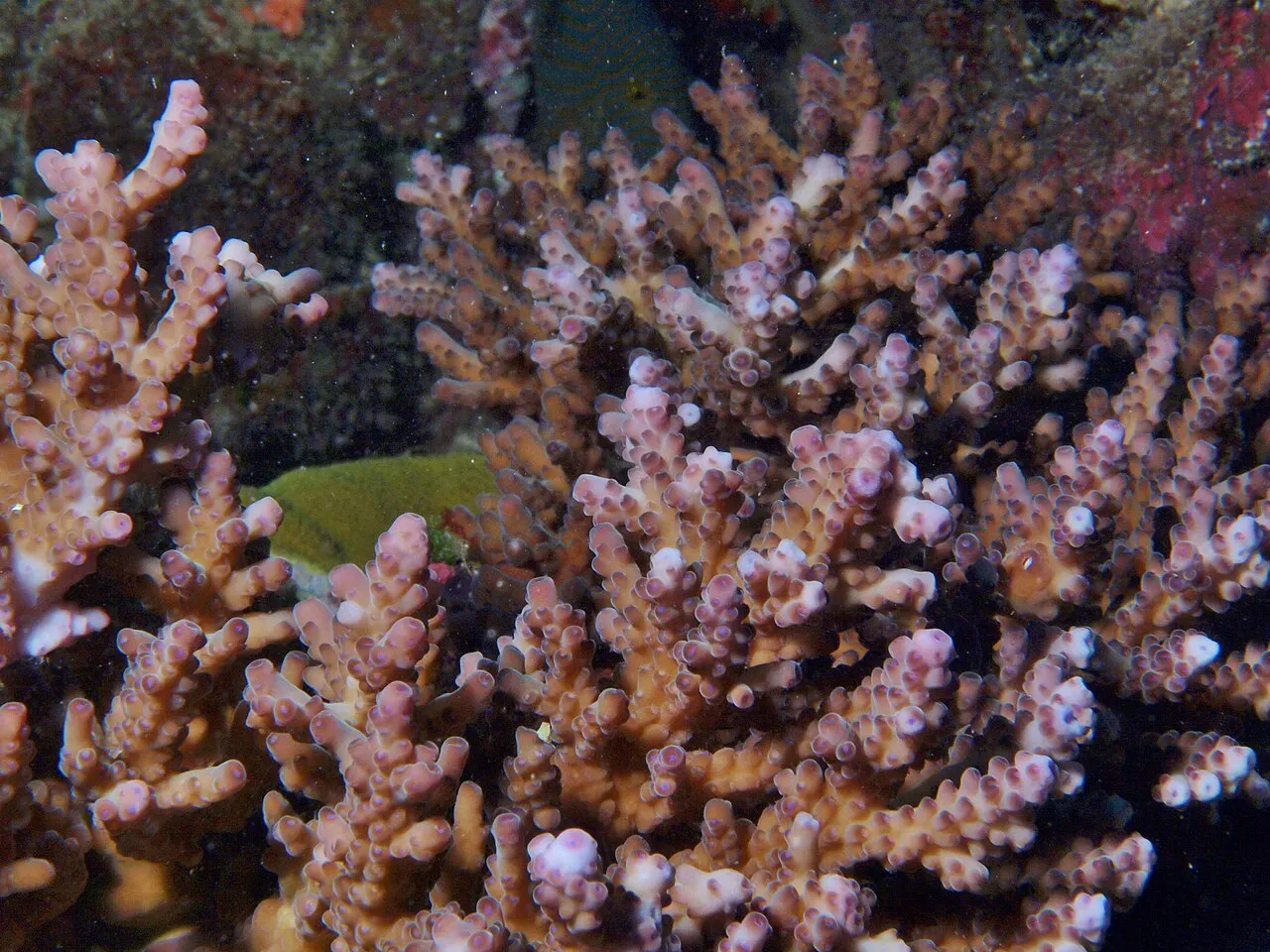
Acropora solitaryensis is a plate-forming hard coral of shallow reefs and rocky shores, recorded from the Red Sea and East Africa across the Indo-Pacific to Polynesia. The IUCN Red List rated it Endangered in 2024 because its population is projected to decline. Where the species begins and ends is still debated.
How to recognise it
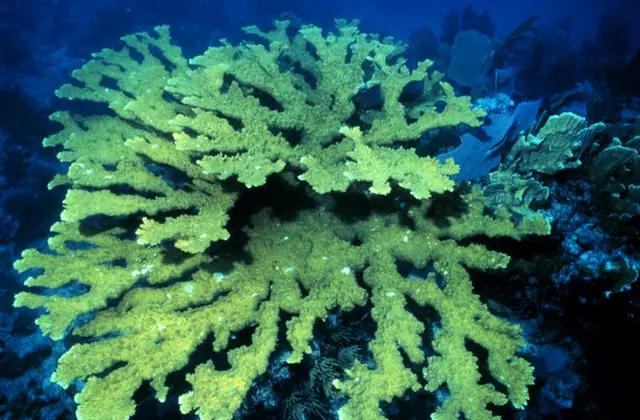
The colony is dark brown or green and grows as a horizontal plate. The plate may be perforated or solid, with irregular upright branchlets rising from it. Veron and Wallace described the species in 1984, with its type locality in the Solitary Islands off northern New South Wales, Australia.
In the shallows of the Solitary Islands Marine Park, colonies can pass 2 metres across.
Where it lives
It has a very wide range through the Indian and Pacific oceans. The Red List records it from more than 50 countries and territories, including Kenya, Madagascar, Saudi Arabia, India, Indonesia, Japan, Australia, Fiji and French Polynesia. In Australia it has been reported from southwest Western Australia, across the tropical north, along the Great Barrier Reef and south to northern New South Wales, plus Lord Howe and Norfolk islands.
It grows on shallow reef and rocky foreshores, and is more common toward the cooler end of its range. The Red List gives a depth of about 3 to 40 metres.
Pins are Wikidata “endemic to” fields. Orange dots, when present, are GBIF occurrence tiles — survey bias included.
One species or several
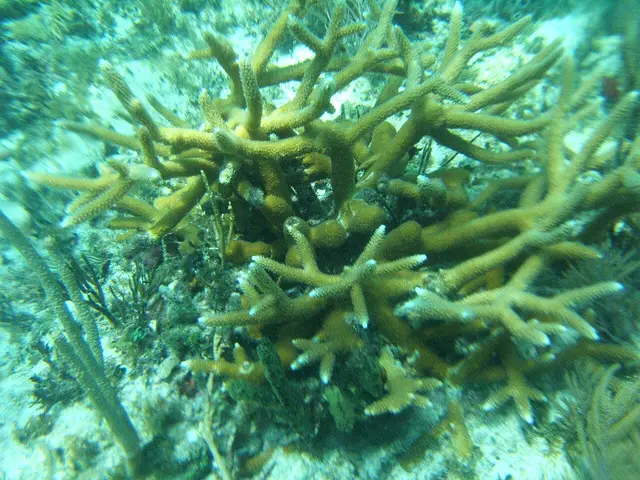
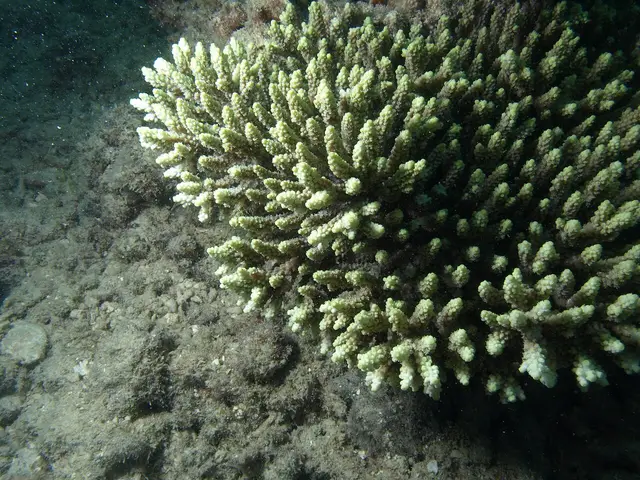
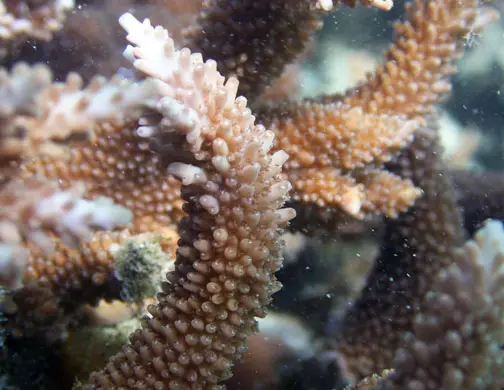
Coral taxonomists still argue over where this species begins and ends. It occurs in several growth forms, including an arborescent table, a solid plate and an intermediate form. A 2012 study of Japanese populations in Zoological Science found that the arborescent and solid-plate forms are genetically distinct and cross-fertilise poorly. It concluded that the solid-plate form may be an undescribed species, while the arborescent and intermediate forms belong to A. solitaryensis.
A 2025 paper in Scientific Reports used DNA and skeletal measurements on corals in Taiwan and Japan and came to a different pairing. It matched the solid-plate form to the coral from the original Solitary Islands locality, and assigned the arborescent and intermediate forms to a separate coral it called Acropora aff. divaricata. Both groups, it said, may in fact hold several species.
That matters for conservation, because records from different regions may not all refer to the same coral.
Why it is in trouble
The Red List assessment lists the population as decreasing and places the species in the Endangered category under criterion A3ce, which rests on a projected population decline over three generations. A generation is estimated at 10 years. Pressures named include temperature extremes, storms and flooding, sediment from erosion, coastal housing and commercial development, shipping lanes, tourism and recreation, and unintentional harm from small-scale harvest.
What is being done
The assessment lists recovery work including site protection and management, habitat restoration, captive propagation and a genome resource bank. Whether the species occurs in a protected area is recorded as unknown. Its listing moved from Vulnerable in 2008 to Endangered in 2024.
Sources
Written for this catalog in our own words from the sources below, checked against them on 12 November 2026. Population figures are estimates and carry the year they were made. Status and assessment year: IUCN. 2026. The IUCN Red List of Threatened Species. Version 2026-1. iucnredlist.org.