Branchiopoda in crisis
8 records. Red List version 2026-1
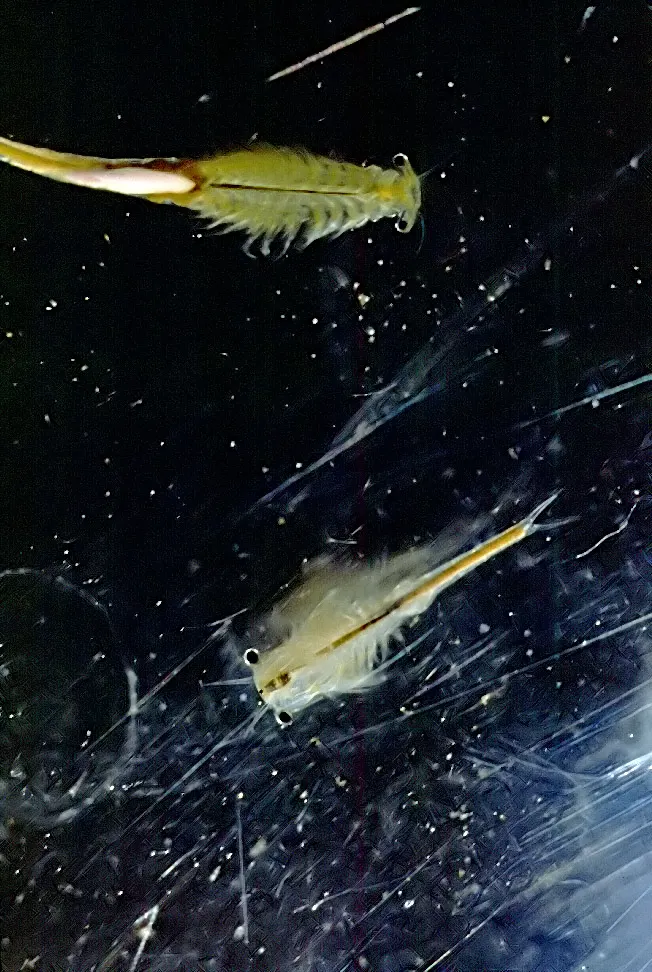
In this catalog, Branchiopoda stands for fairy shrimps, tadpole shrimps and water fleas. We list 8 branchiopods that the IUCN Red List records as threatened enough to be Critically Endangered, Endangered or Extinct in the Wild: 4 Critically Endangered and 4 Endangered.
The biggest groups are the orders Anostraca (6) and Notostraca (2), and the families with the most listed species are Branchinectidae (4), Triopsidae (2) and Chirocephalidae (1). The full list below is grouped by order.
A class is a filing shelf, not a measure of risk: it says nothing about how fast any one species is declining. Status and assessment years come from the IUCN Red List (version 2026-1); how to read an IUCN assessment explains what the categories and criteria mean, and each record links to its own assessment.
Branchiopods are mostly small freshwater crustaceans named for the gills on many of their appendages. The group covers fairy shrimp, tadpole shrimp, clam shrimp and water fleas. Roughly 300 fairy shrimp species are known, and about 620 water flea species have been recognised, with many more still undescribed.
Most live in inland fresh water, especially temporary pools that fill after rain and dry out again. Others live in very salty or brackish water. They filter plankton and detritus, and fairy shrimp in turn feed fish and birds. In California, the invertebrates of vernal pools feed migrating ducks, herons, egrets and plovers.
How they survive drying pools
A pool that vanishes every summer is a hard place to live, so these animals leave eggs behind. In the vernal pool fairy shrimp, eggs dry out with the pool and sit as dormant cysts with protective coverings. They can stay viable for years, even surviving a trip through a predator's gut, and hatch when rain brings water back.
The catch is that these shrimp cannot move far on their own. Aquatic birds are the most likely carriers of cysts to new pools, and large mammals may carry them in their fur.
Why these animals are threatened
Habitat loss comes first. About 90 percent of California's vernal pool ecosystems have been destroyed, and the California Department of Fish and Wildlife reported about 13 percent of the remaining pools lost between 1995 and 2005. In the Central Valley the causes include agriculture, urban growth, changes to water flow, climate change and badly managed grazing.
The US Fish and Wildlife Service adds nonnative bullfrogs and mosquitofish as predators, invasive plants, drought and pesticides as pressures on the vernal pool fairy shrimp, which was listed as threatened on 19 September 1994.
What the catalog lists
The catalog's records come from the orders Anostraca (fairy shrimp) and Notostraca (tadpole shrimp). Branchinectidae, the fairy shrimp family that contains Branchinecta, is the largest family in the facts file. The list reflects which species have been assessed, not the true scale of loss across water fleas and clam shrimp.
Sources for this section
- Wikipedia, Branchiopoda: group definition, species counts, orders, habitats, ecological role
- Wikipedia, Vernal pool: 90 percent of California vernal pools destroyed, 13 percent lost 1995 to 2005 (CDFW), Central Valley threats, birds fed by pool invertebrates
- US Fish and Wildlife Service, Vernal pool fairy shrimp: dormant cysts, viability, survival of predator digestion, dispersal by water birds, threats, threatened listing 19 September 1994
Status breakdown
8 records: Critically Endangered 4; Endangered 4.
All species
Anostraca (6)
- Branchinecta belki CR
- Branchinecta mexicana CR
- Branchinecta sandiegonensis EN
- Conservancy fairy shrimp Branchinecta conservatio EN
- Dexteria floridana CR
- Streptocephalus woottoni EN
Notostraca (2)
The A to Z index lists the species with a full account; the catalog search finds any record by name.
Quick answers
- How many branchiopods are in this catalog?
- 8, listed by the IUCN Red List as 4 Critically Endangered, 4 Endangered.
- What is Branchiopoda?
- Here, Branchiopoda means fairy shrimps, tadpole shrimps and water fleas. It is a taxonomic class used to group the catalog.
- Where do the statuses come from?
- From the IUCN Red List (version 2026-1), with a link to each species' assessment on iucnredlist.org.