Endangered
Vernal pool tadpole shrimp
Vernal pool tadpole shrimp
The vernal pool tadpole shrimp (Vernal pool tadpole shrimp) is a small freshwater crustacean that lives only in seasonal pools in California's Central Valley and nearby areas. The IUCN Red List rated it Endangered in 1996, and it has been federally listed as endangered in the United States since 1994.
How to recognise it
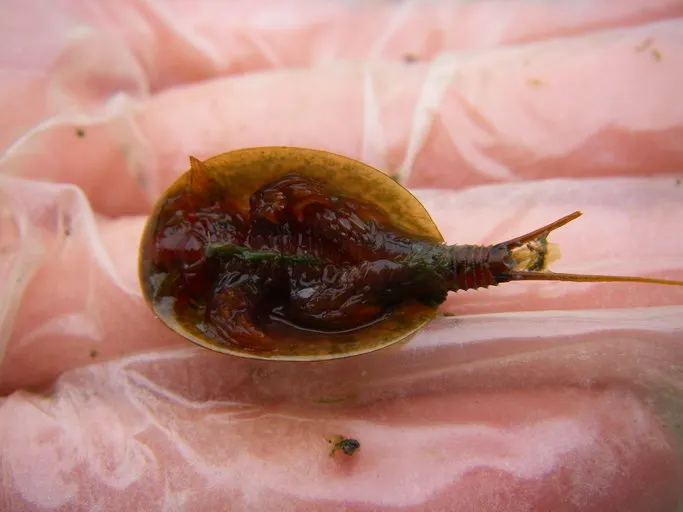
It gets its name from a large, flattened shell that arches over the back and gives the animal a tadpole-like outline. Under it are 30 to 35 pairs of swimming legs that also work as gills, a segmented abdomen, two tail-like appendages and fused eyes.
Sizes quoted for adults run from 15 to 86 mm. Females carry their eggs in a brood sac.
Where it lives
It lives only in short-lived freshwater habitats, including vernal pools, alkaline pools, clay flats, vernal swales and other seasonal wetlands. Its range is patchy, running from Shasta County south to north-western Tulare County, with isolated records in Alameda and Contra Costa counties.
California's Natural Diversity Database lists 226 occurrences across 20 counties, with about 28 percent of them in Sacramento County.
Pins are Wikidata “endemic to” fields. Orange dots, when present, are GBIF occurrence tiles — survey bias included.
How it lives
Life here follows the rains. Resting eggs, called cysts, can stay viable for years in dry pool soil and hatch when the pools refill. The animals typically appear around November and finish their cycle by early May. They take about 38 days to mature and about 51 days to reproduce, and live around 144 days on average.
A female can lay up to six clutches in one wet season, with 32 to 61 eggs per clutch. Several cohorts can hatch in one pool in the same season.
It eats small plants, detritus and aquatic invertebrates, including fairy shrimp. It does not migrate and has limited ability to move on its own, so aquatic birds and large mammals are the likely carriers of cysts between pools. By stirring up sediment, it is also reported to reduce plant cover in a pool.
Why it is in trouble
The main cause is the loss, fragmentation and degradation of vernal pools to development and agriculture. Reportedly only about 9 percent of historical vernal pool habitat remains. Altered water flow in the remaining pools is another problem.
The U.S. Fish and Wildlife Service also names predation by non-native bullfrogs and mosquitofish, invasive plants, climate change and drought, and pesticides. A parasitic fluke has been reported to cut the shrimp's egg production sharply.
What is being done
The U.S. Fish and Wildlife Service listed the species as endangered on 19 September 1994. The planned University of California, Merced campus was reported to include protection for more than 20,000 acres of habitat.
The IUCN assessment dates from 1996, and the species has not been reassessed since.
Sources
Written for this catalog in our own words from the sources below, checked against them on 12 November 2026. Population figures are estimates and carry the year they were made. Status and assessment year: IUCN. 2026. The IUCN Red List of Threatened Species. Version 2026-1. iucnredlist.org.




