Endangered
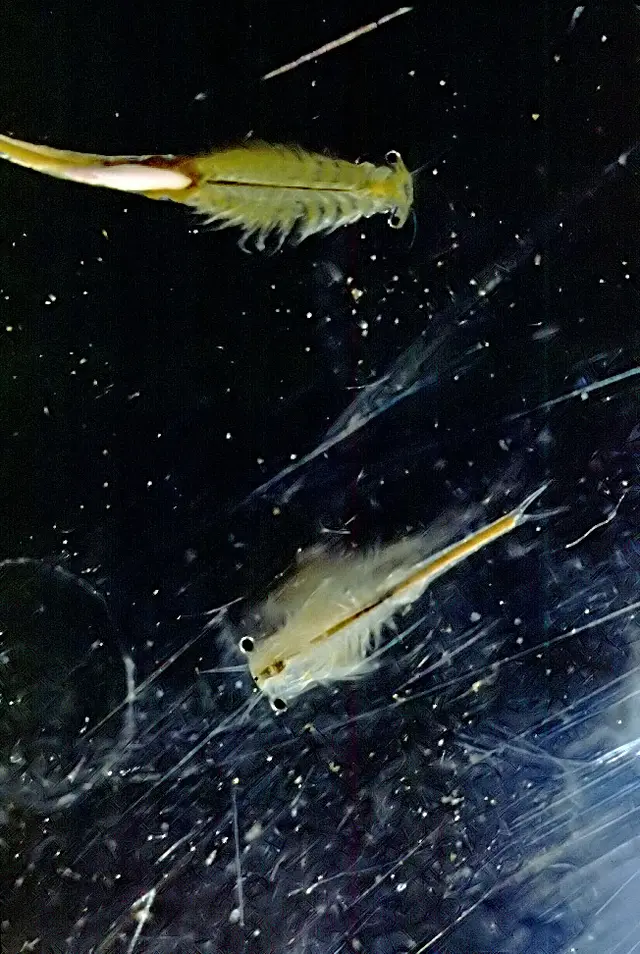
San Diego fairy shrimp
San Diego fairy shrimp
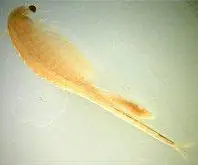
The San Diego fairy shrimp is a tiny freshwater crustacean, 8 to 16 mm long, that lives only in seasonal vernal pools along the coast of southern California and northwestern Baja California. The Red List assessment (1996) lists it as Endangered, and it is also federally protected in the United States.
How to recognise it
Adults measure 8 to 16 mm. Telling it from related fairy shrimp takes a close look. In males the giveaway is the second antennae, whose tip sits in a different position from other Branchinecta males. In females it's the brood sac, which differs in shape and length, and a pair of spines on five abdominal segments.
Even with those features, identification is hard. Recent work found that looks and genetics don't always agree, so researchers now use genetic tools, including an environmental DNA test that detects the species from a water sample.
Where it lives
The species is centred on San Diego County, where it was first found, and extends through Orange County and a small part of Riverside County in California and into northwestern Baja California, Mexico. The Riverside County record is recent. It was detected in 2017 at a restored site, the first sighting east of the coastal range.
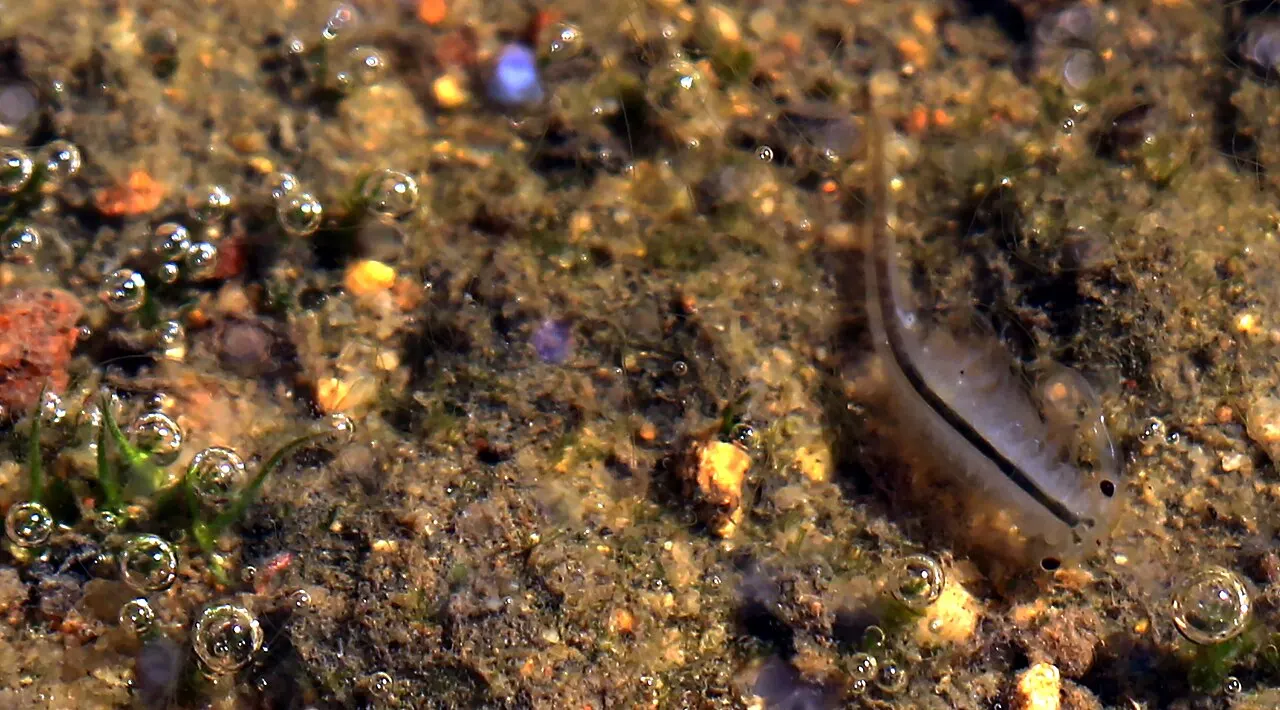
Its habitat is vernal pools and similar bare, seasonally wet basins, typically 2 to 12 inches deep. These form where a hard clay or hardpan layer under the soil lets rainwater pond for a while. Pools usually sit in clusters, tens of metres apart, linked by a shared watershed, and the surrounding land matters as much as the pool itself.
Pins are Wikidata “endemic to” fields. Orange dots, when present, are GBIF occurrence tiles — survey bias included.
How it lives
Adults are usually seen from January to March, when winter rain fills the pools and triggers eggs to hatch. The shrimp hatch and mature within 7 to 14 days, depending on water temperature, and feed on algae, diatoms and fine organic particles.
The eggs are called cysts. They either drop to the pool floor or stay in the female's brood sac until she dies and sinks. They can survive temperature extremes and long dry spells, which is how the species outlasts the months when its pools are bare soil.
Why it is in trouble
Pools have been lost to residential development, road construction and military training, though a 2021 federal review says conservation measures have largely offset those losses. The U.S. Fish and Wildlife Service lists continuing threats including the indirect effects of nearby development, off-highway vehicles, non-native plants and changes to pool hydrology. Pool complexes also differ genetically, so losing one means losing something that can't easily be replaced.
A newer problem is the versatile fairy shrimp (Branchinecta lindahli), a common generalist that now turns up in many coastal pools where it didn't historically live. The two species hybridize and compete. Vehicle ruts that hold water appear to give the invader a foothold, and tires and equipment may carry its cysts into new pools. The 2021 federal review also notes that changes to the Clean Water Act's definition of protected waters removed federal oversight of vernal pools that lack a surface connection to navigable water.
What is being done
The species was listed as endangered under the U.S. Endangered Species Act in 1997, critical habitat was designated in 2007, and a regional recovery plan for southern California vernal pools dates to 1998. A 2021 federal review concluded it remains endangered. It estimated that the number of known occupied locations had increased since 2008, despite some losses, and credited protections and regional conservation planning. In the city of San Diego, a vernal pool habitat plan covers about 517 occupied pools, with 462 to be protected and managed.
The review recommends testing whether removing road-rut pools that hold the invading shrimp protects nearby intact pools, an approach already being tried at Marine Corps Air Station Miramar, and supporting local management units based on population genetics.
Sources
Written for this catalog in our own words from the sources below, checked against them on 12 November 2026. Population figures are estimates and carry the year they were made. Status and assessment year: IUCN. 2026. The IUCN Red List of Threatened Species. Version 2026-1. iucnredlist.org.