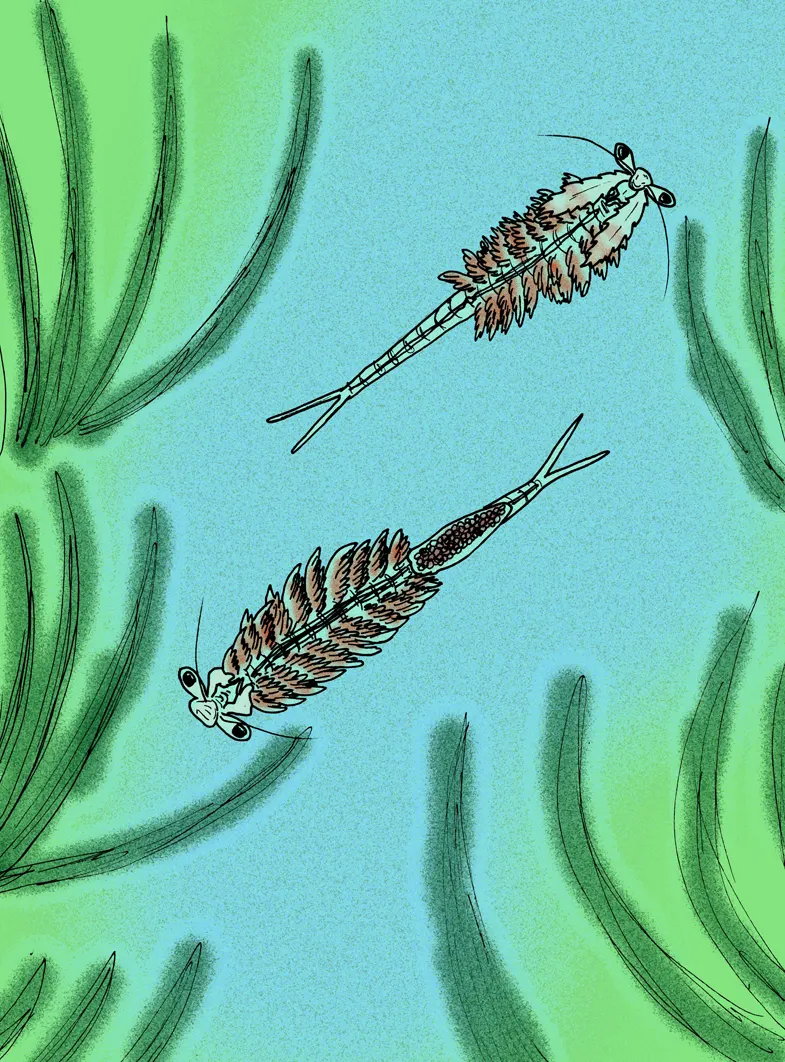
Critically Endangered
Dexteria
Dexteria floridana
The Florida fairy shrimp (Dexteria floridana) is a small freshwater crustacean known from a single temporary pool south of Gainesville, Florida. The IUCN's latest assessment, from 1996, lists it as Critically Endangered, but the US Fish and Wildlife Service announced an extinction finding in 2011, and no living animals have been reported since.
What it is
Fairy shrimp are small branchiopod crustaceans, and this one belongs to the order Anostraca and the family Chirocephalidae. It is the only species in its genus. Ralph W. Dexter described it in 1953 as a species of Eubranchipus, and the genus Dexteria was reportedly named for it by Brtek in 1965.
D. Christopher Rogers published a morphological re-evaluation of the species in the journal Hydrobiologia in 2002. No description of its colour, size or behaviour appears in the sources available today.
Where it lived
Every record comes from one temporary pool about 6 kilometres (4 miles) south of Gainesville in Alachua County, which is also the type locality. Temporary pools hold water only for part of the year, and species that depend on them have a very small footprint to lose. The IUCN's 1996 entry places it in Florida, with no population figures and no habitat details recorded.
Pins are Wikidata “endemic to” fields. Orange dots, when present, are GBIF occurrence tiles — survey bias included.
Is it extinct?
The answer depends on the source. On 5 October 2011 the US Fish and Wildlife Service announced that it considered the species extinct, according to a press release from the Center for Biological Diversity, which had petitioned for its protection. The release said development had destroyed the only known pond and that the species had not been found elsewhere. It gives no survey data behind the finding.
A species summary citing NatureServe (2025) lists it as missing rather than extinct, and says reports that the pool was destroyed may be exaggerated, since other vernal pools lie nearby. The same summary reports that Rogers raised the possibility that it survives in undeveloped parts of Florida, or possibly Cuba.
The IUCN assessment still stands at Critically Endangered, with criteria B1+2c, under the old category system used in the 1996 Red List.
What is being done
No conservation actions, protected areas or recovery work are recorded for this species.
Sources
Written for this catalog in our own words from the sources below, checked against them on 12 November 2026. Population figures are estimates and carry the year they were made. Status and assessment year: IUCN. 2026. The IUCN Red List of Threatened Species. Version 2026-1. iucnredlist.org.




