Endangered
Xerosecta explanata
Xerosecta explanata
Xerosecta explanata is a small land snail that lives only on coastal sand dunes in the western Mediterranean, in southern France, eastern Spain and Algeria. The IUCN Red List assessed it as Endangered in 2025. Development of dune coasts and an invasive succulent have broken its populations up.
How to recognise it
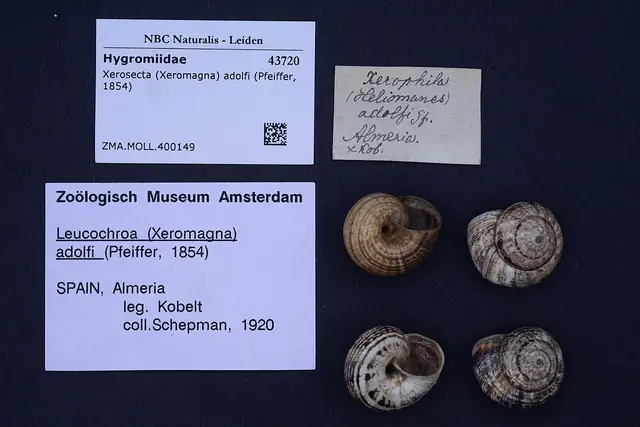
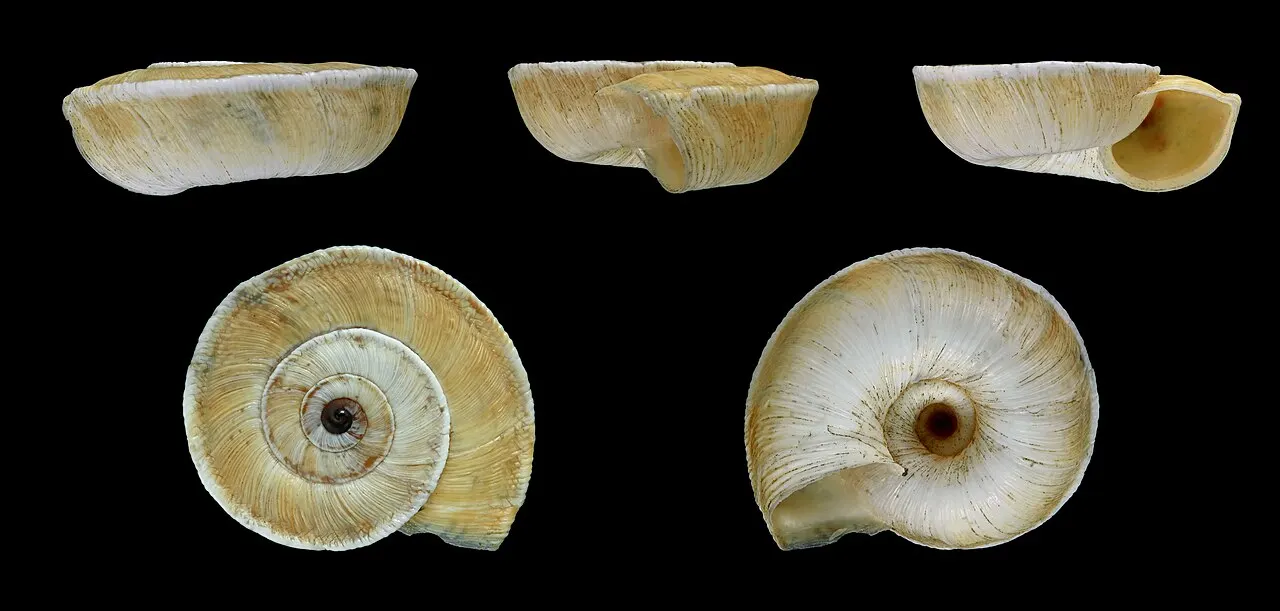
The shell is solid and opaque, with a flat spire and five to six whorls. The last whorl is the widest and carries a strong whitish keel, with regular, clearly marked growth lines above. Colour runs from yellowish white to light brown, with a brownish tip. The navel underneath is wide and deep. The largest shells measure about 17 millimetres across and 7.2 millimetres high. The body is light brown, a little darker on the back.
The species was described by O. F. Müller in 1774, as Helix explanata. In French it has the common name caragouille des dunes.
Where it lives
Its range follows the western Mediterranean coast. The Spanish atlas places it along the southern coast of France, in eastern Spain and in Algeria west of Algiers. In Spain it is known only from the Valencian Community, along the coast of all three provinces, with most localities in the province of Valencia and just a few isolated ones in northern Alicante.
The IUCN assessment gives an occupied area of about 51 square kilometres, between sea level and 10 metres. It treats the Algerian and Balearic records as introduced, with the snail possibly extinct in Algeria and extinct in the Balearics. The Menorca record dates to 1933 and the snail has not been found there since.
Pins are Wikidata “endemic to” fields. Orange dots, when present, are GBIF occurrence tiles — survey bias included.
How it lives
This is a heat-loving snail tied to dunes. In summer it is typically found up on plant stems, which keeps it off the hot sand. It shares the dunes with other small snails, including Cochlicella conoidea, Trochoidea trochoides and the common Theba pisana.
Why it is in trouble
The main threat is loss of its dune habitat. The Spanish atlas describes sharp declines on the Valencian coast, where dunes have been degraded or built over by housing and tourism, and where the snail spreads only slowly. A survey around 2009 counted 37 populations known before it began, found 13 new ones, and recorded 6 as extinct and 3 as not found again.
An invasive plant is another problem. The Spanish national atlas says the succulent known as uña de gato (Carpobrotus) prevents the snail from living on the dune. The IUCN assessment lists Carpobrotus, tourism and recreation areas, and housing as ongoing threats, and describes the population as decreasing and badly fragmented.
Spain's atlas rated the species Vulnerable. The 2025 Red List assessment lists it as Endangered.
What is being done
Most Spanish populations lie inside protected areas, among them EU-designated sites and the Albufera Natural Park near Valencia. The IUCN assessment puts 81 to 90 percent of the population inside protected areas. There is no recovery plan or monitoring scheme in place. Spanish specialists have proposed a conservation plan, restoring dunes, reintroducing populations, controlling development and removing Carpobrotus from occupied dunes.
Sources
Written for this catalog in our own words from the sources below, checked against them on 12 November 2026. Population figures are estimates and carry the year they were made. Status and assessment year: IUCN. 2026. The IUCN Red List of Threatened Species. Version 2026-1. iucnredlist.org.