Hydrozoa in crisis
7 records. Red List version 2026-1
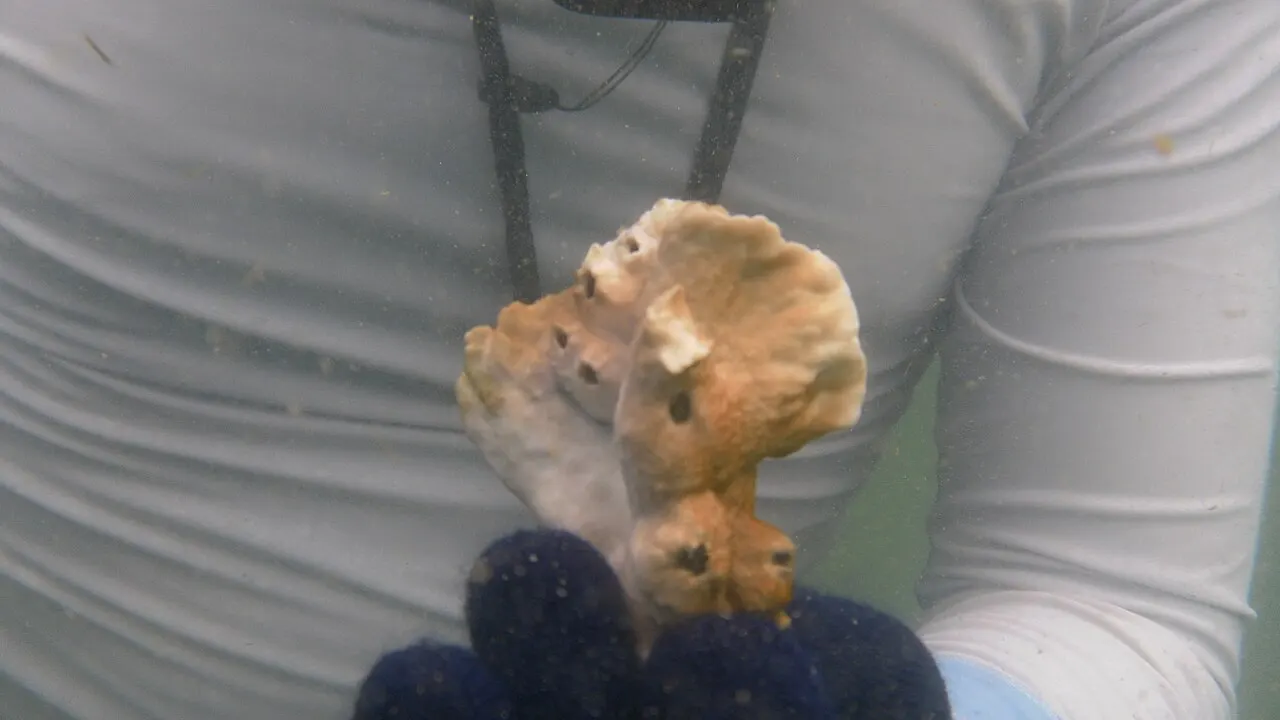
In this catalog, Hydrozoa stands for hydroids and hydrocorals, including fire corals. We list 7 hydrozoans that the IUCN Red List records as threatened enough to be Critically Endangered, Endangered or Extinct in the Wild: 3 Critically Endangered and 4 Endangered.
A class is a filing shelf, not a measure of risk: it says nothing about how fast any one species is declining. Status and assessment years come from the IUCN Red List (version 2026-1); how to read an IUCN assessment explains what the categories and criteria mean, and each record links to its own assessment.
Hydrozoa are a class of cnidarians, the group that also holds jellyfish, sea anemones and true corals. Most hydrozoans have both a fixed, plant-like polyp stage and a free-swimming medusa stage, though some have only one. Hydra, the familiar pond animal, never makes a medusa, while the freshwater jelly Craspedacusta sowerbii is a hydrozoan that does.
Most live in salt water, with a few genera in fresh water. Many form colonies. Some are delicate branching hydroids, and some are floating colonies such as the Portuguese man o' war, often mistaken for a jellyfish although it is made of many specialised individuals. Hydrozoan medusae are small, from 0.5 to 6 cm across.
Fire corals are hydrozoans, not true corals
The animals in the catalog's list are fire corals (genus Millepora, family Milleporidae). They form massive colonies that resemble reef-building corals and build a hard skeleton, but they are more closely related to Hydra than to stony corals. The name comes from the burning sting of their tissues, and the pain can last from two days to two weeks. One source gives 16 recognised species, though the same page also says 15.
Fire corals grow on shallow reefs and upper reef slopes in the Indian, Pacific and Atlantic Oceans and the Caribbean Sea, down to about 40 m. Like stony corals, they host algae in their tissue that feed them.
Why these animals are threatened
Reported pressures include poor land management, sediment and pollutant runoff, overfishing and destructive fishing, and bleaching driven by warm water. Their brittle skeletons are also broken by storms, divers and aquarium collection. When corals bleach, they expel their algae and turn white, and some recover if conditions return to normal. Fire corals are on CITES Appendix II, which regulates trade.
The picture differs between species. A local monitoring blog from Barbados reported that after warming events around October and November 2023, most blade fire coral (Millepora complanata) had died at the sites surveyed, while branching Millepora alcicornis was mostly unaffected. The author cautioned that some dead colonies may have died earlier or from other causes. It is one observer at one island, but it shows how species within one genus can fare very differently.
What the catalog lists
The catalog holds seven records, all in Milleporidae, four Endangered and three Critically Endangered. So the class is represented by fire corals only. Other hydrozoans, such as hydroids and siphonophores, are small, hard to identify and mostly unassessed, which is a gap in the data rather than a sign of safety.
Sources for this section
- Hydrozoa: Polyp and medusa stages, Hydra without medusa, Craspedacusta, mostly marine, medusa size 0.5 to 6 cm
- Millepora: Not true corals, sting duration, habitat to about 40 m, algae symbionts, threats, bleaching, CITES Appendix II, 15 or 16 species
- UCMP Hydrozoa: Polyp and medusa alternation, Hydra, colonial forms, man-o'-war mistaken for jellyfish, fire corals resemble true corals
- Effects of 2023 extreme warming events on Millepora, Barbados: Qualitative 2023 to 2024 observations of M. complanata dieback and M. alcicornis largely unaffected at Barbados sites
Status breakdown
7 records: Critically Endangered 3; Endangered 4.
All species
Anthoathecata (7)
- Millepora alcicornis EN
- Millepora complanata CR
- Millepora nitida CR
- Millepora platyphylla EN
- Millepora squarrosa CR
- Millepora tenera EN
- Net fire coral Millepora dichotoma EN
The A to Z index lists the species with a full account; the catalog search finds any record by name.
Quick answers
- How many hydrozoans are in this catalog?
- 7, listed by the IUCN Red List as 3 Critically Endangered, 4 Endangered.
- What is Hydrozoa?
- Here, Hydrozoa means hydroids and hydrocorals, including fire corals. It is a taxonomic class used to group the catalog.
- Where do the statuses come from?
- From the IUCN Red List (version 2026-1), with a link to each species' assessment on iucnredlist.org.