Endangered
Net fire coral
Millepora dichotoma
The net fire coral (Millepora dichotoma) is a colonial hydrozoan, not a true stony coral, that builds a hard limestone skeleton on reefs across the Red Sea, Indian Ocean and western Pacific. The IUCN Red List classed it as Endangered in its 2024 listing (assessed 2022), with warming seas and reef damage driving a projected steep decline.
How to recognise it
Fire corals look like corals but are more closely related to jellyfish and hydroids. Each colony is made of tiny polyps that live in pores of a shared calcium carbonate skeleton, and colour comes from symbiotic algae living in the tissue.
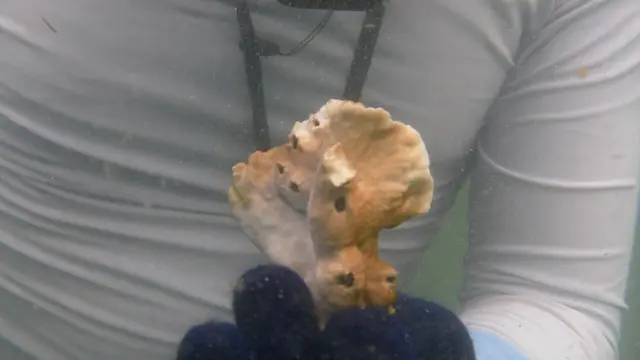
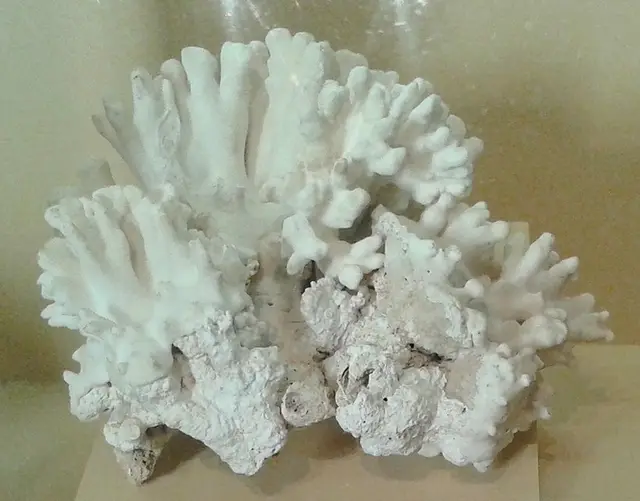
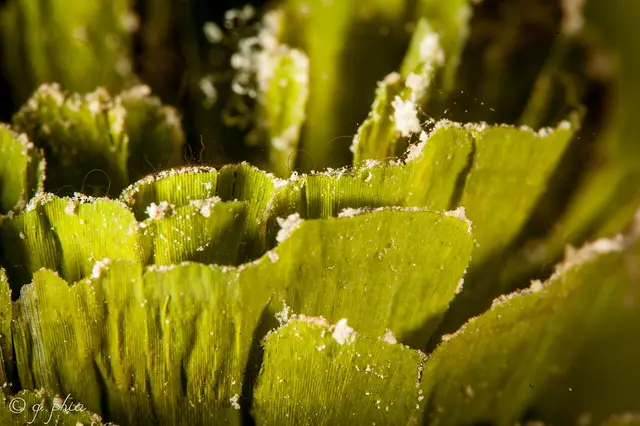
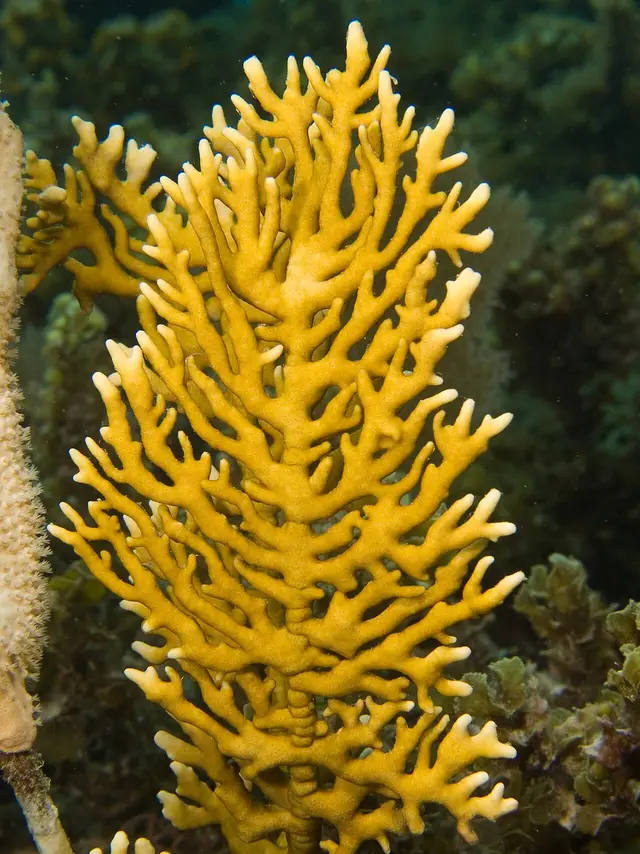
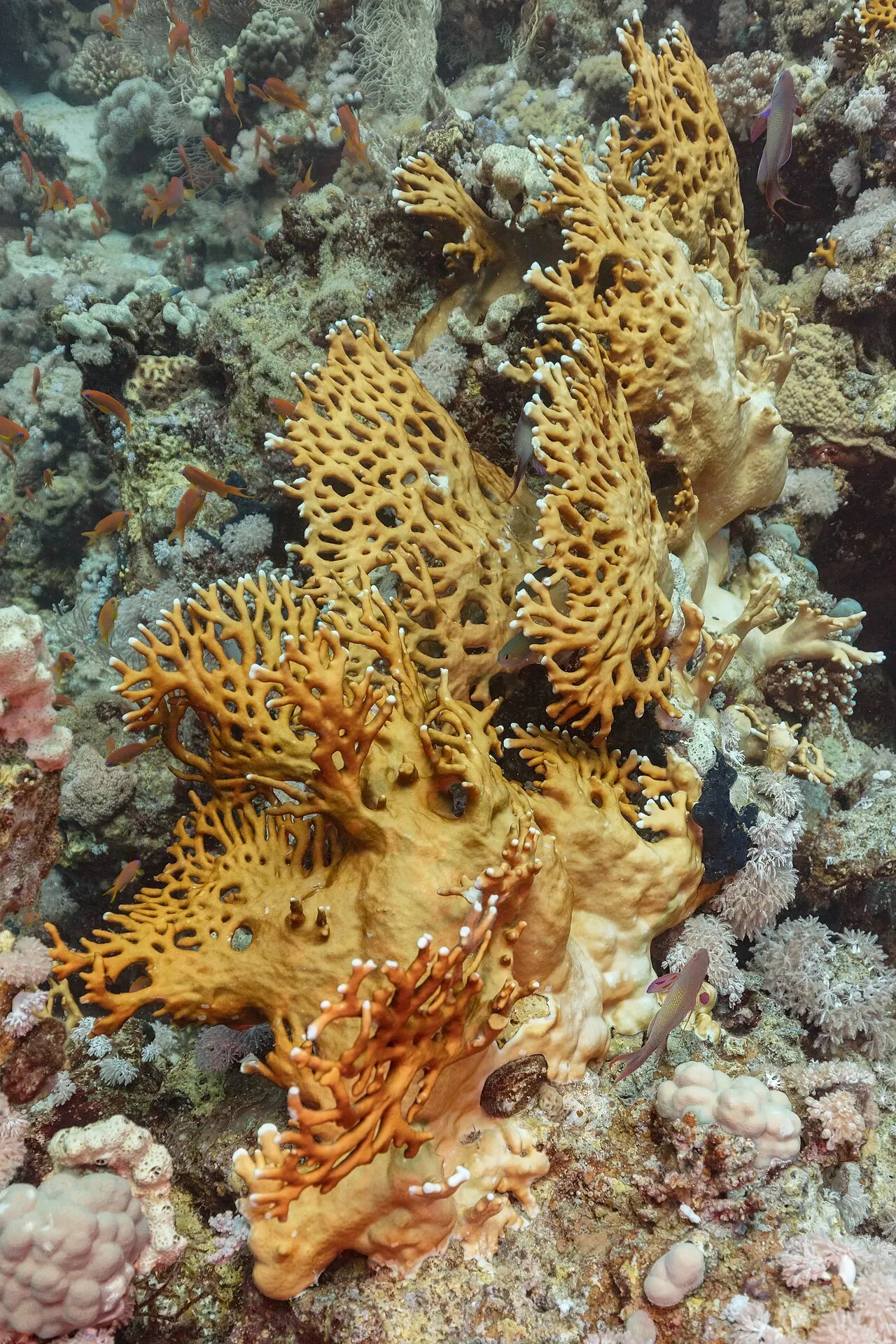
The net fire coral usually grows as upright, fan-shaped branching sheets. Colonies reportedly reach up to about 60 cm wide, and neighbouring colonies can form clumps spanning several metres. Shape changes with depth, water movement and turbidity. Young colonies begin as a crust on hard surfaces, and later forms can be delicate and lace-like, leaf-like, or a sturdier box-work. Calm, deeper water favours the lacy forms, while harsher conditions favour the heavy ones.
Where it lives
It is a reef species of the Indo-West Pacific. The Red List assessment records it as present in around forty countries and territories, from the Red Sea states (Egypt, Jordan, Israel, Saudi Arabia, Sudan, Eritrea, Yemen) and the western Indian Ocean (Somalia, Madagascar, Mauritius) to South-East Asia, Japan, Taiwan, Australia, New Caledonia, Fiji, Samoa and Micronesia.
The assessment treats it as a coral reef animal living between the surface and about 15 m, and it is reportedly most common in the top few metres. A 2018 study in Coral Reefs sampled 412 fire coral colonies of three species at six Red Sea sites. It found deep genetic breaks between Red Sea colonies and those from the south-western Indian Ocean.
Pins are Wikidata “endemic to” fields. Orange dots, when present, are GBIF occurrence tiles — survey bias included.
How it lives
The polyps are carnivorous. They catch plankton and drifting organic particles with stinging cells and digest them in a shared body cavity. The algae inside the tissue supply part of the colony's energy and support skeleton growth. The stings can cause intense pain, burn-like marks and skin irritation lasting up to two weeks, though they are not known to be fatal to humans.
Spawning is reported in April and May, with males releasing gametes slightly ahead of females. The Red List gives a generation length of 10 years.
Why it is in trouble
The Red List places the net fire coral in the Endangered category (2024 listing, assessed 2022) under criterion A3ce, which rests on a projected population reduction. The assessment projects a decline of about 62 percent in the future and lists the population as decreasing. Area of habitat is still shrinking. Earlier assessments, in 2008 and 2014, rated the species Least Concern.
Fire corals bleach in heat waves like other reef builders. The assessment also lists temperature extremes, storms and flooding, sediment and erosion, coastal development, shipping lanes, tourism and recreation, disease and ozone among ongoing threats. Walking on reefs and careless snorkelling or diving damage colonies, and fragmenting can push regrowth toward thicker, less delicate forms. Reefs with added nutrients from human sources have been reported to hold fewer colonies.
What is being done
The species is listed on Appendix II of CITES, which monitors international trade. The Red List assessment names site protection and management, habitat restoration, species recovery, captive propagation and a genome resource bank as relevant actions, and records it as unknown whether the species occurs in any protected area.
Sources
Written for this catalog in our own words from the sources below, checked against them on 12 November 2026. Population figures are estimates and carry the year they were made. Status and assessment year: IUCN. 2026. The IUCN Red List of Threatened Species. Version 2026-1. iucnredlist.org.
- IUCN Red List, Millepora dichotoma (2024 listing, assessed 2022)
- IUCN Red List API, taxon record for Millepora dichotoma
- Net fire coral, Wikipedia
- Millepora (fire coral), Wikipedia
- Arrigoni et al. 2018, Coral Reefs: Millepora species boundaries in the Red Sea (abstract, JCU repository)
- SeaLifeBase, Millepora dichotoma