Critically Endangered
Millepora nitida
Millepora nitida
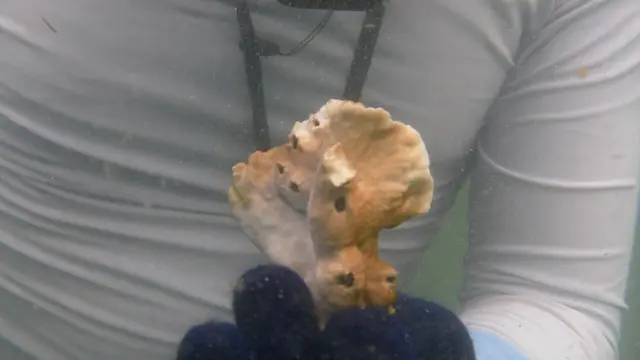
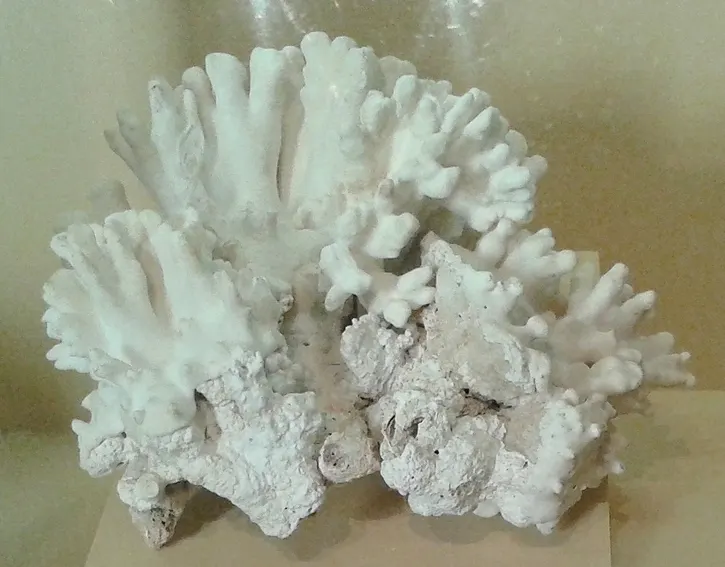
Millepora nitida is a fire coral found only on the coast of Brazil. It isn't a true stony coral but a hydrozoan, a relative of hydras. The IUCN Red List rated it Critically Endangered in 2022, mainly because of the projected loss of the reef habitat it depends on.
What it is
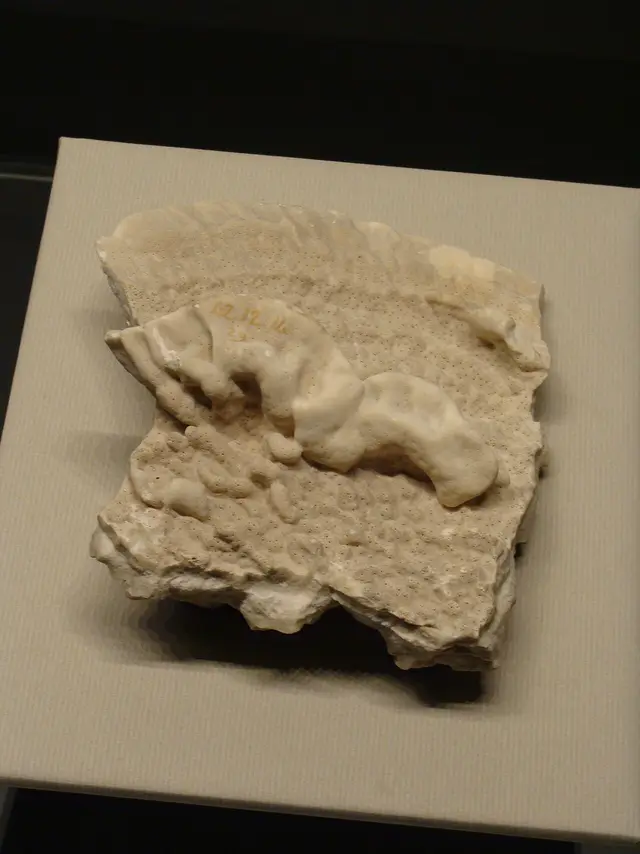
Fire corals (genus Millepora) look like corals and build hard, brittle skeletons of calcium carbonate, but they are hydrozoans, closer to hydras than to stony corals. They are colonial animals. Most polyps sit inside the skeleton, and stinging polyps called dactylozooids capture prey, which gives the group its name. Colonies host symbiotic algae that photosynthesise and help feed the coral.
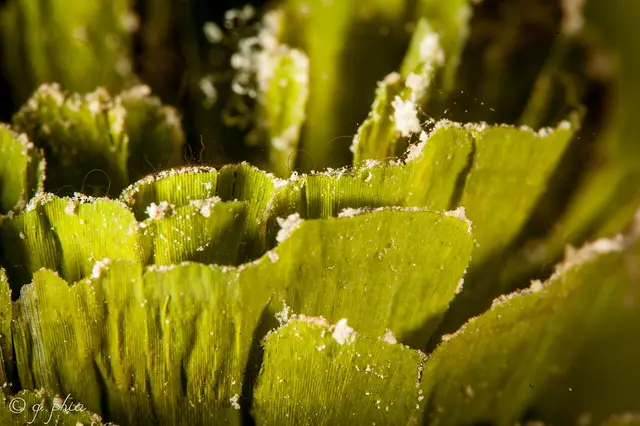
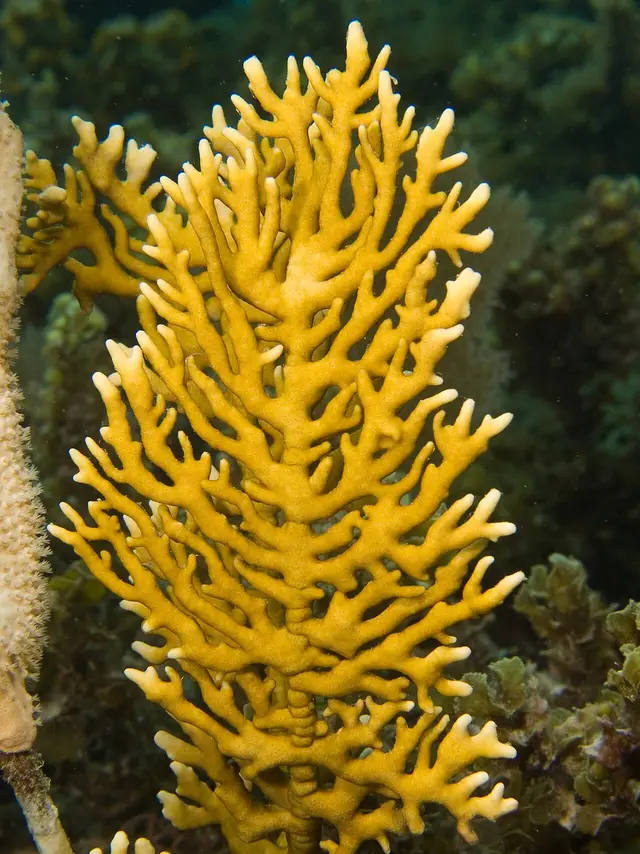
As a genus, fire corals form branching, plate-like or encrusting colonies, mostly yellow or orange. Verrill described this species in 1868, and it is treated as a valid species. Colony shape and colour specific to M. nitida are poorly documented, so the description above is for the genus.
Where it lives
Brazil is the only country on the Red List record, and the species is endemic there. A 2016 Zootaxa census of South American marine Cnidaria gives its range as roughly 9 degrees S to 18 degrees S. The Red List habitat is coral reef in shallow water, from the surface down to 15 m.
The assessment estimates the area it occupies at 404 square km and counts one location. The species is recorded within at least one protected area.
Pins are Wikidata “endemic to” fields. Orange dots, when present, are GBIF occurrence tiles — survey bias included.
Why it is in trouble
The Critically Endangered listing, under criterion A3c, rests on a projected 80 percent reduction in the future based on loss of area and habitat quality. The area it occupies is already shrinking, and the population trend is decreasing. Generation length is estimated at 10 years.
The assessment names a long list of ongoing pressures, each scored as low impact: coastal housing, commercial development, tourism and recreation, shipping lanes, small-scale harvesting, sedimentation, storms and flooding, temperature extremes and ozone. The species is also used locally for handicrafts and jewellery.
Warming is the larger worry. A 2025 study in Coral Reefs by Laura Marangoni, Tarciso da Silva and colleagues followed Brazilian fire corals through the 2023 to 2024 global bleaching event. At three sites on Recife de Fora, off Porto Seguro in Bahia, about 40 percent of M. nitida colonies bleached, but live cover did not change significantly. A related species, Millepora braziliensis, bleached completely at its monitored site in Tamandare, Pernambuco, and lost all its living cover.
What is being done
The Red List lists site protection, site management, habitat restoration, species recovery, captive breeding and a genome resource bank among the actions that would help. Only occurrence inside a protected area is recorded as in place. Researchers from the Coral Vivo Institute began monitoring Brazilian fire corals after a bleaching event in 2019. They report that corals in protected areas generally bleach less than those outside, and that lab-raised fire corals put back on reefs have not succeeded so far, since they die in later bleaching events.
Sources
Written for this catalog in our own words from the sources below, checked against them on 12 November 2026. Population figures are estimates and carry the year they were made. Status and assessment year: IUCN. 2026. The IUCN Red List of Threatened Species. Version 2026-1. iucnredlist.org.