Endangered
Redfin killifish
Nothobranchius rubripinnis
Nothobranchius rubripinnis is a tiny, brightly coloured freshwater killifish from the coastal lowlands of eastern Tanzania, found nowhere else. Described in 1986, it lives in seasonal waters and was assessed as Endangered on the IUCN Red List in 2019 because its few sites are shrinking.
How to recognise it
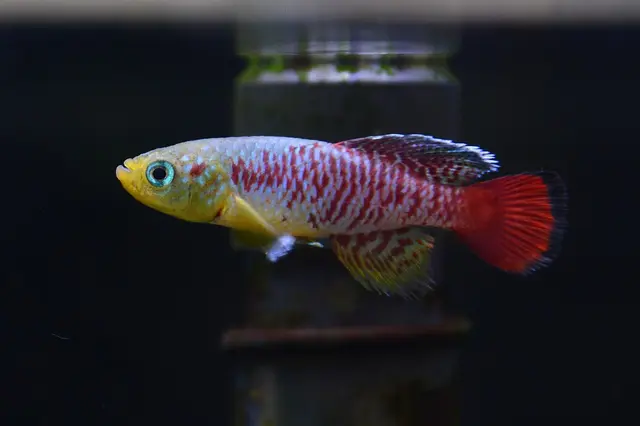
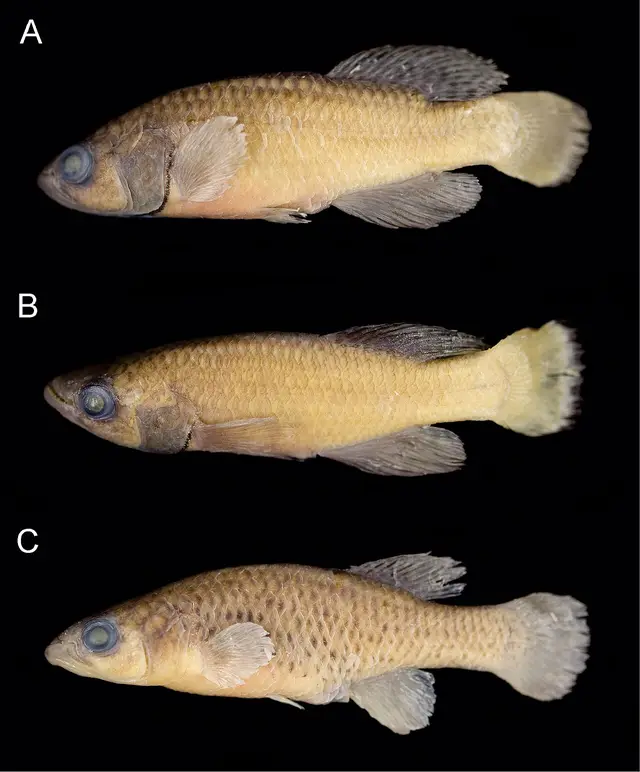
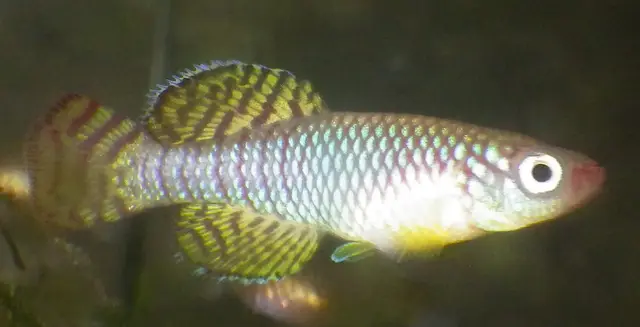
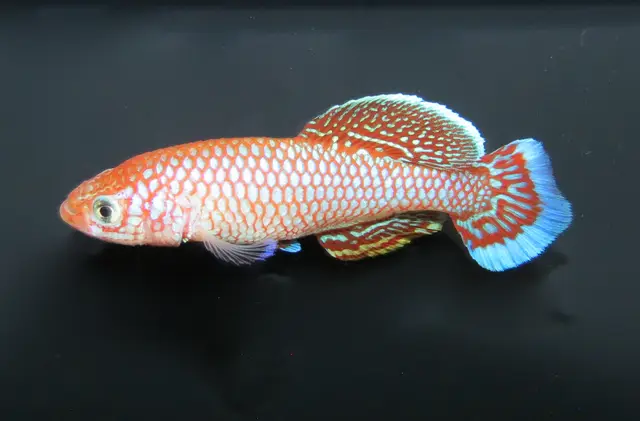
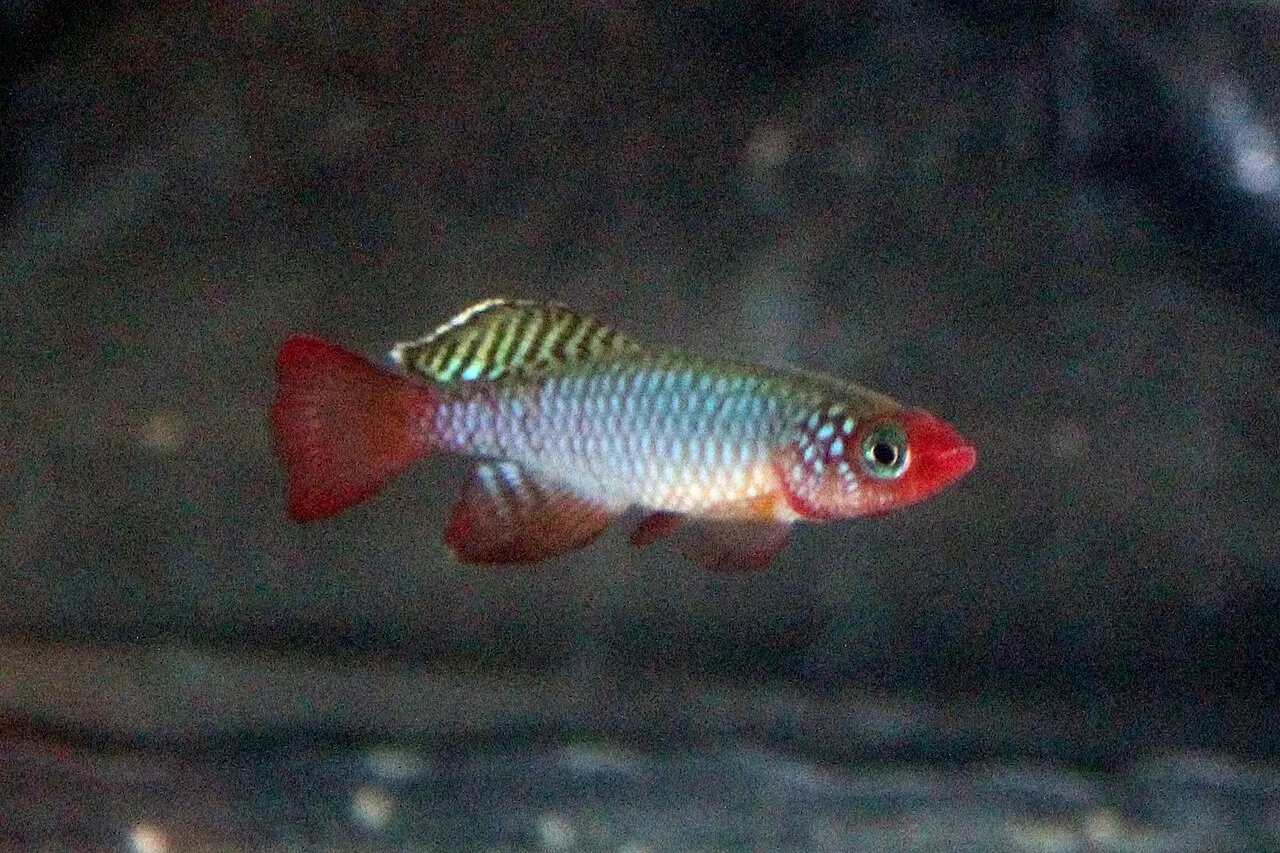
Males are the showy ones. The body is pale green to bronze, and narrow red edges on the scales create chevron-like vertical bars toward the tail. The snout, front of the head and throat are red. The anal and tail fins are red too, and the tail fin has a thin black rim. The dorsal fin is light green to bronze with brown spots and stripes.
It's a very small fish. FishBase gives a maximum of 3.6 cm standard length for males and 2.8 cm for females.
Where it lives
The species is endemic to Tanzania. Lothar Seegers described it in 1986 from fish that aquarists Wischmann and Seegers collected in 1983 near Kibiti, about 40 km south of Dar es Salaam, at a bridge over the Mbezi River. Other records are also from the coast south of the city, including the Mbezi and Luhule rivers. Fish reported from the Mbwemkuru River were misidentified and belong to Nothobranchius cardinalis, a separate species.
IUCN lists its habitat as seasonal pools and marshes under 8 hectares, and seasonal or irregular streams. The assessment counts five locations, an occupied area of just 28 to 100 square kilometres and a wider range outline (extent of occurrence) of 291 to 1,000 square kilometres.
Pins are Wikidata “endemic to” fields. Orange dots, when present, are GBIF occurrence tiles — survey bias included.
How it lives
Like other killifish of its genus, this fish appears to live a short, seasonal life. Aquarium breeders describe a cycle running from hatching around December to death by about July, and wild fish are thought to live no longer than about six months, even where water lasts longer. FishBase lists it as a bottom spawner whose eggs take two to four months to develop.
Males fight, which often leaves small fin tears that heal on their own. A dealer describes it as very productive in captivity, but FishBase rates it very difficult to keep. Wild-caught Tanzanian fish aren't available in the trade, so aquarium stock depends on captive breeding.
Why it is in trouble
IUCN names small-holder farming, shifting agriculture and housing and urban areas as the threats, each rated low impact, with the occupied area still shrinking. The assessment records that none of its population lies in a protected area. Whether numbers are rising or falling is unknown, and no population size is given.
What is being done
The 2019 assessment lists site and area management and resource and habitat protection as the actions needed, and records that no protected area covers any part of the range. Hobbyists keep captive-bred stock, but no conservation breeding programme is described.
Sources
Written for this catalog in our own words from the sources below, checked against them on 12 November 2026. Population figures are estimates and carry the year they were made. Status and assessment year: IUCN. 2026. The IUCN Red List of Threatened Species. Version 2026-1. iucnredlist.org.