Endangered
Redtail notho
Nothobranchius guentheri
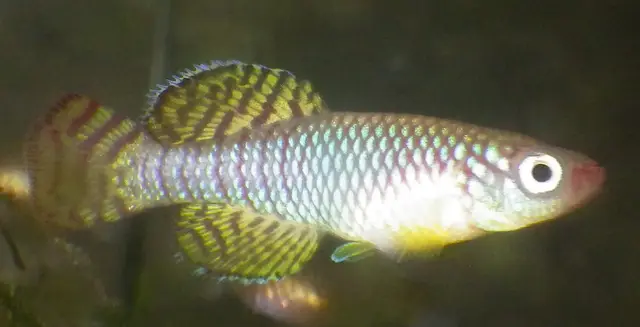
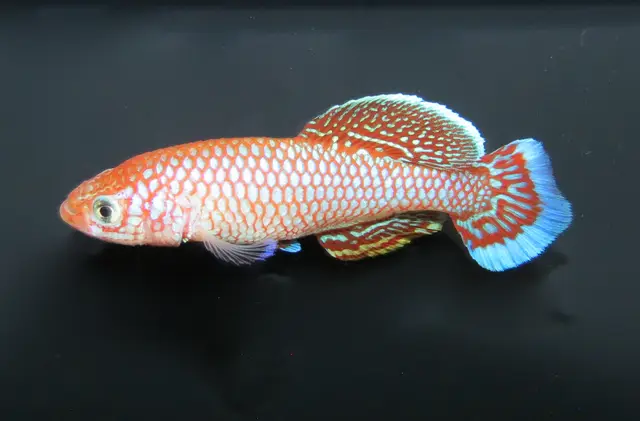
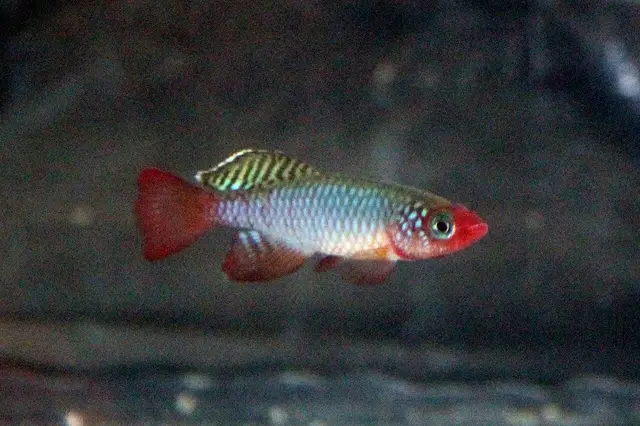
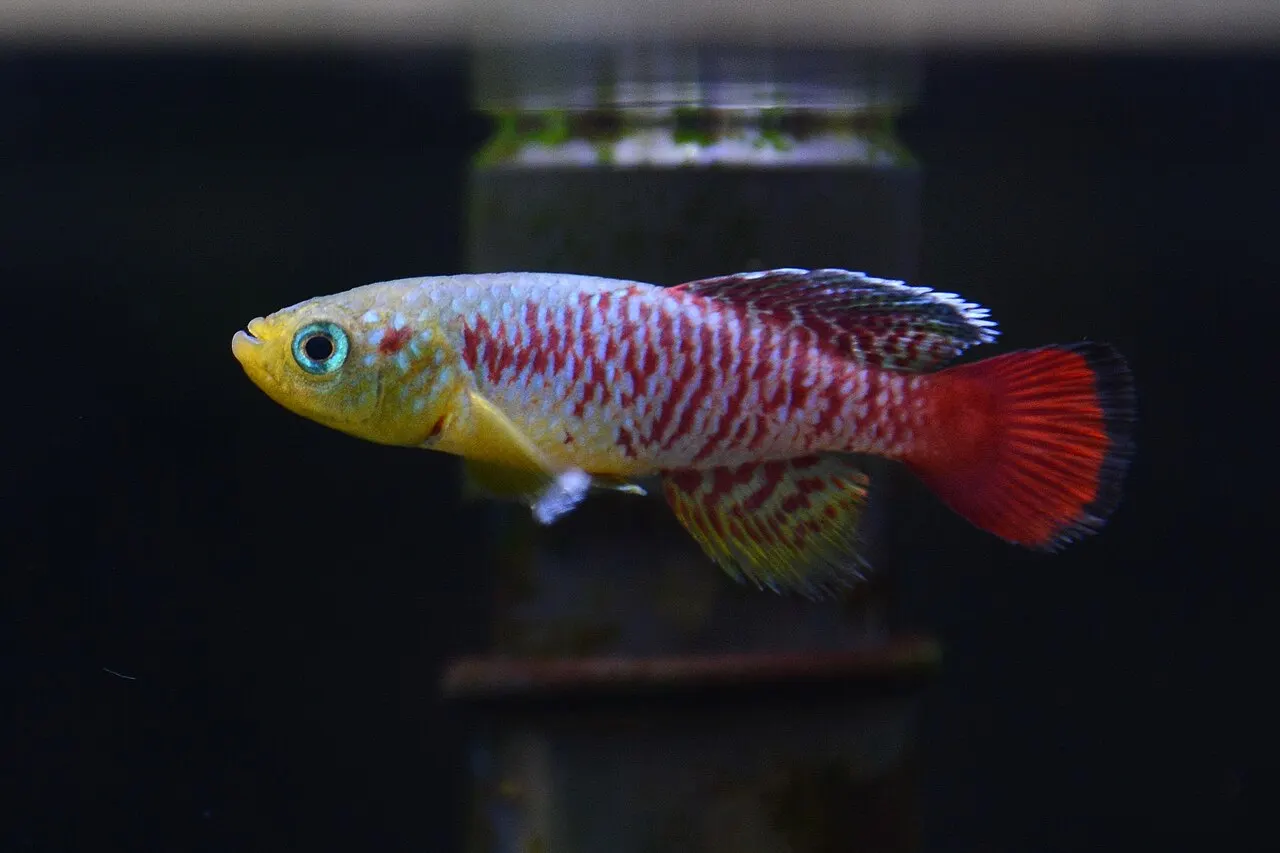
The redtail notho (Nothobranchius guentheri) is a tiny annual killifish found only on Unguja, the main island of the Zanzibar archipelago in Tanzania. Males are blue-green with a red tail. It lives in seasonal pools that dry out every year, and the Red List classes it as Endangered (2019 assessment).
How to recognise it
This is a small fish, with males reaching about 3.5 cm and females about 3.2 cm in standard length. Males are iridescent blue-green with two or three red slanting bars on the gill cover and a red tail fin edged in black. Females are yellow-brown and carry no markings.
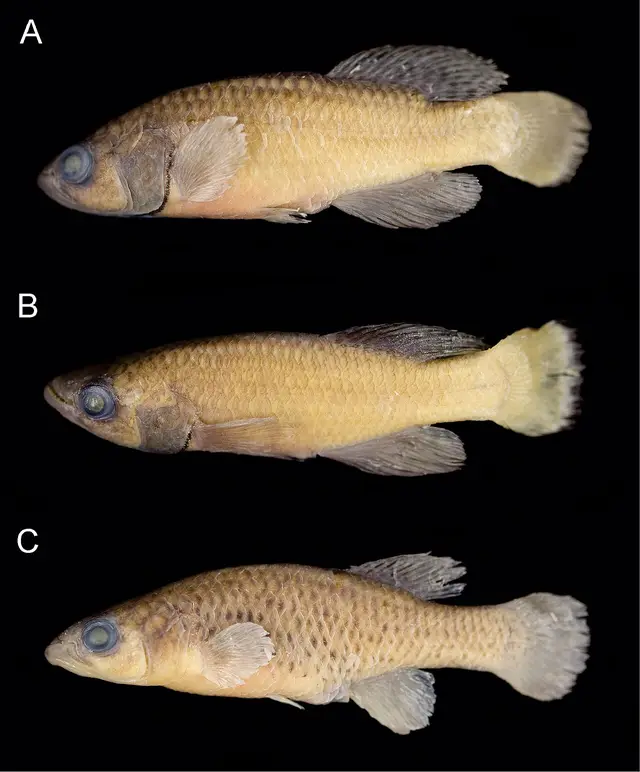
A second killifish, Nothobranchius melanospilus, also lives on Zanzibar and has a history of being confused with this species. A 2017 revision by W. J. E. M. Costa in the Journal of Natural History redescribed both from type material, using features such as gill-raker, scale and vertebra counts. It found the redtail notho is the one confined to Zanzibar, while N. melanospilus is widespread in East Africa.
Where it lives
The whole species is known from Unguja. The Red List counts five locations, with an estimated area of occupancy of about 36 square kilometres, and records a continuing decline in the area occupied and in the number of subpopulations. It reports no part of the range in a protected area.
It lives in temporary water. The Red List lists seasonal marshes and pools of under 8 hectares as suitable habitat and seasonal streams as marginal. FishBase adds ditches and swamps, in water around 22 to 25 degrees C.
Pins are Wikidata “endemic to” fields. Orange dots, when present, are GBIF occurrence tiles — survey bias included.
How it lives
Like other annual killifish, it has to finish its life before its pool disappears. Adults spawn in the bottom mud through the breeding period, then die when the water dries. The eggs sit dormant until rain refills the pool, and the young then grow fast, maturing in about 6 to 8 weeks.
Published figures for dry incubation differ: 8 to 12 weeks in one account, 3 to 4 months in FishBase. The fish eat mosquito larvae and other small plankton, and the species has been studied for mosquito control, which the Red List also records as a use.
Why it is in trouble
Its pools are small and its range is tiny, so losing a handful of them matters. The Red List names small-holder farming, housing and urban areas, and roads as ongoing threats, each affecting a minority of the range. It also lists use for pets and display and for research.
The fish is popular with aquarists but has a reputation for being hard to keep, and males are aggressive toward each other. How much wild collecting happens is not documented.
What is being done
The assessment calls for site and area management and for protection of resources and habitat. Its research priorities are life history and ecology, population size and distribution, habitat trends and threats. No part of the range is recorded as protected, and no captive breeding programme for conservation is documented, although hobbyists keep the fish.
Sources
Written for this catalog in our own words from the sources below, checked against them on 12 November 2026. Population figures are estimates and carry the year they were made. Status and assessment year: IUCN. 2026. The IUCN Red List of Threatened Species. Version 2026-1. iucnredlist.org.