Endangered
Nothobranchius korthausae
Nothobranchius korthausae
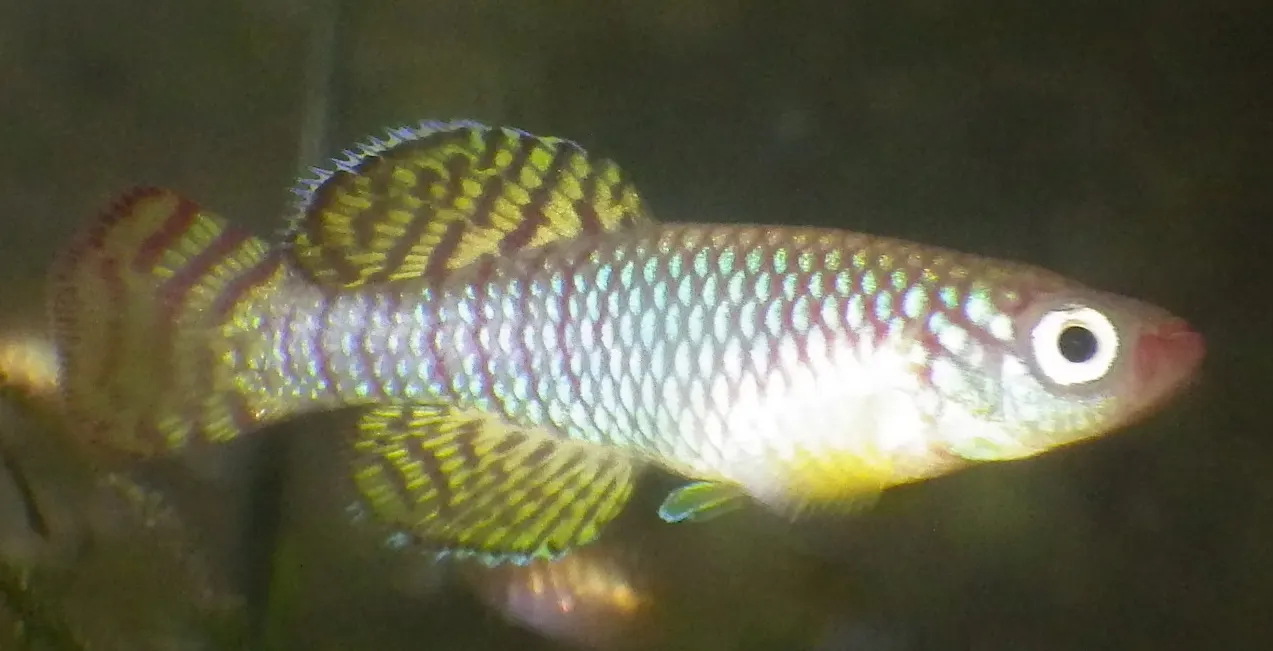
Nothobranchius korthausae is a tiny killifish from Mafia Island, off the coast of Tanzania. The IUCN Red List rated it Endangered in 2019, with five known locations, none inside a protected area. Males come in yellow and red forms, and the fish is a long-standing aquarium species.
How to recognise it
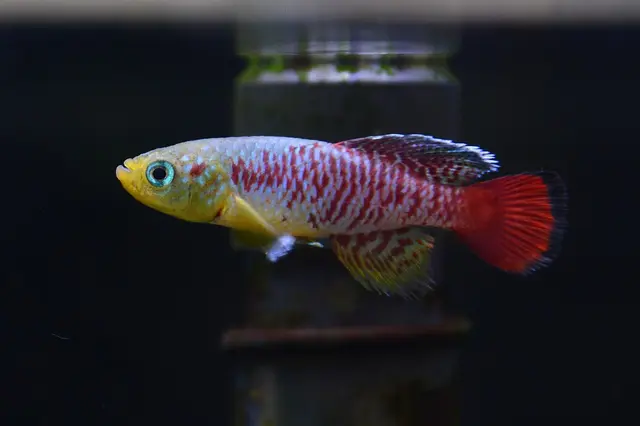
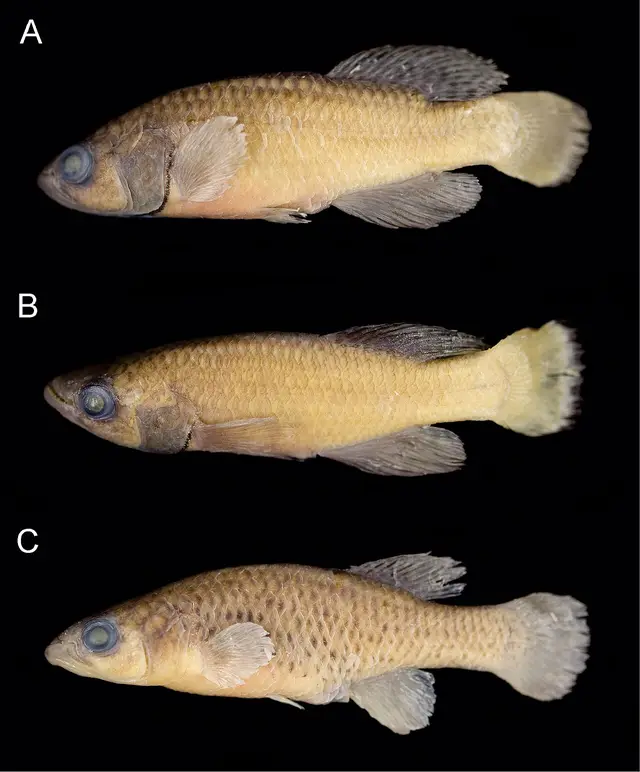
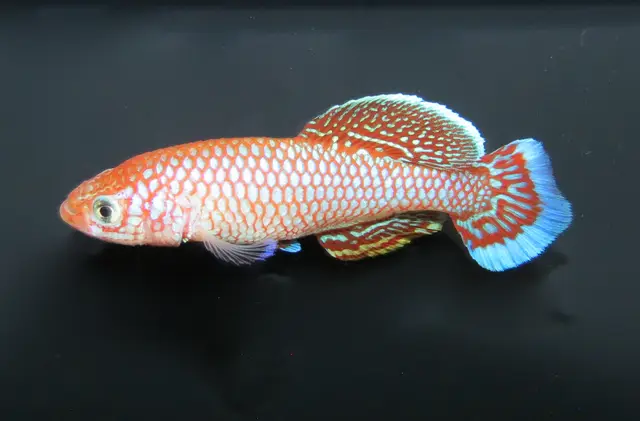
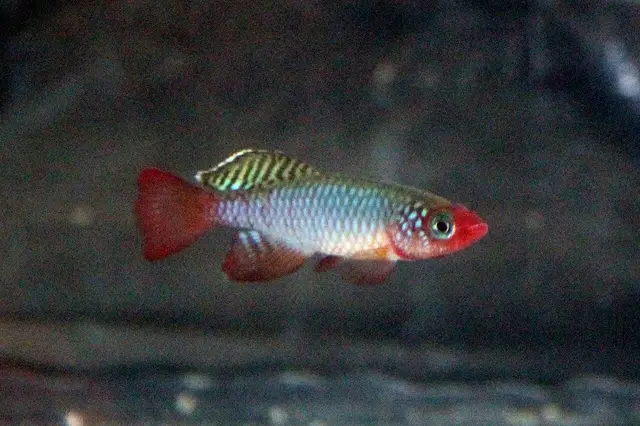
It's a small fish, about 4 to 5 cm at most. Males are the colourful sex and come in two natural colour forms, yellow and red, while females look the same whichever form the males take. Aquarium stocks also include intermediate shades.
The IUCN assessment says it can be told from other Nothobranchius killifish (except the mainland species N. ruudwildekampi) by bars across the tail fin, a white edge on the dorsal and anal fins, and a blue blotch on the pectoral fin of males.
Where it lives
The species was named by Meinken in 1973 and honours Edith Korthaus, the German aquarist who collected the first specimens. She visited Mafia Island in 1972, and the first fish found were yellow.
It lives in pools, swamps, ditches and small streams, and is much more abundant in temporary pools set in open, savanna-like vegetation and gallery forest. The IUCN habitat list includes seasonal pools and marshes. It records five locations, all in Tanzania, and none of the population is inside a protected area.
Mainland Tanzanian fish collected in 2001 were first treated as this species, then described in 2009 as a separate species, N. ruudwildekampi. Mafia Island is therefore the safest description of the true home of N. korthausae.
Pins are Wikidata “endemic to” fields. Orange dots, when present, are GBIF occurrence tiles — survey bias included.
How it lives
Like its relatives it's a bottom spawner, laying eggs in the substrate. Incubation is reported as one to three months. Aquarium keepers use peat for spawning and report eggs ready to hatch after 6 to 8 weeks at 20 to 24 degrees C. A dealer adds that the eggs hatch without a dry phase, which is unusual in this genus.
It prefers live food and is peaceful enough to keep in groups, though some keepers find it timid.
Why it is in trouble
The Red List cites small-holder farming and housing as the threats, and records a continuing decline in the area where it lives. The species is known from a tiny area with very few localities. The population trend is listed as unknown, and no population size has been estimated.
What is being done
The assessment calls for site management and protection of the resource and its habitat, but none of the population is currently in a protected area.
Meanwhile the fish is easy to keep and breed. A dealer states that all aquarium fish are captive-bred and that there is no commercial wild collecting, with only occasional collections by travelling aquarists that it does not regard as a threat.
Sources
Written for this catalog in our own words from the sources below, checked against them on 12 November 2026. Population figures are estimates and carry the year they were made. Status and assessment year: IUCN. 2026. The IUCN Red List of Threatened Species. Version 2026-1. iucnredlist.org.