Endangered
Nothobranchius insularis
Nothobranchius insularis
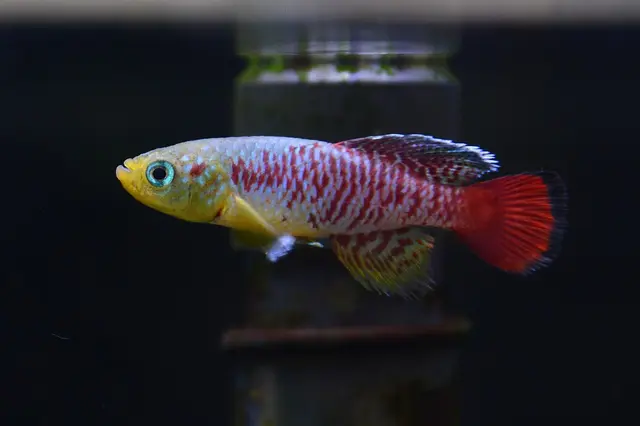
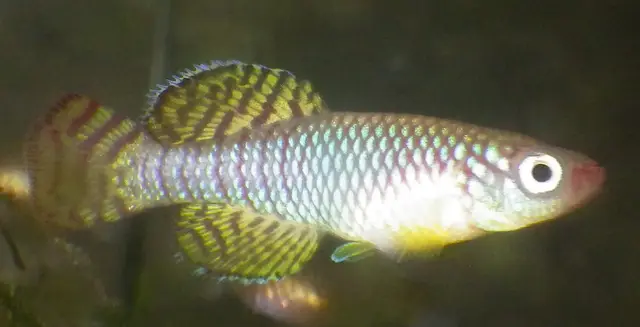
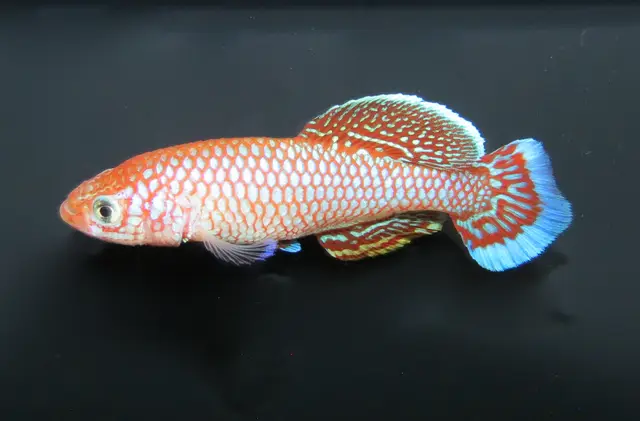
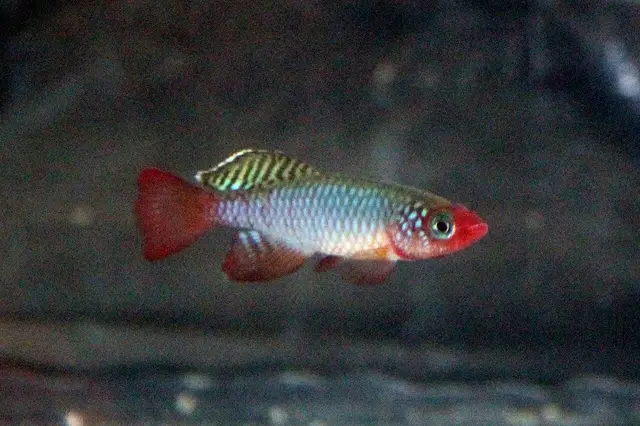
Nothobranchius insularis is a small killifish known only from the northern part of Mafia Island, off the coast of Tanzania. It was described in 2017 and rated Endangered on the Red List in 2019, because its seasonal pools lie in a tiny area under pressure from farming and housing.
How to recognise it
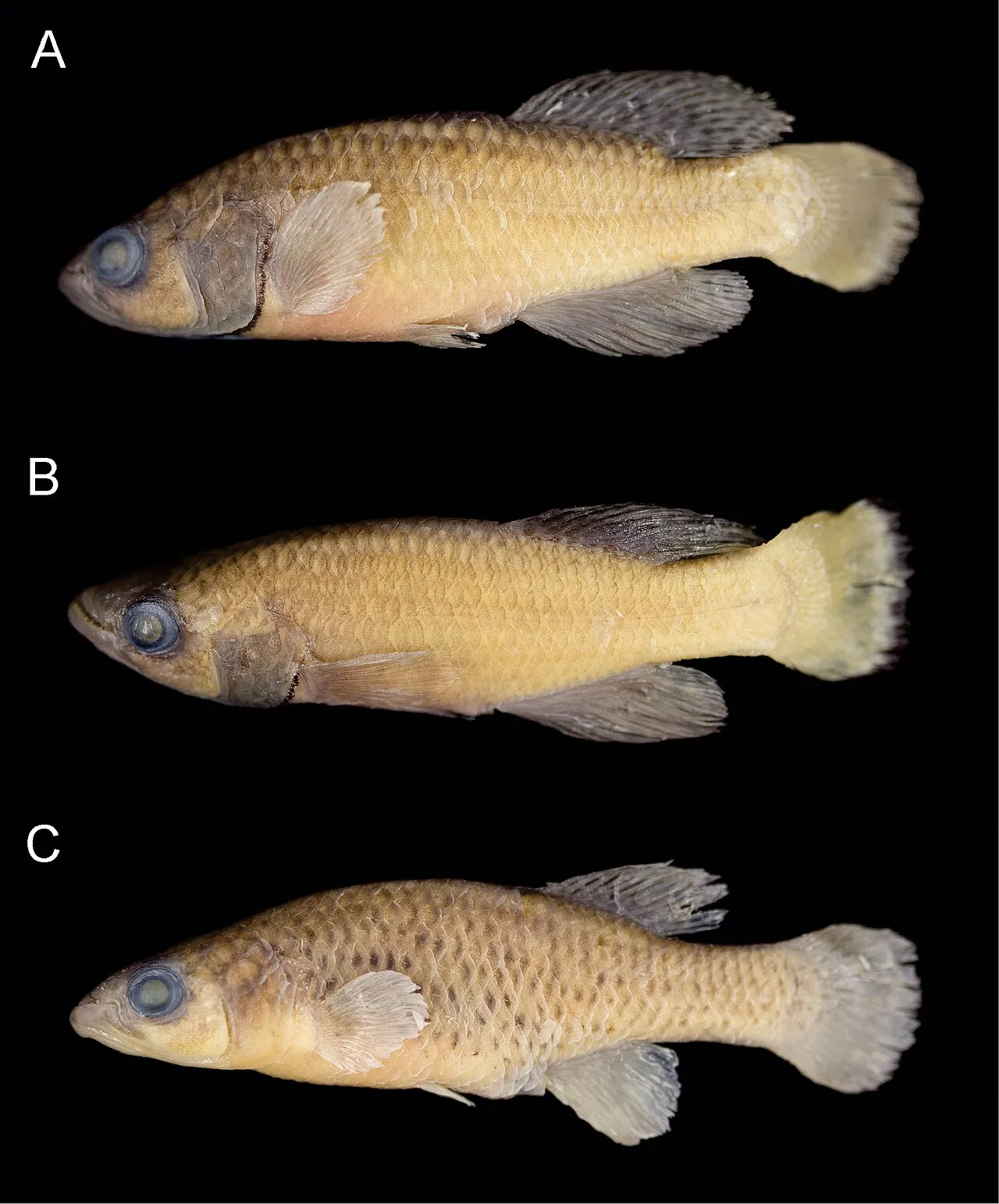
This is a small fish, about 5 centimetres at most. The largest recorded males reach 5.3 cm standard length and females 5.0 cm. It has a pointed snout and moderately long jaws, and its tail fin is shorter than that of its closest relative, Nothobranchius lucius. Males carry a broad dark grey to black band along the rear edge of the tail fin. Females have dark dots over the whole flank, often arranged in oblique rows.
Wilson Costa described it in 2017 in the journal Zoosystematics and Evolution, in the same paper that redescribed N. lucius. The name insularis is Latin for island, after Mafia Island. The holotype was a male of 52.9 mm collected about 3 km south of the village of Kirongwe on 31 May 2002.
Where it lives
It has been found at two close sites in the north of Mafia Island, at roughly 10 to 15 metres above sea level. The Red List puts its extent of occurrence at about 100 square kilometres, and the area it occupies at somewhere between 8 and 20 square kilometres, from one to five locations.
The habitat is seasonal freshwater marsh and pools of less than 8 hectares. These are places that fill in the rains and dry out later.
Pins are Wikidata “endemic to” fields. Orange dots, when present, are GBIF occurrence tiles — survey bias included.
How it lives
Little has been published on this species' own life history. Fish in the genus Nothobranchius are annual killifish. They typically live in temporary pools, and their eggs rest in the mud through the dry season. Whether N. insularis follows exactly that pattern has not been described.
Why it is in trouble
The assessment names two ongoing threats: smallholder farming, and housing and urban development. Each is judged to affect the majority of the population, and each could cause large swings in numbers. The area it occupies is still shrinking.
None of the population lives inside a protected area. The population trend is listed as unknown and no population size has been recorded.
What is being done
The assessment lists management of the sites and protection of the habitat and its resources as the conservation actions that apply. At the time of assessment no protected area covered the species. Pets and display animals are listed among its uses, though no trade volume is given.
Sources
Written for this catalog in our own words from the sources below, checked against them on 12 November 2026. Population figures are estimates and carry the year they were made. Status and assessment year: IUCN. 2026. The IUCN Red List of Threatened Species. Version 2026-1. iucnredlist.org.