Critically Endangered
Hemicycla saulcyi
Hemicycla saulcyi
Hemicycla saulcyi is a medium to large land snail that lives on a few hills at La Isleta, just north of Las Palmas on Gran Canaria. It was assessed as Critically Endangered in 2026. The IUCN lists a single location, with housing and urban areas and military exercises named as threats.
How to recognise it
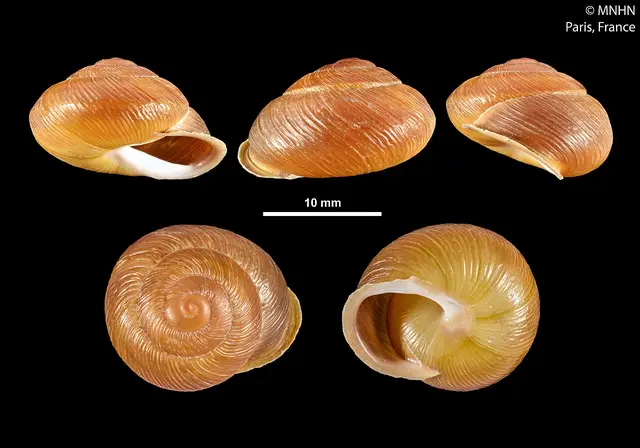
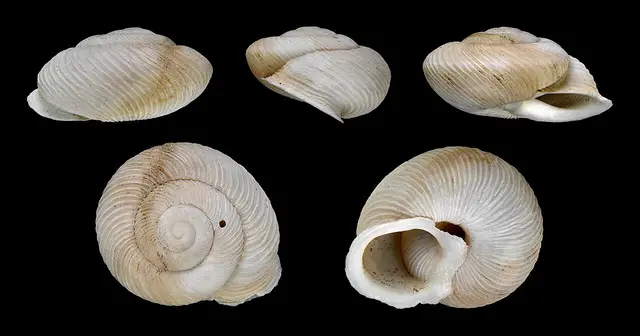
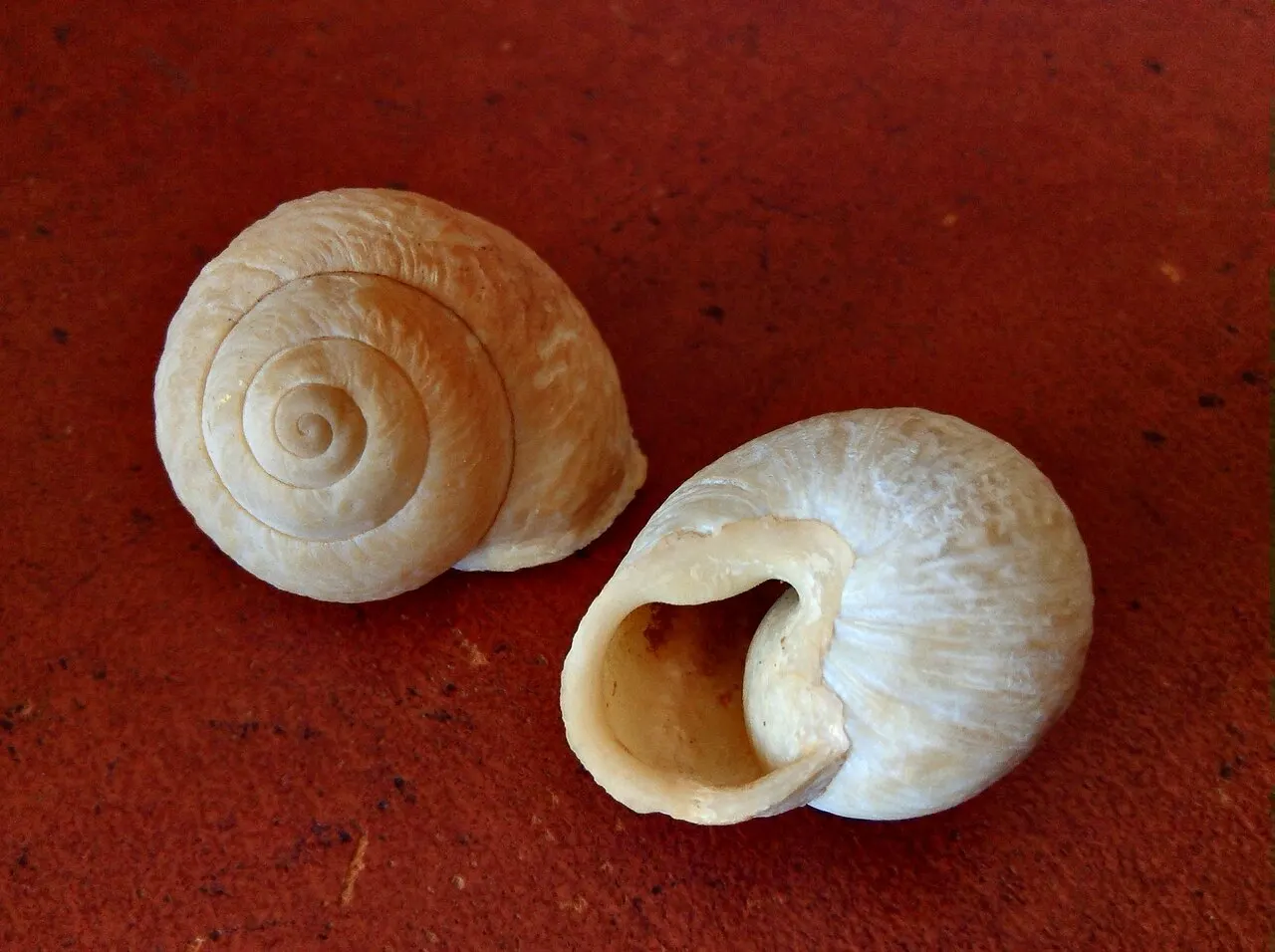
It is a fairly big snail for the Canary Islands, with a shell 24 to 28 mm across. The body is a very dark bluish gray. The shell is solid, rounded and slightly conical, with no navel opening and long, irregular ribs that mostly run at a slant to the shell's axis. The shell is brown and the ribs are yellow. The mouth edge is drawn out into a well-developed lip.
Alcide d'Orbigny described it in 1839. It has no common name.
Where it lives
The living snail is known only from La Isleta, the headland north of the island's capital. Spain's national atlas of threatened invertebrates (2006) puts its range at under 4 square kilometres, between 120 and 238 metres above sea level. The 2026 IUCN assessment lists a single location, an area of occupancy of 8 square kilometres and an elevation range of 100 to 238 metres.
The densest groups are on the north-east facing slopes of the higher hills, which catch the most moisture from sea breezes. An older form, Hemicycla saulcyi carta, is known only as fossils from sites between Agaete and La Isleta. Subfossil shells have also been collected at El Confital, nearby and at a lower elevation.
Pins are Wikidata “endemic to” fields. Orange dots, when present, are GBIF occurrence tiles — survey bias included.
How it lives
The habitat is dry, stony and clayey ground, degraded by people, where the main plant cover is a leafless spurge scrub (Euphorbia aphylla), with lichens and a few low shrubs. IUCN lists it under Mediterranean-type shrubby vegetation. Little else is known of its biology.
Why it is in trouble
Spain's atlas called it uncommon, with only about 30 living animals observed up to its 2006 publication. That is the number of snails seen, not a population estimate. Surveyors confirmed three of the four 1 km squares they visited.
Most of La Isleta has been a military base since the early 20th century, which kept the city from spreading north. The atlas expected buildings to cover the area once the army hands the land over. The 2026 assessment names housing and urban areas, plus military exercises, as threats, and records a continuing decline in habitat area. Whether the snail's numbers are falling is listed as unknown.
What is being done
Live snails were reported as rediscovered at La Isleta in a 1992 paper by Groh and colleagues. The Canary Islands listed the species as in danger of extinction by decree in 2001. The IUCN assessment says conservation sites have been identified over its whole range and that 91 to 100 percent of the population is inside protected areas. It also says there is no recovery plan and no systematic monitoring scheme. The atlas's only recommended measure was protecting the habitat from building and restoring its plants.
Sources
Written for this catalog in our own words from the sources below, checked against them on 12 November 2026. Population figures are estimates and carry the year they were made. Status and assessment year: IUCN. 2026. The IUCN Red List of Threatened Species. Version 2026-1. iucnredlist.org.