Critically Endangered
Tylomelania zeamais
Tylomelania zeamais
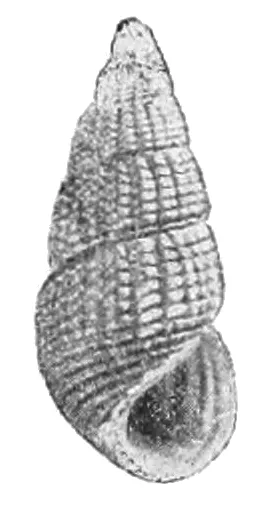
Tylomelania zeamais is a freshwater snail with a tall, many-whorled shell, known only from the ancient lakes of Sulawesi, Indonesia. The IUCN Red List rated it Critically Endangered in 2019 and records its presence as possibly extinct. Little has been recorded about it beyond its shell.
How to recognise it
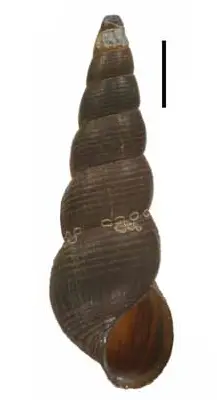
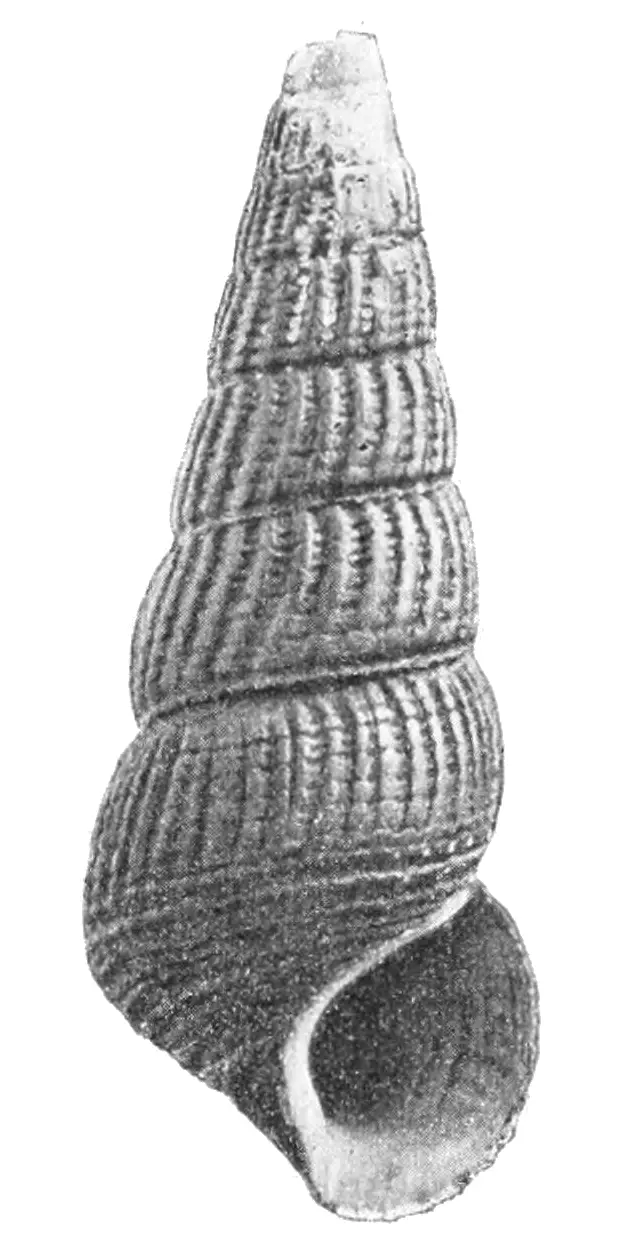
It's a member of the family Pachychilidae, the river and lake snails that carry a horny plate (an operculum) to seal the shell opening. The shell has 7 to 8 whorls and measures about 29 mm high and 13 mm wide. The opening is roughly 11.5 mm high and 7.5 mm wide, and the operculum shows six concentric lines.
Paul and Fritz Sarasin described it in 1897 as Melania zeamais. It was later moved to the genus Tylomelania.
Where it lives
Tylomelania is a genus found only on Sulawesi, and most of its species live in the Malili lake system (Matano, Towuti and smaller lakes) or in Lake Poso. This species is reportedly known from a single lake, Matano, which is also its type locality. The Red List assessment names only Sulawesi and Indonesia as its range, and lists lakes and streams as its habitat.
Pins are Wikidata “endemic to” fields. Orange dots, when present, are GBIF occurrence tiles — survey bias included.
How it lives
The details here come from the genus, not from measurements of this species. Many Tylomelania species have separate sexes, which is unusual among water snails. The young develop inside the female and are released one at a time as small, fully formed snails. Larger species release fewer and bigger young, so populations grow slowly.
In the Malili and Poso lakes these snails are densest in the first 1 to 2 m of water. The IUCN assessment gives a generation length of 2 years for this species.
Why it is in trouble
The 2019 assessment estimated a past population reduction of about 90 percent and described the trend as decreasing. It lists nutrient pollution, dams, mining and quarrying, and unspecified invasive species as ongoing threats.
The best documented pressure on Lake Matano's snails is the flowerhorn, an aquarium hybrid cichlid first recorded in the lake in 2010 and probably released by an aquarist or pet shop owner. A 2024 note in Oryx reported six endemic Tylomelania species in Matano, nearly all Critically Endangered, and said the smaller species and the young of larger ones disappeared as flowerhorns spread. Flowerhorns appear to feed mainly on snails. That note does not name this species, so how it fared within the pattern is not recorded.
What is being done
The assessment records no conservation measures in place for this snail. It names control of invasive species and protection of resources and habitat as the actions needed. No captive population is known.
Sources
Written for this catalog in our own words from the sources below, checked against them on 12 November 2026. Population figures are estimates and carry the year they were made. Status and assessment year: IUCN. 2026. The IUCN Red List of Threatened Species. Version 2026-1. iucnredlist.org.