Critically Endangered
Tylomelania baskasti
Tylomelania baskasti
Tylomelania baskasti is a freshwater snail from the ancient Malili lake system on Sulawesi, Indonesia, described in 2008 from the lower Larona River. The IUCN assessed it as Critically Endangered in 2019, citing a very small range, dams and mining. Its population trend is unknown.
How to recognise it
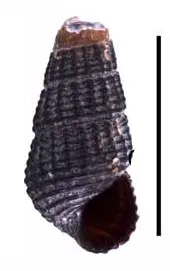
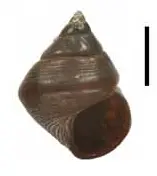
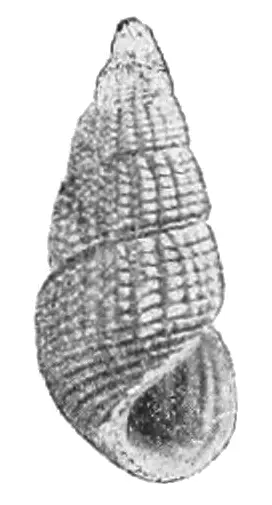
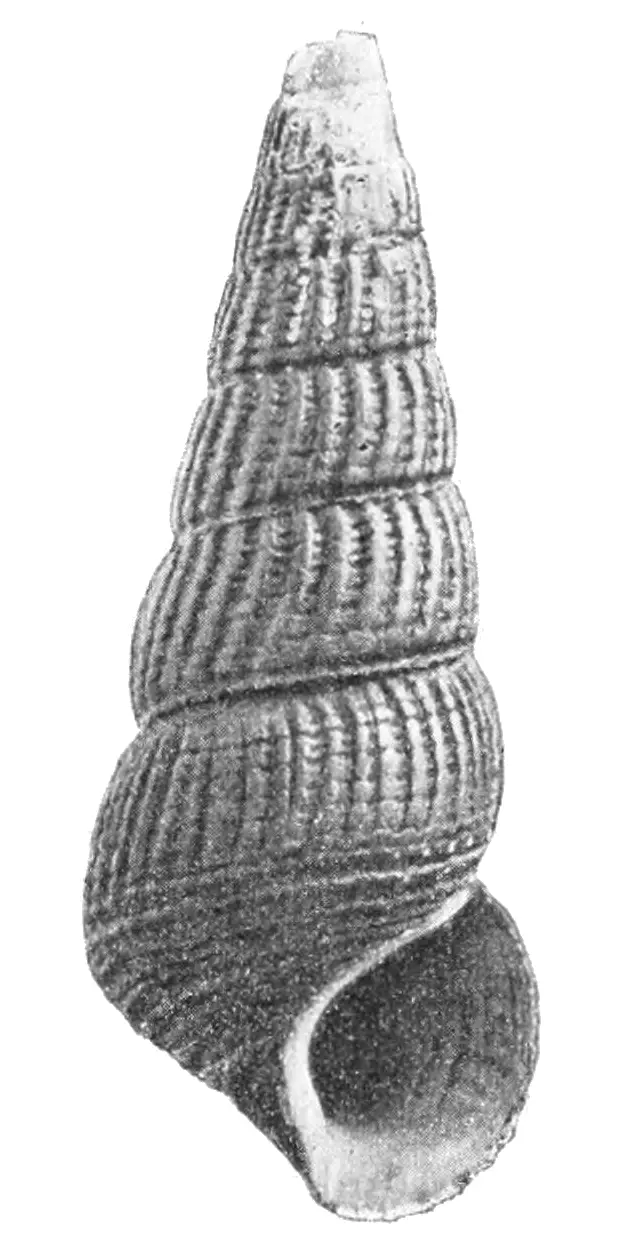
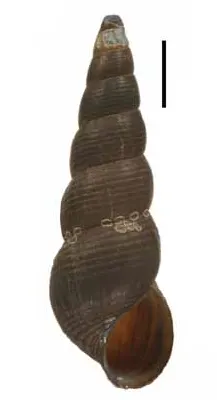
This is a medium to large, brown, elongate snail in the family Pachychilidae. The holotype, the specimen on which the name is based, measures 52.3 mm tall and 17.7 mm wide, and adult shells can reach 54.7 mm. The tips of adult shells are always corroded to some degree, leaving 4 to 9 whorls, and the shell carries spiral ribs only.
The soft body is black with fine orange dots. Inside, the aperture is brown, occasionally with a thin whitish coating.
It looks most like Tylomelania lalemae from Lake Towuti, but its shell is more fragile and lacks the conspicuous white aperture of that species. Molecular data place it within the Malili lakes group of Tylomelania.
A species found late
Thomas von Rintelen and Matthias Glaubrecht described it in 2008 in the journal Zootaxa, alongside two other new Tylomelania species, based on sampling in the Malili area between 2002 and 2005. The name honours Bas Kast, a German author and journalist who supported research on these snails at the Museum für Naturkunde in Berlin.
Where it lives
The species belongs to the Malili lakes, a chain of lakes in central Sulawesi. It was collected in the lower reaches of the Larona River, which is its type locality. The IUCN treats the whole population as a single location and estimates the area it occupies at only 8 square kilometres.
The type material came from shallow water, 0.1 to 0.5 metres deep, in calmer parts of the river bank over soft ground. Deeper water could not be sampled because of strong currents, so it may live deeper too.
Tylomelania snails give birth to shelled young. In this species the brood pouch held 4 to 12 embryos, with shells up to 8.4 mm. The genus lives only on Sulawesi and probably cannot live above about 700 metres.
Pins are Wikidata “endemic to” fields. Orange dots, when present, are GBIF occurrence tiles — survey bias included.
Why it is in trouble
The 2019 assessment lists dams across more than 90 percent of its range as an ongoing threat, along with mining and quarrying. The range is recorded as still shrinking. A third, future threat is also flagged: unspecified invasive species expected to cause rapid declines across the whole range.
That last concern has a precedent nearby. The flowerhorn, an artificial hybrid cichlid, was first recorded in Lake Matano in 2010, probably released by an aquarist or pet store owner, and has spread through the lake. Flowerhorns mainly eat snails. A 2023 study cited in a 2024 Oryx news piece found that Matano's smaller Tylomelania species disappeared as it spread, along with the young of larger ones. Matano is a different lake from the Larona River, and the effect on this species is not documented.
What is being done
No conservation measures are recorded for the species in the 2019 assessment, and its population size is unknown. Conservation work on Tylomelania in the region has focused on other species, such as a project on Tylomelania zeamais in Lake Matano that surveyed 32 localities, bred snails in captivity and released them, and ran outreach in two village schools.
Sources
Written for this catalog in our own words from the sources below, checked against them on 12 November 2026. Population figures are estimates and carry the year they were made. Status and assessment year: IUCN. 2026. The IUCN Red List of Threatened Species. Version 2026-1. iucnredlist.org.
- IUCN Red List assessment, Tylomelania baskasti (2019)
- Von Rintelen and Glaubrecht 2008, Zootaxa 1852: 37-49, T. baskasti treatment (Plazi)
- Tylomelania baskasti (encyclopedia article)
- Tylomelania (genus article)
- Flowerhorn invasion in Lake Matano, Oryx 58(1), 2024 (Cambridge core)
- MBZ Species Conservation Fund grant report, Tylomelania zeamais