Critically Endangered
Tylomelania sinabartfeldi
Tylomelania sinabartfeldi
Tylomelania sinabartfeldi is a brown freshwater snail from the Larona River on Sulawesi, Indonesia, and nowhere else known. The IUCN Red List rates it Critically Endangered (assessed 2019) with a decreasing population. It lives on submerged logs in fast current, and its shell comes in two quite different shapes.
How to recognise it
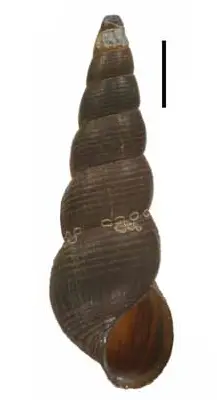
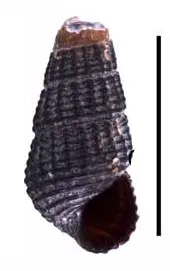
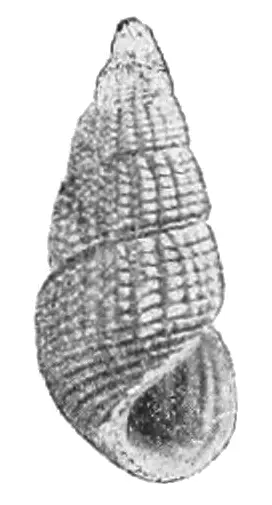
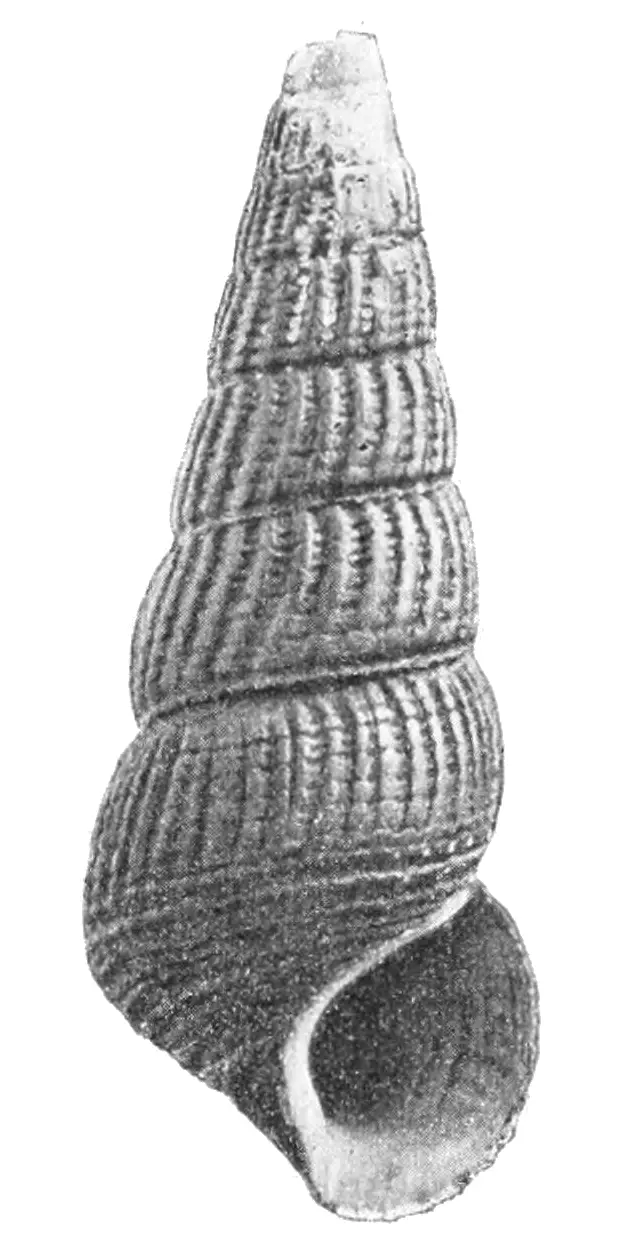
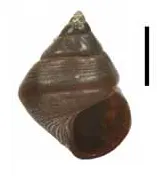
This is a medium-sized, brown snail. Adult shells measured in the original 2008 description ran from about 14 to 27 millimetres tall, averaging roughly 21 mm, with a body whorl that makes up most of the shell. The head and foot are black, and the edge of the mantle is serrated to a varying degree.
The shell comes in two shapes, a conical one and a rounder, subglobose one, with every step in between. Von Rintelen and Glaubrecht tried to sort their specimens into two groups and couldn't. Radulae and embryo shells from both extremes looked the same, and both shapes were collected from the same log, so they treat it as one highly variable species. In adults the top whorls are always corroded, leaving only 3 to 6 whorls intact.
Where it lives
The species is known only from the lower reaches of the Larona River in South Sulawesi. The river is part of the Malili lake system, which holds a large cluster of closely related Tylomelania snails. The type specimens were collected on the road stretch between Malili and Soroako, and the snails sampled for the description came from a stretch of river about 1.5 km long.
The IUCN treats the whole population as a single location. Its estimated area of occupancy is 4 square kilometres, and its extent of occurrence is put at somewhere between 0.159 and 16 square kilometres. Those figures show how small the range is, and they carry a lot of uncertainty.
Pins are Wikidata “endemic to” fields. Orange dots, when present, are GBIF occurrence tiles — survey bias included.
How it lives
Every specimen in the original study came from submerged wood. The snails sat on logs in strong current, in water from 0.1 to 1 metre deep. Deeper water in the river is too fast to sample, so the true depth range isn't known.
The radula, the toothed feeding ribbon, is a specialised type that, in Tylomelania, goes with living on hard surfaces such as rock and wood. It closely resembles that of a snail from the Tominanga River, which connects two of the Malili lakes. Von Rintelen and Glaubrecht read this as a sign that the river is better thought of as a fast-flowing arm of the lakes than a typical river.
Females carry their young in a brood pouch. Pouches held 11 to 67 embryos, and the shells of the largest embryos reached about 5 mm.
Why it is in trouble
When the species was described in 2008, two hydroelectric dams had been built on the Larona since the 1960s. They would limit the snail's range upstream to no more than eight kilometres, the 2008 paper estimated. Lower down, the river turns sluggish, and the snails apparently don't tolerate that change. A third large dam was under construction less than 3 km above the highest sampling site. A collector reported in 2007 that the snails were still thriving despite the building work.
The IUCN lists dams, mining and quarrying, soil erosion and sedimentation, and seepage from mining as ongoing threats, and records a continuing decline in habitat area. Small-scale harvesting is also listed as an ongoing, low-impact threat.
What is being done
The Red List entry lists no conservation measures in place. The action it identifies as needed is protection of the species' habitat and resources. Research is recorded on threats, population size and trends, and habitat trends. The species has a single known river site, so any change to that stretch of the Larona matters a great deal.
Sources
Written for this catalog in our own words from the sources below, checked against them on 12 November 2026. Population figures are estimates and carry the year they were made. Status and assessment year: IUCN. 2026. The IUCN Red List of Threatened Species. Version 2026-1. iucnredlist.org.