Endangered
Tylomelania towutensis
Tylomelania towutensis
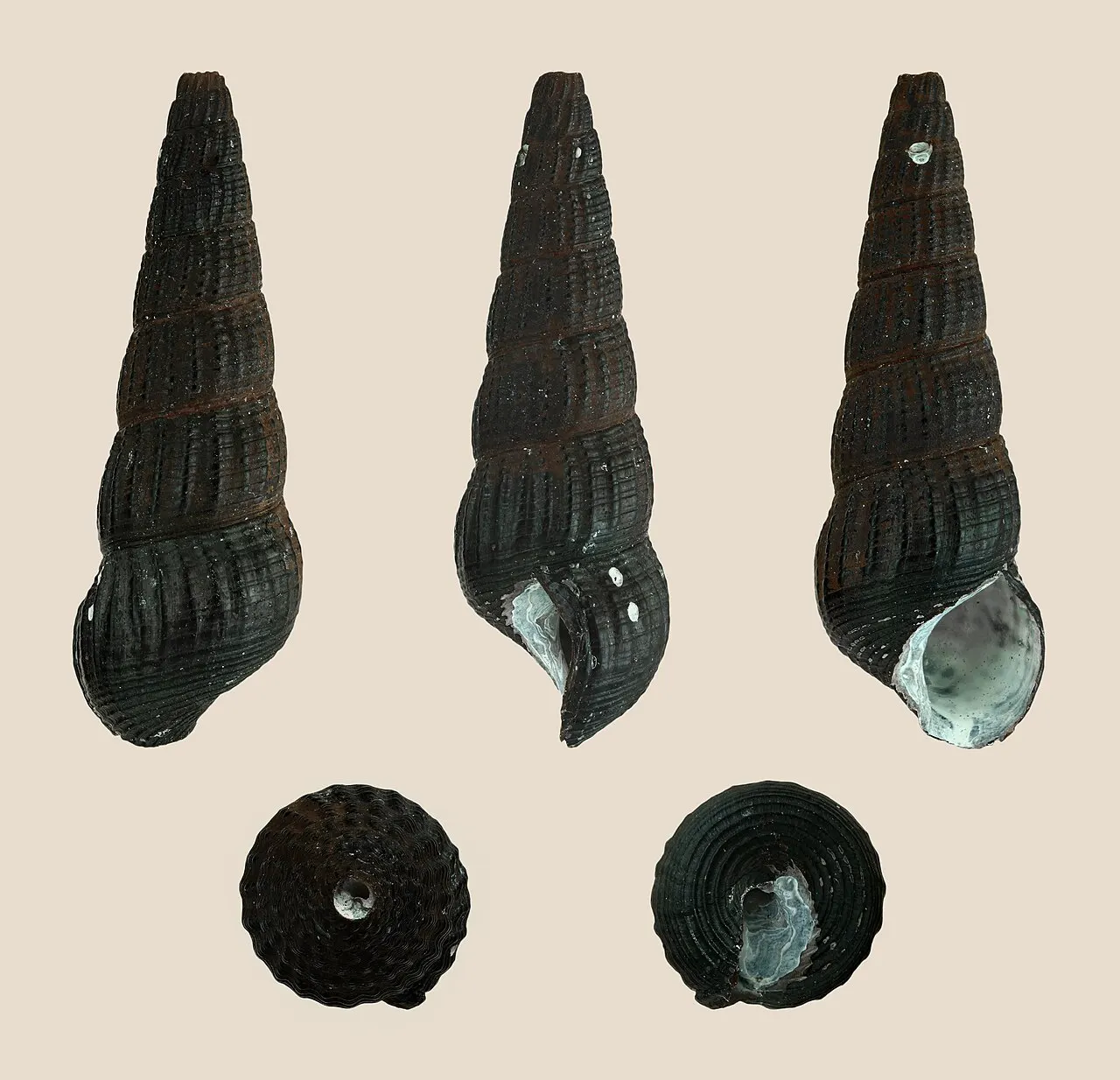
Tylomelania towutensis is a large freshwater snail known only from Lake Towuti, one of the Malili lakes of Sulawesi, Indonesia. The IUCN Red List assessed it as Endangered in 2019, citing a tiny range, and little is known about how it lives.
How to recognise it
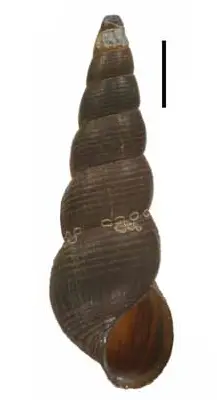
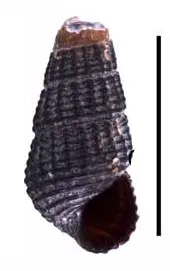
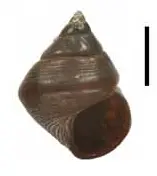
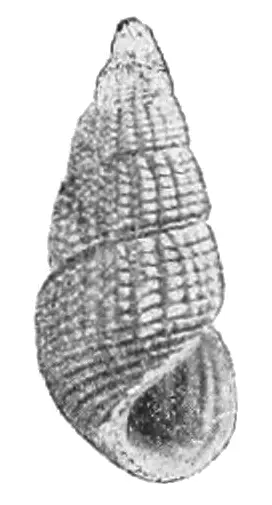
This is a sizeable, elongated, coiled shell, about 62 mm tall and 20 mm wide, with 6 to 9 whorls. The opening is roughly 20 mm tall and 12 mm wide. The horny plate that seals the opening when the snail withdraws, the operculum, carries 6 to 7 concentric lines.
The species was described in 1897 by Paul and Fritz Sarasin, and its name refers to the lake where it was first collected. Other Tylomelania species live in the Malili lakes too.
Where it lives
It lives in Lake Towuti and nowhere else. Towuti is the largest lake on Sulawesi, about 561 square kilometres and up to 203 metres deep, and one of five lakes in the Malili system. The lake is home to many animals found nowhere else, including fish, shrimp, crabs and other Tylomelania snails.
The Red List treats the snail as occurring at a single location, with an extent of occurrence of about 746 square kilometres and an area of occupancy of about 156 square kilometres. It lists both permanent lakes and streams as habitat.
Pins are Wikidata “endemic to” fields. Orange dots, when present, are GBIF occurrence tiles — survey bias included.
How it lives
Little is documented for this particular species. The genus Tylomelania is unusual among freshwater snails. Females keep their eggs inside the body and give birth to shelled juveniles, and the newly born young of some species are almost 2 cm long. A generation is estimated at 1 to 2 years for this snail, and it does not migrate.
Why it is in trouble
The Red List expects a population decline of about 50 percent in the future, citing effects such as introduced taxa, pathogens and pollutants, and records that the snail's habitat area is already shrinking. It lists nutrient pollution as a medium-impact threat across the whole range. Large-scale harvest for trade is rated low impact, while dams and mining are listed with their severity unknown.
A warning comes from the neighbouring Lake Matano. A hybrid aquarium fish, the flowerhorn cichlid, was first recorded there in 2010, probably released by someone who kept it, and reportedly spread to neighbouring lakes. It mainly eats snails. In Matano, smaller Tylomelania species and the juveniles of larger ones have disappeared. The population trend of the Towuti snail is listed as unknown.
What is being done
The assessment calls for habitat protection, harvest management and control of invasive species, but records no conservation measures in place for this snail. In Lake Matano, a youth-led group, TARSIUS, leads a program to remove an invasive cichlid that attacks young snails.
Sources
Written for this catalog in our own words from the sources below, checked against them on 12 November 2026. Population figures are estimates and carry the year they were made. Status and assessment year: IUCN. 2026. The IUCN Red List of Threatened Species. Version 2026-1. iucnredlist.org.