Critically Endangered
Sulawesi Cardinal Shrimp
Caridina dennerli
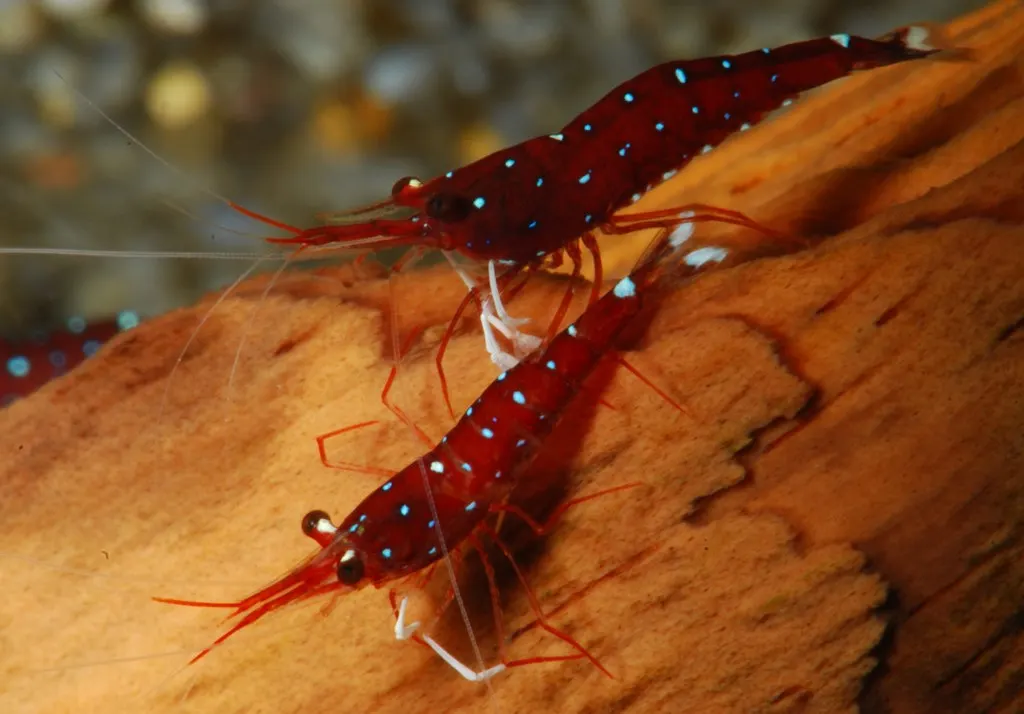
The Sulawesi cardinal shrimp (Caridina dennerli) is a tiny, brightly coloured freshwater shrimp found only in Lake Matano on the Indonesian island of Sulawesi. The IUCN Red List rated it Critically Endangered in 2018 and flagged it as possibly extinct in the wild, though recent fieldwork has found it again.
How to recognise it
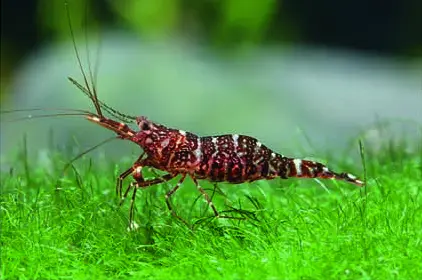
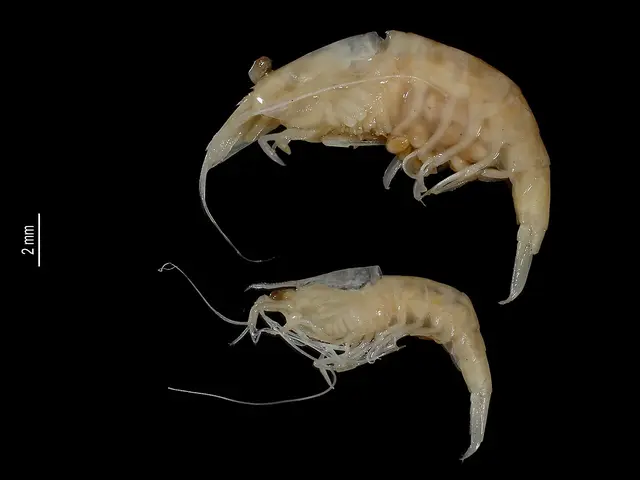
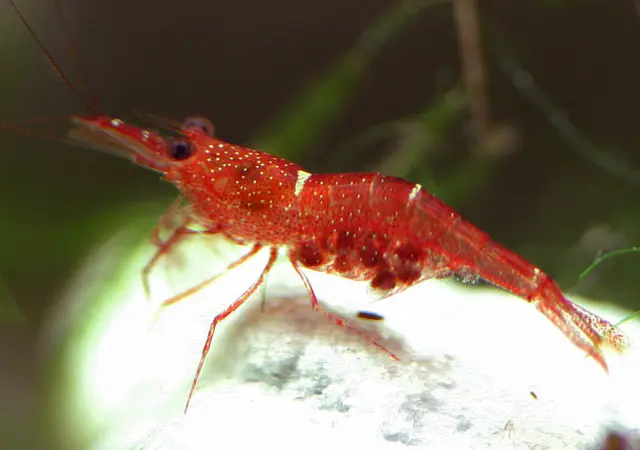
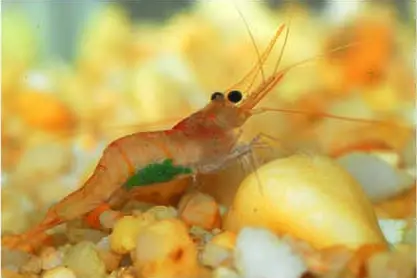
It is a small shrimp in the family Atyidae, reaching about 2.5 cm. Females are larger than males and have a deeper carapace. They carry relatively large eggs under the abdomen. The aquarium trade knows it as the cardinal shrimp or Sulawesi shrimp and prizes its looks.
The scientific name honours the German company Dennerle, which supported the expedition behind its description. Kristina von Rintelen and Yixiong Cai described it in 2009, in a paper that named eight new Caridina species from the lakes of Sulawesi.
Where it lives
Lake Matano, in East Luwu on Sulawesi, is the only place it is known. The shrimp lives among rocks and cliffs, from shallow water down to about 10 m. Matano is a very nutrient-poor lake, with warm water recorded at 27 to 31 degrees C.
In the wild the shrimp is believed to feed on detritus.
Pins are Wikidata “endemic to” fields. Orange dots, when present, are GBIF occurrence tiles — survey bias included.
Why it is in trouble
The Red List assessment lists several pressures: nutrient loads, seepage from mining, dams, subsistence harvest and an unspecified introduced species. It also records international trade in the shrimp as a pet. Nickel mining pollution and hydroelectric plants on the lake's southern shore are reported as threats.
The flowerhorn cichlid, a fish introduced to the lake, is now abundant and is reported to harm native species through predation, competition and disease. The assessment gives a decreasing population trend and a continuing decline in habitat area.
The shrimp was once locally abundant, but it has reportedly gone unrecorded in the wild since 2013. That led to the possibly extinct in the wild flag.
What is being done
In November 2024 the Mohamed bin Zayed Species Conservation Fund gave $5,500 to Diky Dwiyanto and the Zoological Community of Celebes. The project describes itself as the first in-situ conservation action for the shrimp. Fieldwork on 9 to 13 January 2025 surveyed six sites around the lake and found the shrimp at only three.
In that first phase about 50 kg of flowerhorn cichlid were removed, and spearfishing competitions were run to keep the numbers down without catching shrimp by accident. The project also ran education programmes with locals, shrimp collectors and the regional conservation agency, BKSDA, which received a population database. Safe breeding areas and population monitoring are planned next. The shrimp is also kept and bred in aquariums.
Sources
Written for this catalog in our own words from the sources below, checked against them on 12 November 2026. Population figures are estimates and carry the year they were made. Status and assessment year: IUCN. 2026. The IUCN Red List of Threatened Species. Version 2026-1. iucnredlist.org.