Critically Endangered
Caridina glaubrechti
Caridina glaubrechti
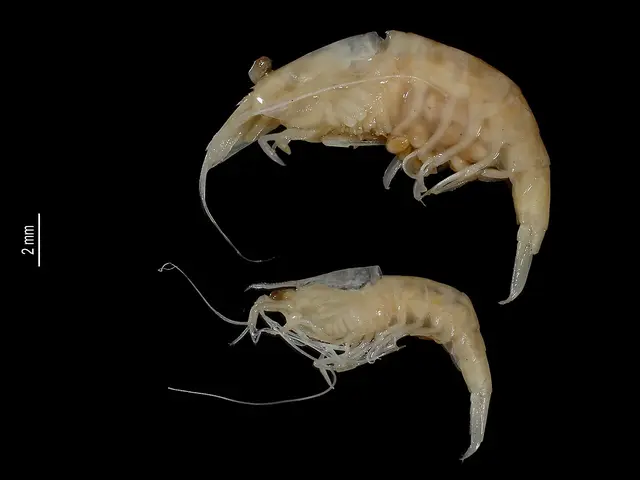
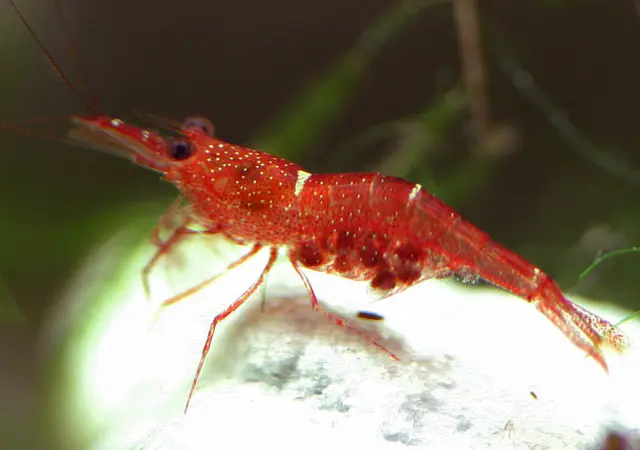
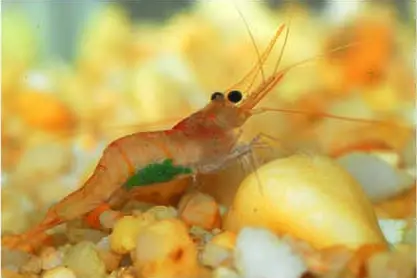
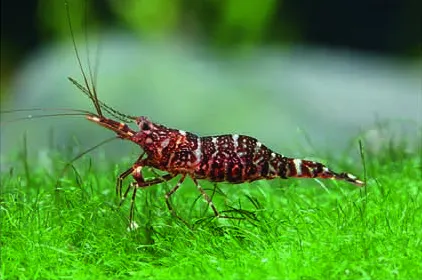
Caridina glaubrechti is a small freshwater shrimp that lives only in the western part of Lake Towuti, a large ancient lake on Sulawesi, Indonesia. It is listed as Critically Endangered on the IUCN Red List (assessed 2019), with one known location and an unknown population trend. Aquarists know it as the red orchid shrimp.
How to recognise it
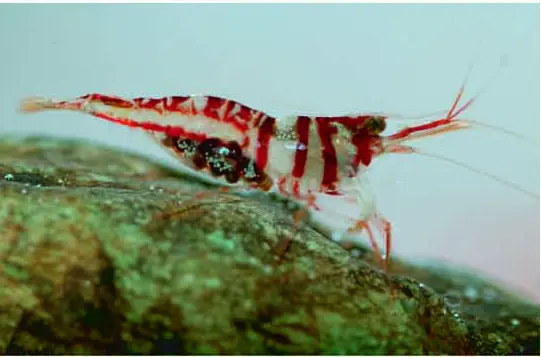
The shrimp is brown with several white bands or patches on the body, and a conspicuous white band on the abdomen. Its appendages are transparent or partly brownish.
In the aquarium trade it has been sold under the names Caridina sp. red orchid and Caridina sp. brown camo.
Where it lives
It is found only in Lake Towuti, the largest lake on Sulawesi, with a surface area of about 561 square kilometres and a maximum depth of 203 metres. The shrimp is recorded from the western part of the lake, and the IUCN counts one location, with an estimated area of occupancy of 32 square kilometres. It mostly lives in shallow water among rocks, boulders and other hard surfaces.
Towuti is one of five lakes in the Malili system and has many endemic species, including fish, crabs, snails and several other Caridina shrimps. C. profundicola, C. spinata, C. striata and C. woltereckae share the lake with this species.
Pins are Wikidata “endemic to” fields. Orange dots, when present, are GBIF occurrence tiles — survey bias included.
How it lives
Little has been published about its biology. One aquarium retailer's guide rates it as hard to keep, even by the standards of Sulawesi shrimps, and suggests that Towuti species may rely heavily on biofilm, the thin film of microbes and algae that grows on rocks.
Why it is in trouble
The IUCN lists large-scale harvest, sewage, mining and dams among the threats, and records international use of the species as a pet or display animal. In 2009, when the lake's shrimps were first described, their describers raised a general concern that taking large numbers for aquariums could harm their survival. Introduced predators and pollution are also reported as risks to this shrimp.
The listing rests on criterion A3e, which concerns a projected future decline, and the IUCN gives the current population trend as unknown. No population count exists.
What is being done
The IUCN lists site protection and harvest management as the conservation actions needed. A programme aimed specifically at this shrimp has not turned up in the sources available.
Sources
Written for this catalog in our own words from the sources below, checked against them on 12 November 2026. Population figures are estimates and carry the year they were made. Status and assessment year: IUCN. 2026. The IUCN Red List of Threatened Species. Version 2026-1. iucnredlist.org.