Critically Endangered
Caridina linduensis
Caridina linduensis
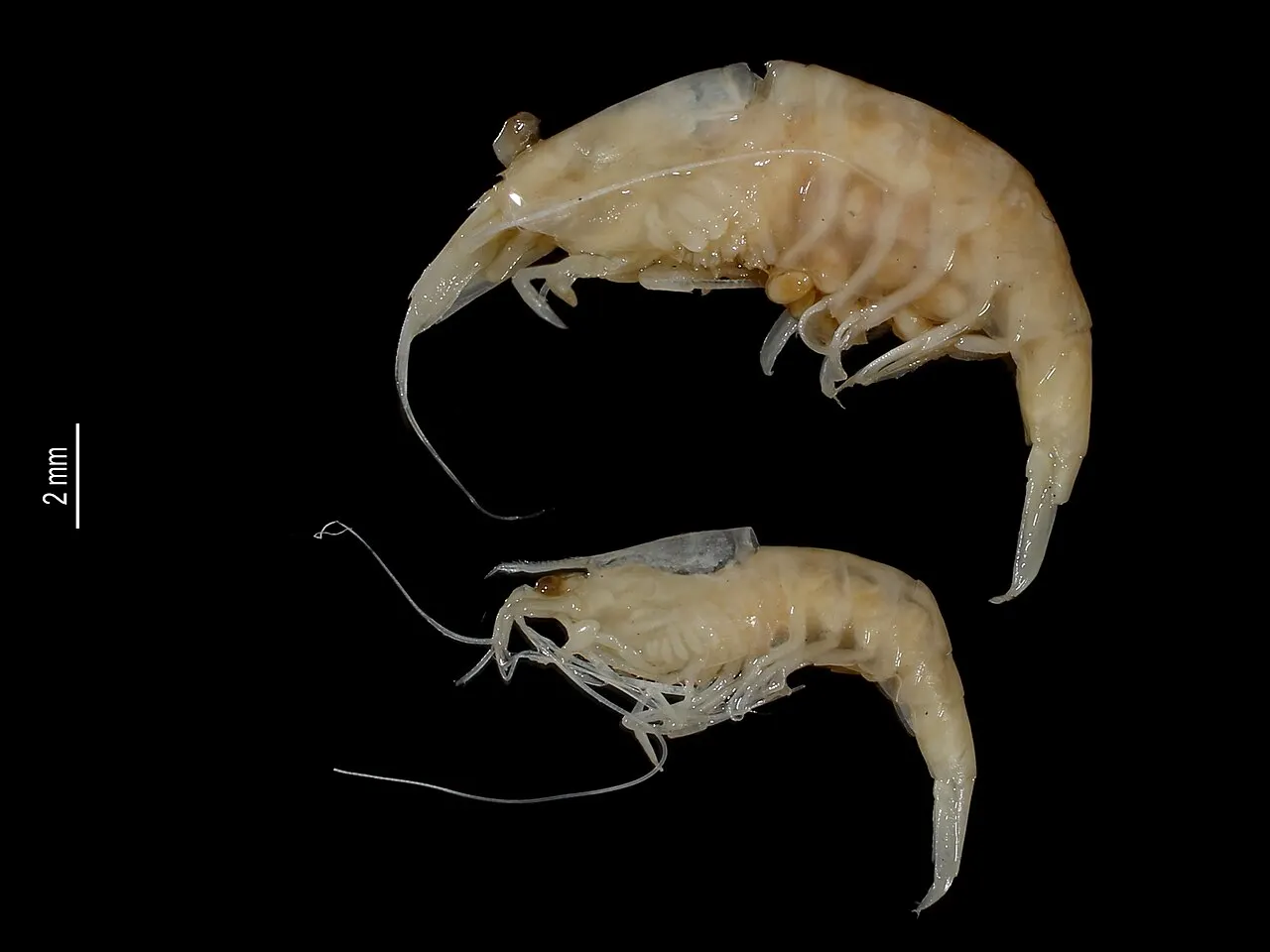
Caridina linduensis is a freshwater shrimp found only in Lake Lindu and the stream that drains it, on the Indonesian island of Sulawesi. It was described from specimens collected in 1904. The IUCN Red List lists it as Critically Endangered (assessed 2020), with introduced fish and land clearing named among the threats.
Where it lives
This shrimp is known from Lake Lindu and its outflow stream on Sulawesi, and from nowhere else. The Red List records Indonesia as its only country and permanent freshwater lakes as its habitat.
Around the lake it lives in shallow water near the shore, among fallen leaves, water plants and dead wood. In the outflow stream it is found on soft bottoms where the current is slow. It is reportedly less common in the lake than in the stream. A 2016 survey of 39 sites in the Lindu catchment, published in HAYATI Journal of Biosciences, found it in the lake and in very slow or almost still streams, never alongside Caridina dali.
Pins are Wikidata “endemic to” fields. Orange dots, when present, are GBIF occurrence tiles — survey bias included.
A species lost and found
The shrimp was named by J. Roux in 1904 from the specimens collected that year. For more than a century it was known only from that original series. A survey around the lake in 2011 recorded it again.
The lake system holds two other Caridina shrimps found nowhere else, Caridina kaili and Caridina dali. A 2025 study in Revista de Biologia Tropical collected 224 shrimps from three sites around the lake in 2023 and 2024 and found one of the three species at each site. It produced the first reference DNA barcodes for all three. Caridina linduensis and Caridina dali shared one gene variant, which the study put down to the marker's poor resolution, possibly because the species diverged recently.
Why it is in trouble
The Red List places the shrimp in its highest threat tier under criteria B1ab(iii,v), which cover a very small range with continuing decline. The threats it lists are problem species, including named introduced fish, and unintended harm from harvesting.
The 2016 survey named introduced Mozambique tilapia, common carp and an alien prawn as likely predators or competitors. Other reported pressures around the lake include walking catfish, conversion of land to farming, logging, and trampling and grazing of the shoreline by water buffalo. The Red List records the population trend as unknown.
What is being done
The lake lies inside Lore Lindu National Park and its UNESCO biosphere reserve, and was reportedly made a recreation park in 1978. The Red List says the shrimp occurs in a protected area, with 91 to 100 percent of the population inside one.
The listed conservation needs are site management and control of invasive species. Surveys of the outflow stream are still needed to learn the full extent of where the shrimp lives.
Sources
Written for this catalog in our own words from the sources below, checked against them on 12 November 2026. Population figures are estimates and carry the year they were made. Status and assessment year: IUCN. 2026. The IUCN Red List of Threatened Species. Version 2026-1. iucnredlist.org.
- IUCN Red List assessment, Caridina linduensis (2020)
- Caridina linduensis (encyclopedia entry)
- Insights from DNA barcoding endangered endemic Caridina shrimps in Lindu Lake, Revista de Biologia Tropical
- Habitat preferences and distribution of Caridina in Lake Lindu, HAYATI Journal of Biosciences 23 (2016)