Critically Endangered
Caridina loehae
Caridina loehae
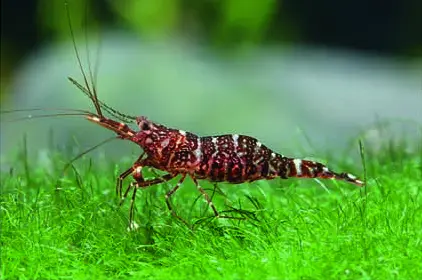
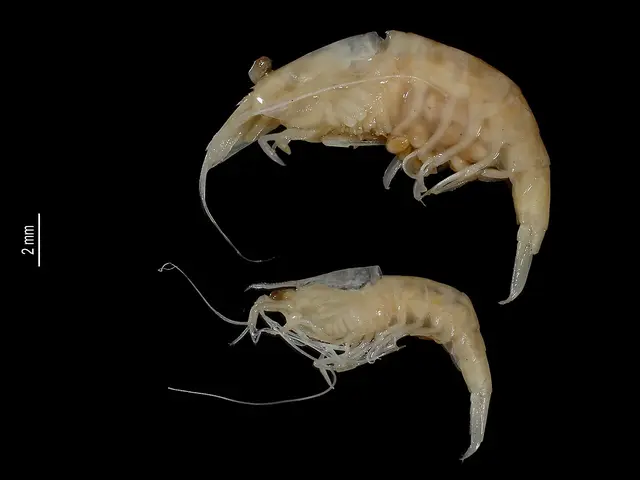
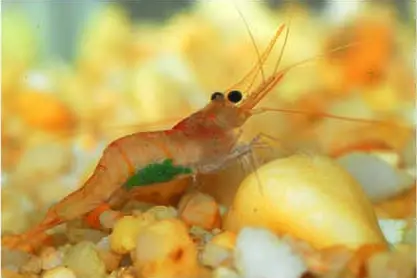
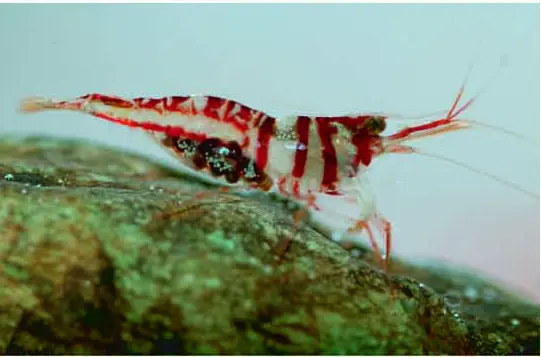
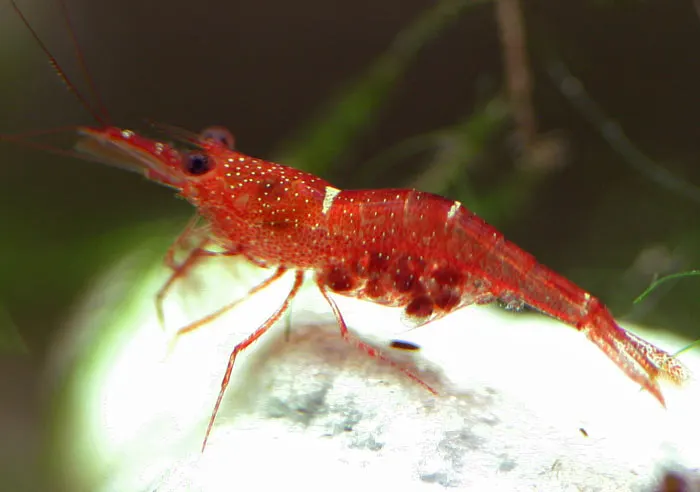
Caridina loehae is a freshwater shrimp found only in the Malili lake system of Sulawesi, Indonesia. Aquarists sell it as the orange delight or mini blue bee shrimp. The IUCN Red List classed it as Critically Endangered in 2019, citing two locations and a decreasing population.
Where it lives
This shrimp is endemic to the Malili lake system on the Indonesian island of Sulawesi. It was described by the zoologist Woltereck in 1937. The Red List counts two locations and treats the population as not severely fragmented.
It lives in the shallows. It has been recorded on rocky bottoms down to a maximum depth of about 5 m.
Pins are Wikidata “endemic to” fields. Orange dots, when present, are GBIF occurrence tiles — survey bias included.
How it lives
It is a freshwater species, and the Red List places it in inland wetland habitat. It is listed as not a migrant, and its generation length is about 3.3 years, so a population can turn over quickly.
No population size has been estimated, and no body size, diet or breeding details have been published that could be confirmed.
Why it is in trouble
The 2019 assessment lists the population as decreasing and classes the shrimp as Critically Endangered under criterion A3e, which covers a projected decline linked to introduced species. The recorded threat categories are mining and quarrying, harvesting of aquatic resources, dams and water management, invasive species, and domestic and urban waste water.
A nickel mine, pollution and two introduced fish, the flowerhorn cichlid and the pacu, are also reported as pressures. The flowerhorn is an aquarium-bred fish that has been released into Lake Matano.
The shrimp is also traded. The Red List records international use as a pet or display animal, and it is sold under colour names such as orange delight.
What is being done
No recovery programme aimed only at this species is described. In Lake Matano, a small grant project that began in November 2024 targets a related shrimp, Caridina dennerli, which the Species Conservation Fund lists as Critically Endangered.
The project aims to reduce flowerhorn cichlids by buying the fish from local fishers and running a fishing competition with rewards, and it runs education programmes for the local community, fishers and government staff. About 50 kg of the fish had been removed by the time of its first-phase report. It does not target C. loehae directly, but the same lake pressures apply to the lake's shrimps in general.
Sources
Written for this catalog in our own words from the sources below, checked against them on 12 November 2026. Population figures are estimates and carry the year they were made. Status and assessment year: IUCN. 2026. The IUCN Red List of Threatened Species. Version 2026-1. iucnredlist.org.