Endangered
Southern tuco-tuco
Ctenomys australis
The southern tuco-tuco (Ctenomys australis) is a burrowing rodent that lives only in the coastal sand dunes of Buenos Aires Province, Argentina. It digs large tunnel systems, defends them hard, and has been rated Endangered by the IUCN Red List since its 2018 assessment because its dune habitat is shrinking.
How to recognise it
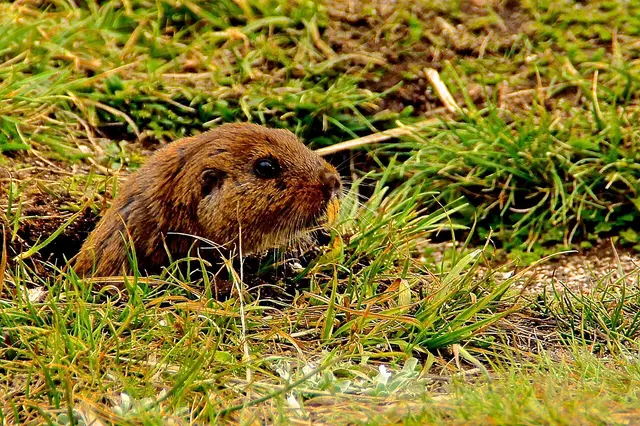
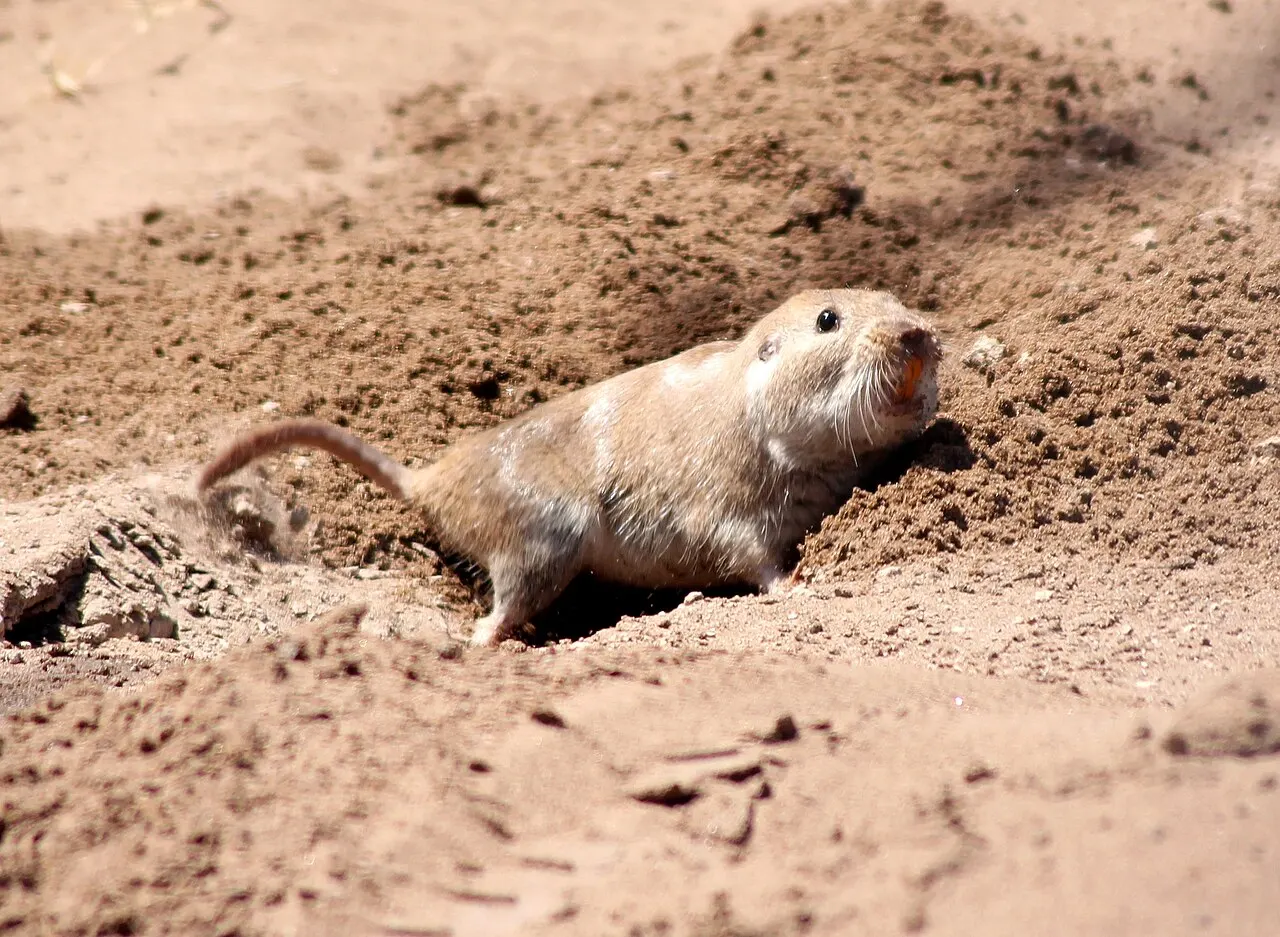
It's one of the larger tuco-tucos, weighing about 250 to 600 grams, with a head and body of 15 to 25 centimeters and a hairless tail of 6 to 11. The head is big, the legs short and the incisors prominent. The fur is dark brown to black above and pale grey beneath.
Where it lives
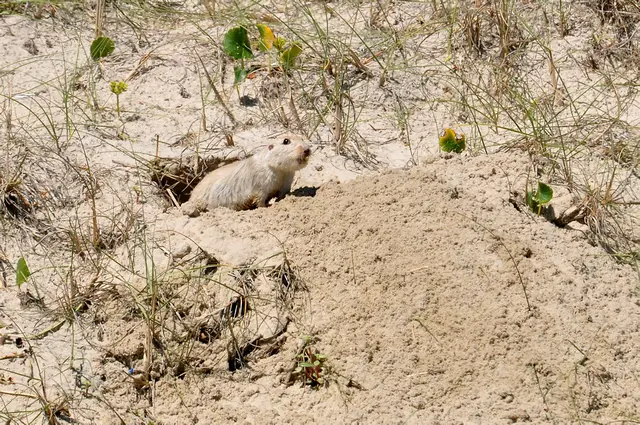
Its range is a narrow strip of Atlantic coast from Necochea to Bahía Blanca. It lives in dunes with sparse plant cover and deep soil, and the Red List habitat is coastal sand dunes. It reportedly shares much of this coast with the Talas tuco-tuco, the two separating by soil, with the southern species on softer ground.
A Mohamed bin Zayed Species Conservation Fund project carried out eight field trips in late 2024 and 2025 near Monte Hermoso, Pehuen-Co, Necochea, Marisol and Reta. Its habitat model, built from 463 records, tied the animal to low ground near the sea and rated active dunes as the most suitable land cover. The model put suitable area at roughly 387 square kilometers along the coast, and a separate GeoCat calculation gave an extent of occurrence of about 1,657 square kilometers and an area of occupancy of 172.
Pins are Wikidata “endemic to” fields. Orange dots, when present, are GBIF occurrence tiles — survey bias included.
How it lives
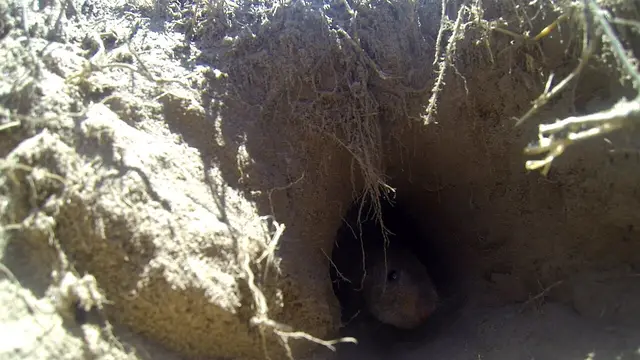
It's reportedly mostly solitary, strongly territorial and probably polygynous. It eats grassland plants and apparently favors grasses over broadleaf herbs all year. Gestation is said to take about 100 days, with up to two litters a year of roughly three pups (range two to six). Owls prey on tuco-tucos in this area, though possibly more on the larger Talas species.
A 2010 genetic study in BMC Genetics found that dispersal wasn't restricted at a scale of about 4 kilometers, and that males dispersed more than females.
Why it is in trouble
The Red List cites tourism and recreation areas and small-holder plantations, both of which convert or degrade dune habitat. It records five locations, a severely fragmented population and a decreasing trend. The 2010 genetic study points to urban development and forestry as threats to the dunes. The 2024 to 2025 field project adds wind energy facilities, which it says have markedly changed soil structure and native plants in the area.
What is being done
The Red List lists site protection and site management, and records no action recovery plan or systematic monitoring scheme. In 2025 the field project's researchers proposed that the national mammal assessment run by the Argentine Society for the Study of Mammals keep the species as Endangered. Their work continues with connectivity analyses to find the largest, best-conserved habitat patches, plus genomic sequencing and outreach in coastal towns.
Sources
Written for this catalog in our own words from the sources below, checked against them on 12 November 2026. Population figures are estimates and carry the year they were made. Status and assessment year: IUCN. 2026. The IUCN Red List of Threatened Species. Version 2026-1. iucnredlist.org.