Extinct
Sevan trout
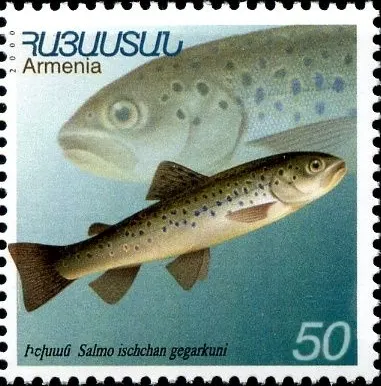
Salmo ischchan
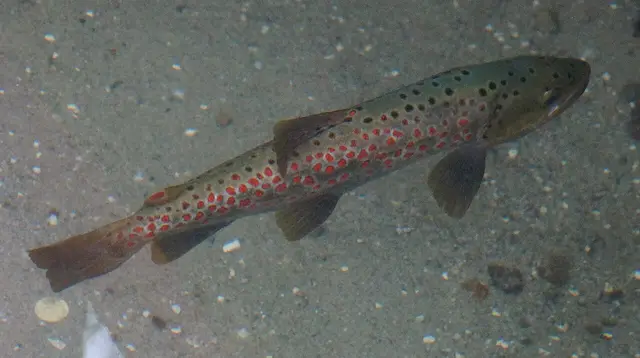
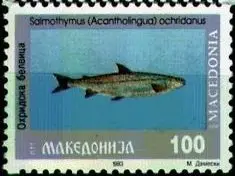
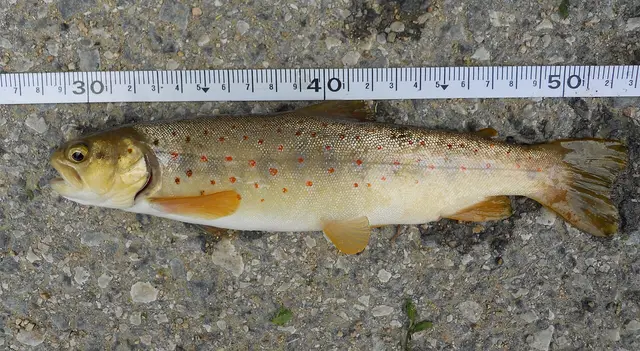
The Sevan trout (Salmo ischchan) was a group of trout forms found only in Lake Sevan, high in the Armenian mountains. The IUCN Red List classes it Extinct in its 2026 assessment, though hatchery stocks of some forms are still kept going and a related population lives in Kyrgyzstan.
Update 10 November 2026: the IUCN Red List now lists this species as Extinct (assessed 2026, Red List version 2026-1). This catalog covers animals recorded as Critically Endangered, Endangered or Extinct in the Wild, so the page is kept for reference. Read the assessment.
What it was
Lake Sevan sits at about 1,900 m above sea level, a high mountain lake roughly 75 km long. Its trout were first named as a species in 1877 and are closely related to the brown trout. Rather than one fish, they were a cluster of forms, each spawning at a different time or place.
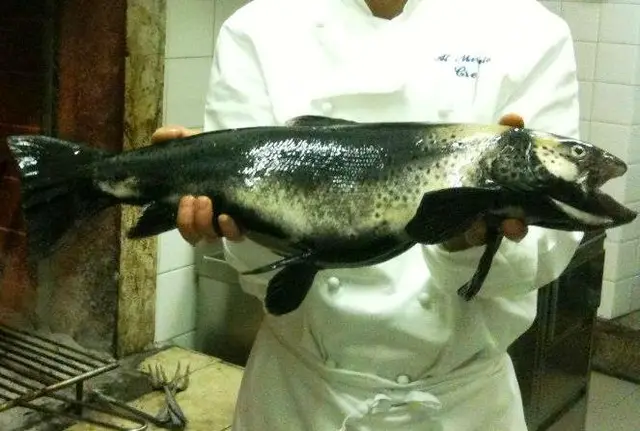
The winter bakhtak was the giant, reaching 90 cm and 15 kg, and spawned in the lake from November to March. The summer bakhtak spawned in rivers from May to July. The gegharkuni spawned in tributary rivers from September to January, and the bojak was a slow growing dwarf form that spawned in the lake in October and November.
A 2022 genomic study in Molecular Phylogenetics and Evolution found that the lake forms and local stream trout descend from a single lineage, ultimately from the Caspian salmon, and are so closely related that they look like a young, still diverging group. A 2018 analysis of old fish scales reportedly could not separate the four forms by mitochondrial DNA, yet a 2020 checklist of Armenian fish still lists them as separate species.
Why it is in trouble
The lake has been used for power generation since 1938. By 1990 its level stood about 18.5 m below the original, its surface area had shrunk by 12 percent and its volume by about 42 percent. The main winter trout spawning grounds dried out in 1963, and the summer trout's lake spawning grounds dried out earlier, in 1948.
Other pressures piled on. Whitefish were introduced in the 1920s and competed with the trout. The trout fed mostly on small crustaceans called gammarids, which nearly vanished as aquatic plants declined. Pollution, irrigation diversion, overfishing and poaching added to the damage. The IUCN lists dams, water abstraction, nutrient loads, sewage and run-off among the threats.
Trout once made up 60 to 65 percent of the commercial catch. An FAO review citing work up to 1997 puts them at about 1 percent. Trout fishing was banned in 1976, though poaching continued. The early-spawning winter type went extinct once the water dropped by about 10 m, and a genomic study reports that two of the lake forms were lost in the 1980s.
Pins are Wikidata “endemic to” fields. Orange dots, when present, are GBIF occurrence tiles — survey bias included.
What is being done
Hatcheries began stocking the lake in 1923, and from 1926 about 20 million larvae a year were released, mostly gegharkuni, though one estimate suggested 90 percent of released fry died within a month. Gegharkuni and summer trout are now mainly kept going through hatchery propagation, with eggs from fish spawning in rivers such as the Makenis and Masrik. Egg collection fell sharply between 1975 and 1987, from 62 million to 6.7 million for gegharkuni.
Gegharkuni eggs were also sent to Lake Issyk Kul in Kyrgyzstan in 1930 and 1936. The fish grew larger there, to about 89 cm and 17 kg, against about 60 cm and 4 kg at Sevan. A restoration plan from the 1990s anticipates raising the level of Lake Sevan by 6 to 8 m. The IUCN records no recovery plan or monitoring scheme.
Sources
Written for this catalog in our own words from the sources below, checked against them on 12 November 2026. Population figures are estimates and carry the year they were made. Status and assessment year: IUCN. 2026. The IUCN Red List of Threatened Species. Version 2026-1. iucnredlist.org.