Endangered
Ohrid trout
Salmo letnica
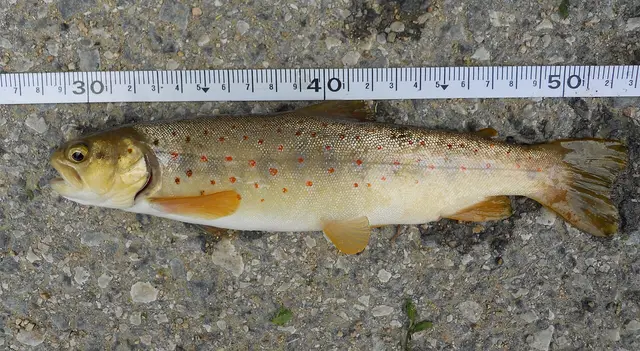
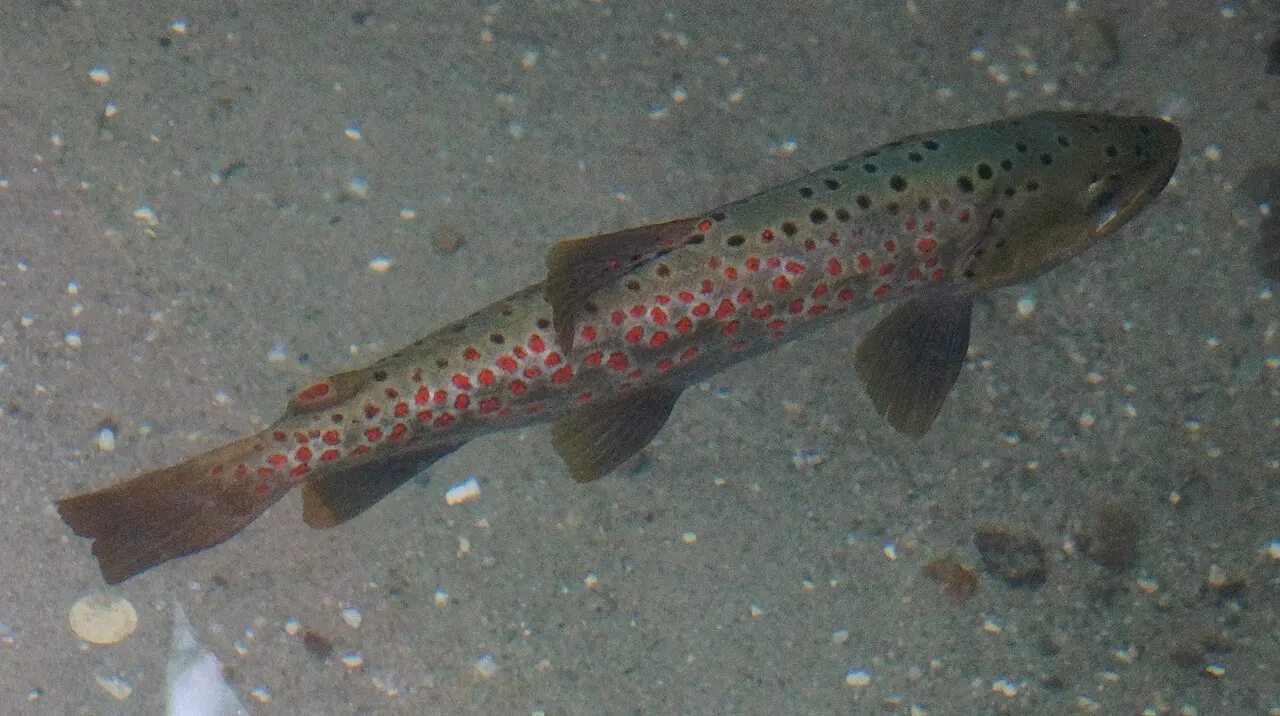
The Ohrid trout (Salmo letnica) is a prized food fish that lives only in Lake Ohrid, on the border of North Macedonia and Albania, and in the rivers that feed or drain it. The IUCN Red List rated it Endangered in 2024. Heavy fishing and a damaged lake have cut its numbers sharply.
Where it lives
Lake Ohrid sits at about 700 m above sea level, covers roughly 350 to 385 square kilometres (sources differ) and drops to 290 m at its deepest. It is among the oldest lakes in Europe. The trout is found in the lake itself, in its tributaries and in the Black Drin river that carries water out of it. The IUCN treats the whole population as living in a single location.
The fish was described to science by Stanko Karaman in 1924. It belongs to the brown trout group, and its exact taxonomic status is still debated. Up to four lake forms have been proposed as separate species, but morphological and genetic data have not backed that split. The forms are reported to differ mainly in spawning season.
Pins are Wikidata “endemic to” fields. Orange dots, when present, are GBIF occurrence tiles — survey bias included.
How it lives
Ohrid trout live in deep water and move up to spawn in winter. The Albanian closed season, 1 December to 1 March, is set to match the natural spawning period, and the proposed forms are reported to breed at different times between October and July. The fish matures at three to four years old and has pink flesh.
Old stories describe fish of 30 kg and 30 years. A 2008 report found that fish about half that size and age had been documented, but nothing close to it had been landed for two decades.
Why it is in trouble
Fishing did most of the early damage. Nets grew from the legal 500 m to more than a kilometre long, with finer mesh than permitted, and boats carried a dozen or more lines instead of four. Up to 2,500 permits were issued for a 13-day season, and registered catches reached about eight tonnes a day. When Albania's communist government fell in 1991, the Albanian side of the lake, which had sheltered the trout, was fished as heavily as the rest, and the population declined sharply.
The numbers from the hatchery tell the story. Fertilised eggs at the Ohrid Hydrobiological Institute fell from 21.5 million in 1989 to 1.5 million in 2003.
The lake itself is under strain too. The IUCN lists nutrient loads, sewage, soil erosion and sedimentation, pesticides and herbicides, rubbish, groundwater pumping and recreation among the pressures. Reporting in 2008 also flagged rising nutrient levels and growing numbers of other fish as risks to any recovery. The current population trend is recorded as unknown, and no overall population count exists.
What is being done
North Macedonia banned fishing across its part of the lake in March 2004, with penalties for poachers and for traders and restaurants selling the fish. The ban reportedly ran until 2014. In Albania, a 2003 law bans fishing only during spawning, and a 2015 report listed unregistered fishers, banned gear and undersized mesh as continuing problems. Licences there restrict fishing areas but not the amount caught.
Both countries run hatcheries. Fishers are paid to bring in spawning trout, the eggs are stripped and fertilised, and the adults go back into the lake. In one Albanian season described in 2015, about 1 million fertilised eggs gave 700,000 fingerlings, and Albania's ministry expects about a million young a year, though that isn't always reached. North Macedonia releases larvae instead. In 2008, workers found eggs in wild nests for the first time in about twelve years. Nobody has shown how much stocking adds to the wild population.
Ohrid trout were also stocked outside their home range, including about 500,000 moved to Serbia's Vlasina Lake in 1953, and in lakes in Minnesota, Colorado and Tennessee from 1968 onward. Most of those introductions failed to establish breeding populations, though spawning has been seen in Tennessee. The current status of the Vlasina fish is unknown.
Sources
Written for this catalog in our own words from the sources below, checked against them on 12 November 2026. Population figures are estimates and carry the year they were made. Status and assessment year: IUCN. 2026. The IUCN Red List of Threatened Species. Version 2026-1. iucnredlist.org.