Endangered
Salmo peristericus
Salmo peristericus
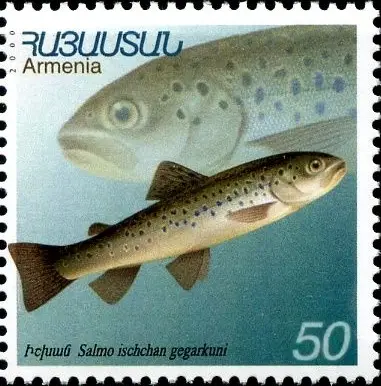
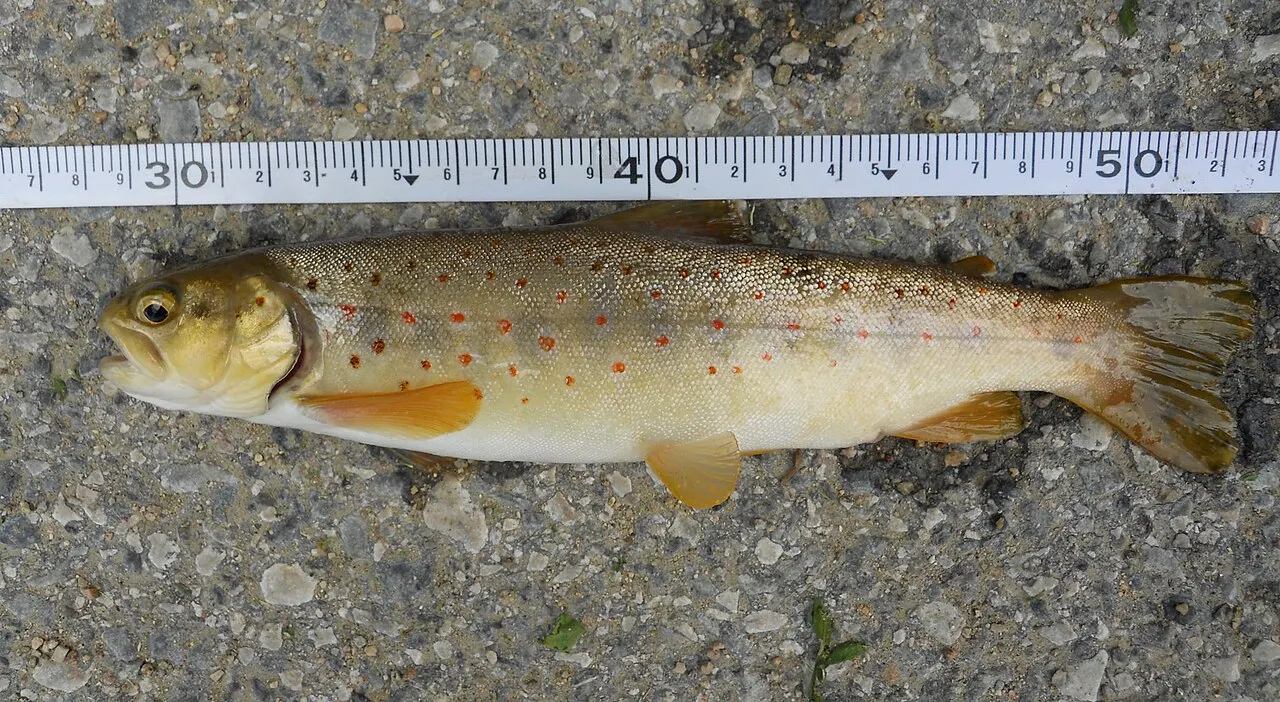
The Prespa trout (Salmo peristericus) is a small freshwater trout found only in the Lake Prespa basin on the border of Greece and North Macedonia. The IUCN Red List rates it Endangered (2024 assessment, population decreasing). It survives in four known populations, in headwater streams.
How to recognise it
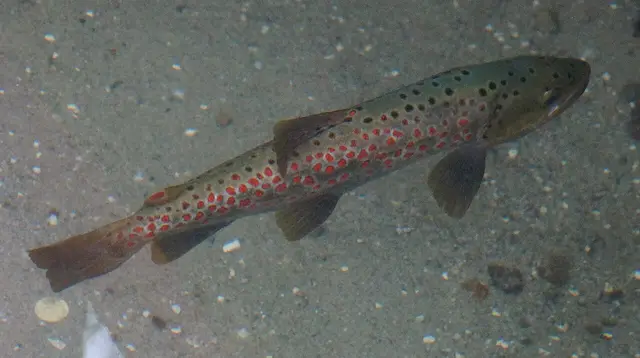
It reaches about 35 cm in standard length. Among Balkan trouts it is told apart by a small black spot on the gill cover and upper flank, red ringed spots along the side, 16 to 18 gill rakers and a body depth of 19 to 23 percent of its length. Even so, it is hard to separate from nearby trouts by appearance alone.
Where it lives
Four populations are known: one in the Agios Germanos stream in northwestern Greece, and three in North Macedonia, in the Brajcinska and Kranska rivers and the Leva Reka stream. The IUCN counts four locations, an extent of occurrence of about 1,384 square kilometres and an area actually occupied of roughly 100 square kilometres.
The trout is thought to have lived originally in the lake and run up streams to spawn. Water abstraction and altered habitat have cut off the lower stretches of most streams, so it is now confined to the upper reaches, possibly only two streams according to a 2007 handbook. The IUCN lists permanent rivers and streams and permanent freshwater lakes as its habitat.
Pins are Wikidata “endemic to” fields. Orange dots, when present, are GBIF occurrence tiles — survey bias included.
How it lives
It spawns in November, according to a 2007 European freshwater fish handbook. The IUCN describes the species as non-migratory and as gathering in groups all year. Detailed information on diet and lifespan is thin.
Why it is in trouble
The 2024 assessment rates it Endangered under criteria B1ab(iii,v)+2ab(iii,v), citing a small, shrinking range, declining habitat quality and a continuing fall in numbers. Listed pressures include water taken from streams and groundwater for farming and homes, drought, sewage, rubbish, nutrient pollution, soil erosion and silting, small dams, grazing, and small-scale fishing.
Genetic work places the Prespa trout close to the Adriatic lineage of brown trout and does not support it as a distinct species. Researchers argue it should still be protected as an evolutionarily significant unit.
What is being done
A species action plan was published in 2008. The IUCN lists a recovery plan, a monitoring scheme, a harvest management plan and an area-based management plan as in place, with the species occurring in at least one protected area. Habitat restoration, site management and harvest management are the recommended actions. It is not held in captive breeding programmes and has not been reintroduced anywhere.
Sources
Written for this catalog in our own words from the sources below, checked against them on 12 November 2026. Population figures are estimates and carry the year they were made. Status and assessment year: IUCN. 2026. The IUCN Red List of Threatened Species. Version 2026-1. iucnredlist.org.