Endangered
Belvica
Belvica
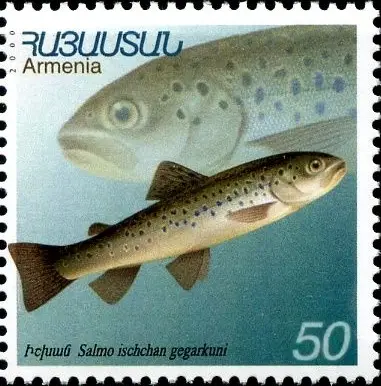
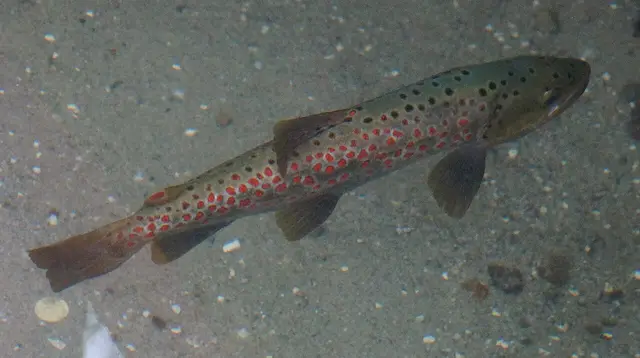
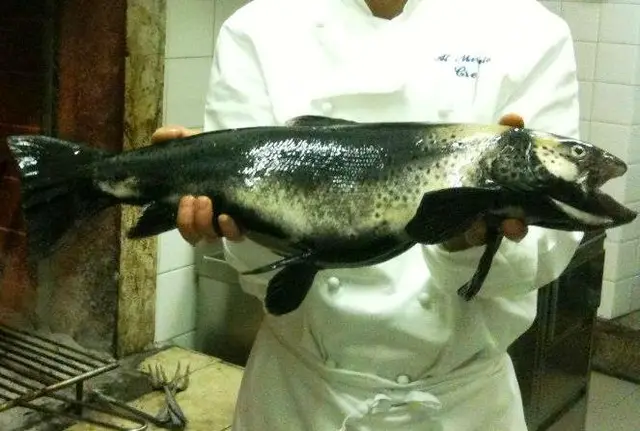
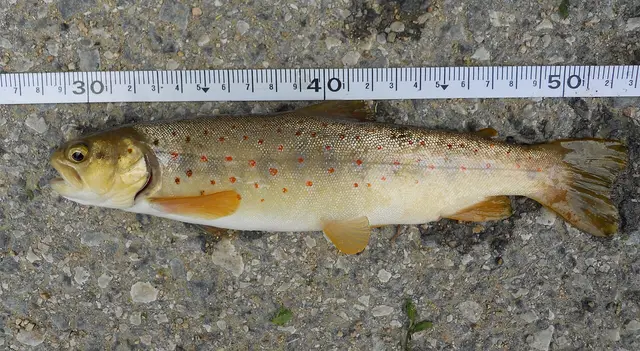
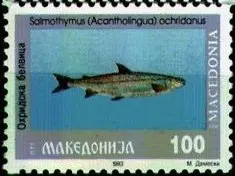
The belvica (Belvica) is a small trout found only in Lake Ohrid, on the border of North Macedonia and Albania. The IUCN Red List assessed it as Endangered in 2024, citing a tiny range and growing pollution of the lake. It is an old lineage, distinct from the lake's other trout.
What it is
The belvica (belushka in Albanian) is a freshwater salmonid, usually under 30 cm long and under half a kilogram. The largest recorded fish measured about 34 cm and weighed 685 g, and the oldest recorded age is 12 years. Steindachner described it in 1892, and it spent decades under other genus names, Acantholingua and Salmothymus.
Genetic work now places it in Salmo, closest to the softmouth trout. A European research project estimated from mitochondrial DNA that the belvica and softmouth trout diverged from the brown trout lineage more than 4 million years ago, so the belvica is an old and distinct lineage, not a local form of brown trout.
Where it lives
It is endemic to Lake Ohrid, shared by North Macedonia and Albania. The IUCN estimates its area of occupancy at 360 square kilometres and its extent of occurrence at 386, and treats the whole lake as a single location.
Adults live in deep, cold water. The IUCN gives 40 to 70 m, FishBase notes fish near the surface in summer, and most winter catches come from 25 to 50 m.
Pins are Wikidata “endemic to” fields. Orange dots, when present, are GBIF occurrence tiles — survey bias included.
How it lives
Belvica feed on small bottom-living invertebrates, zooplankton and fish larvae. Adults mature at 3 to 4 years. Spawning mainly runs from late November to January or February, in shore-side stonewort beds a few metres deep and over fine sediment 20 to 40 m down. Some fish may spawn as late as June or July.
Eggs take roughly 45 to 55 days to hatch at 10 degrees Celsius. The IUCN notes that the species' life history has not been studied in detail for about half a century.
Why it is in trouble
Lake Ohrid has seen rising urbanisation, tourism and farming since the late 1940s. The assessment lists nutrient loads, sewage, rubbish, sedimentation and erosion, pesticides, groundwater abstraction, recreation and changes to the shoreline. Loss of the stonewort beds used for spawning would shrink its breeding habitat.
Belvica has also been bred in fish farms for more than 50 years, and farmed fish have been deliberately crossed with the Ohrid trout (Salmo letnica). The IUCN says hybridisation has been reported only occasionally and it is unclear whether it comes from natural processes or from hatchery fish released into the lake. Some sources name overfishing as a threat, but the IUCN found no clear evidence of it.
What is being done
The species occurs in at least one protected area and a harvest management plan is in place. The assessment records no recovery plan, no systematic monitoring and no captive or release programme. Habitat restoration is the one conservation action listed. The population trend is unknown.
Sources
Written for this catalog in our own words from the sources below, checked against them on 12 November 2026. Population figures are estimates and carry the year they were made. Status and assessment year: IUCN. 2026. The IUCN Red List of Threatened Species. Version 2026-1. iucnredlist.org.