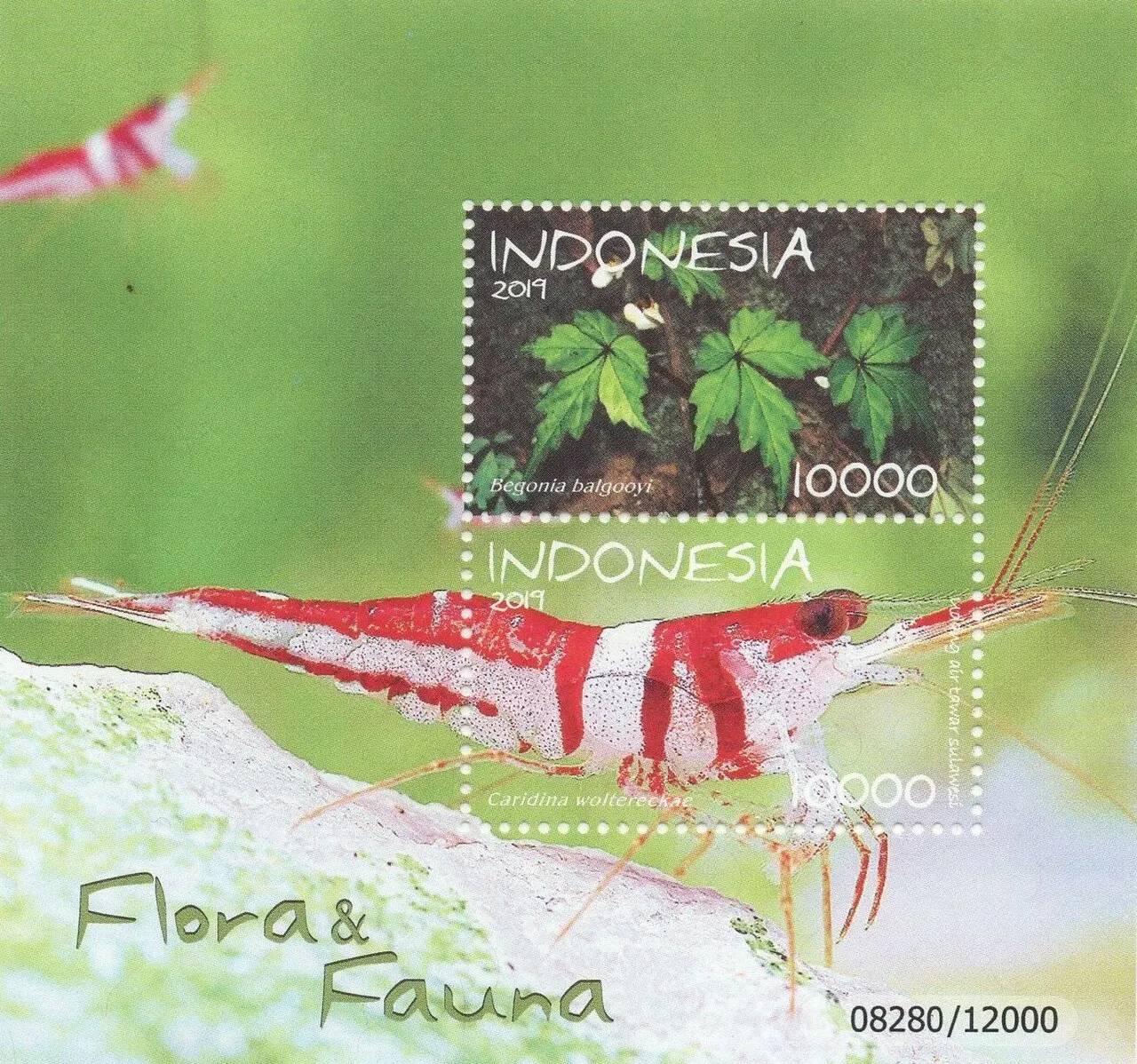
Critically Endangered
Caridina woltereckae
Caridina woltereckae
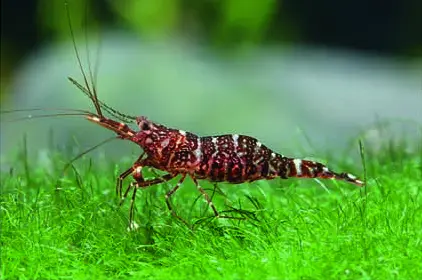
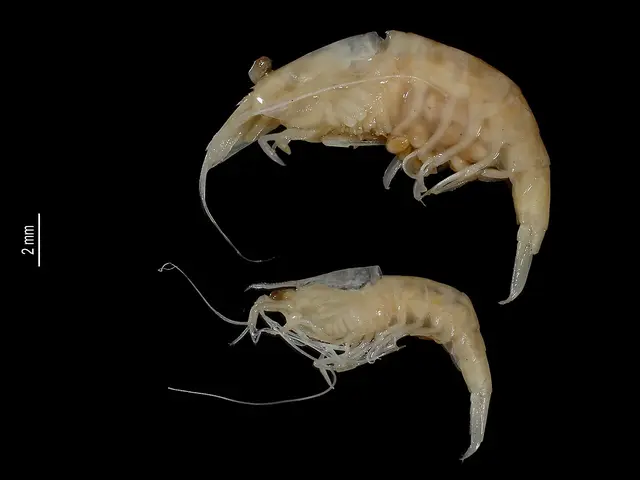
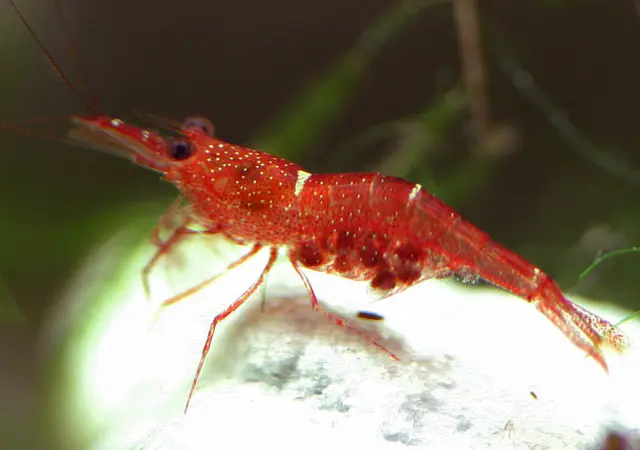
Caridina woltereckae, the Sulawesi harlequin shrimp, is a freshwater shrimp found only in Lake Towuti on the Indonesian island of Sulawesi. The IUCN rated it Critically Endangered in 2019, mostly because of projected future declines. It is traded for aquariums, which adds pressure on the wild stock.
How to recognise it
This is a freshwater shrimp in the family Atyidae. The aquarium trade calls it the Sulawesi harlequin shrimp. It looks much like Caridina spongicola, which lives in the same lake, but spongicola is smaller and less strongly coloured.
Cai, Wowor and Choy described it as a new species in 2009. The sources consulted give no body size for it.
Where it lives
Lake Towuti is the largest and southernmost of the Malili lakes, a chain of five lakes in central Sulawesi that hold many shrimps, fishes, crabs and snails found nowhere else. C. woltereckae is endemic to Towuti and is found on rocky substrate.
The Red List treats Towuti as a single location. It estimates an area of occupancy of 60 square kilometres within an extent of occurrence of 468 square kilometres, and says the population is not severely fragmented. It does not give a population size or a trend.
Pins are Wikidata “endemic to” fields. Orange dots, when present, are GBIF occurrence tiles — survey bias included.
Why it is in trouble
The 2019 assessment used criterion A3e, which is based on a projected population reduction. The assessors projected a reduction of about 90 percent, citing effects such as introduced species, hybridisation, pathogens, pollutants, competitors or parasites. The generation length is estimated at 3.3 years.
Threats on the record are sewage and nickel mining, each scored as a medium impact with slow but significant declines across the whole range, plus dams (low), unspecified introduced species (low) and large-scale harvest for sale (low). Introduced flowerhorn cichlids have also reportedly been named as a danger.
Collecting for the aquarium trade, national and international, is the use the Red List documents.
What is being done
The assessment lists harvest management and trade management as conservation actions, plus research into threats, harvest, ecology and distribution. It does not say whether any quota or enforcement is actually working. A fishkeeping author writing about the Malili lakes argues that collecting living specimens should be sensibly limited, because some colourful species there have very small populations.
Sources
Written for this catalog in our own words from the sources below, checked against them on 12 November 2026. Population figures are estimates and carry the year they were made. Status and assessment year: IUCN. 2026. The IUCN Red List of Threatened Species. Version 2026-1. iucnredlist.org.