Endangered
Puntius tambraparniei
Dawkinsia tambraparniei
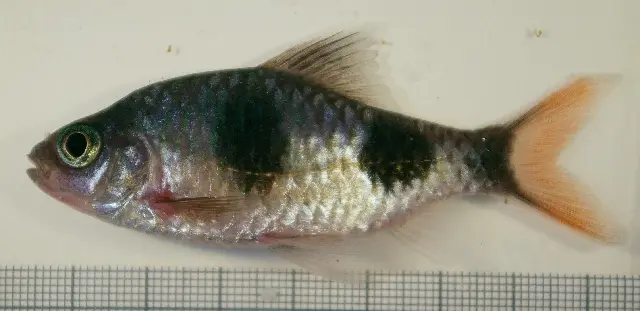
Dawkinsia tambraparniei, listed in older sources as Puntius tambraparniei, is a small barb found only in the Tambraparni River basin of the Western Ghats in Tamil Nadu, India. The IUCN Red List assessed it as Endangered in 2015, citing a small, shrinking area and declining habitat quality.
How to recognise it
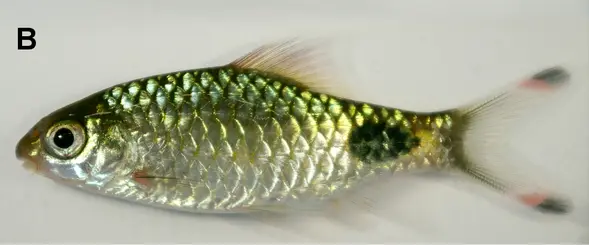
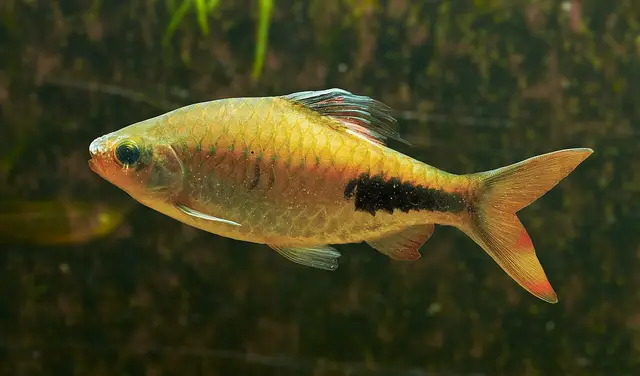
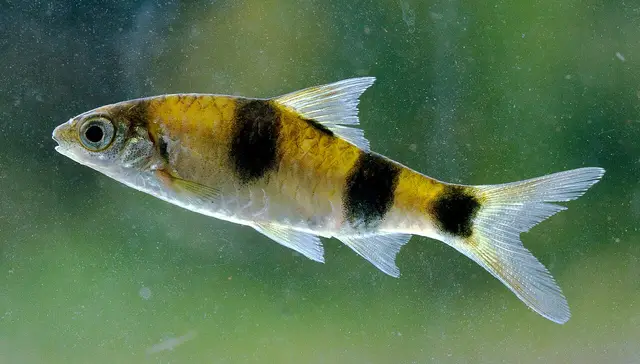
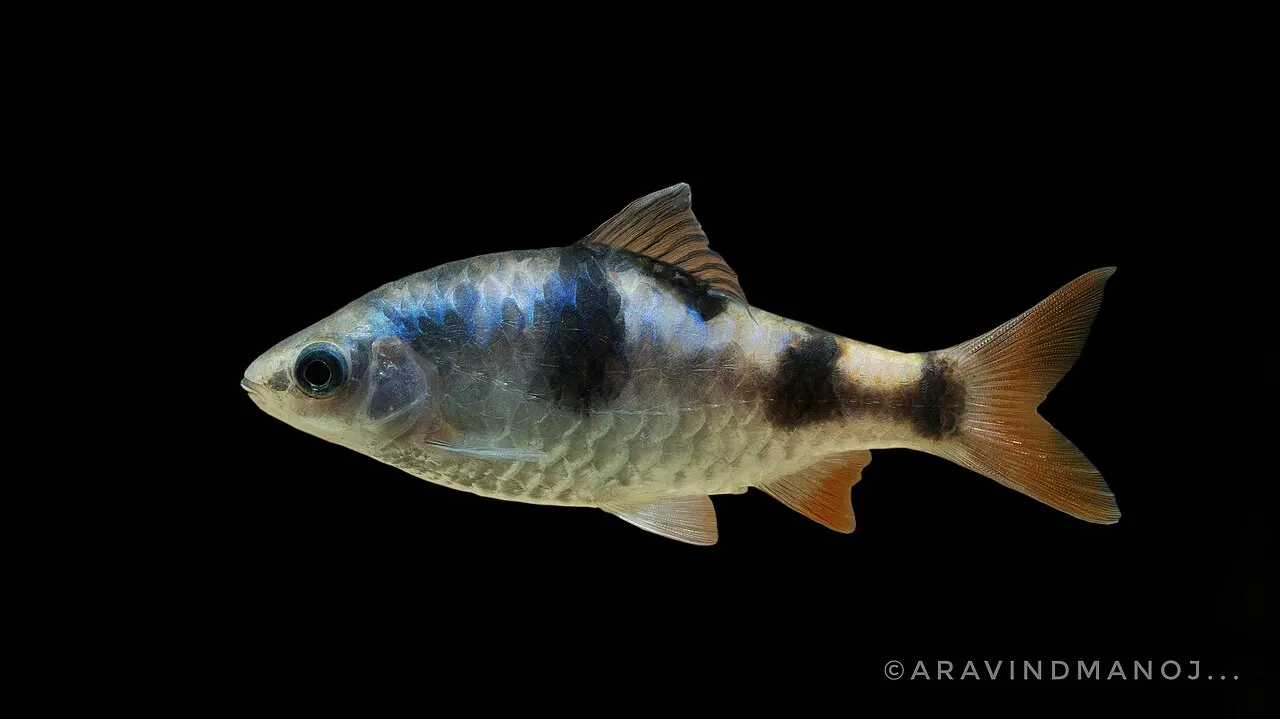
This is a slim-bodied freshwater fish in the carp and minnow family (Cyprinidae), reaching about 12.8 cm in standard length. Adults have prominent black marks on the body in front of the anal fin and a pair of barbels at the mouth. In adult males the branched rays of the dorsal fin stretch into filaments, which helps separate the species from its close relative Puntius arulius.
E. G. Silas described it in the early 1950s (sources give 1953 or 1954), reportedly first as a subspecies of Puntius arulius. It was later moved to the genus Dawkinsia, which is named for the evolutionary biologist Richard Dawkins.
Where it lives
It is confined to the Tambraparni basin (also spelled Thamirabarani or Tamiraparani). The IUCN estimates its extent of occurrence at 4,000 to 4,500 square kilometres, but the area it actually occupies is only 40 to 90 square kilometres, spread over three to five locations between roughly 50 and 600 m above sea level.
A 2020 fish survey of Kalakad-Mundanthurai Tiger Reserve found it at streams including Karayar, Manimuthar, Servalar and Papanasam, and called it the only endemic species there with a wide spread through the middle and lower reaches of the basin. Several other endemic fishes are confined to the headwaters. It lives in flowing streams and rivers, and FishBase describes it as living in the middle to lower water, near the bottom.
Pins are Wikidata “endemic to” fields. Orange dots, when present, are GBIF occurrence tiles — survey bias included.
Why it is in trouble
The IUCN says the area it occupies is still shrinking and the population is decreasing. It lists tourism and recreation areas, housing and urban development, run-off, sewage, small-scale harvest and other changes to the river as threats. Sand mining is also reportedly behind recent declines. The 2020 survey adds that tea estates and household waste in the reserve can make streams unsuitable for specialised endemic fishes.
Because the species has so few locations, one polluted or dredged stretch can matter a great deal.
What is being done
Part of its range is in protected land. The IUCN reports that about 10 percent of the population is inside protected areas, that it occurs in at least one, and that conservation sites have been identified over part of its range. No recovery plan, monitoring scheme or harvest management plan was in place at the 2015 assessment. The assessment recommends resource and habitat protection, site protection, a genome resource bank and captive breeding.
Sources
Written for this catalog in our own words from the sources below, checked against them on 12 November 2026. Population figures are estimates and carry the year they were made. Status and assessment year: IUCN. 2026. The IUCN Red List of Threatened Species. Version 2026-1. iucnredlist.org.