Endangered
Dawkinsia srilankensis
Dawkinsia srilankensis
The blotched filamented barb is a small freshwater fish found only in Sri Lanka, in streams of the Kalu River basin. The IUCN's 2019 assessment rates it Endangered, with a decreasing population across about five locations, threatened by dams and by silt from upstream mining.
How to recognise it
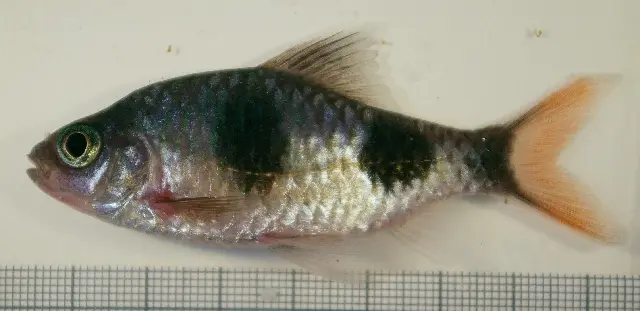
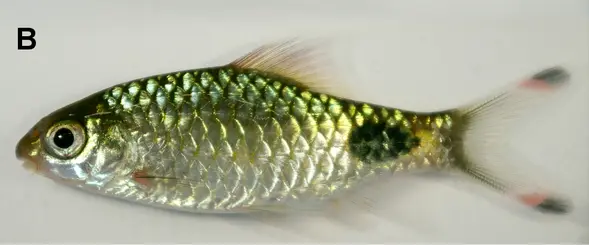
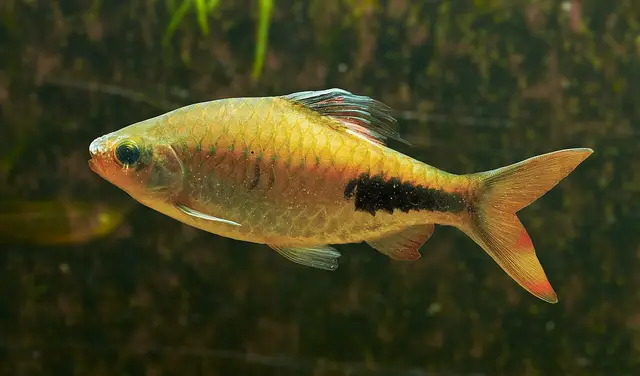
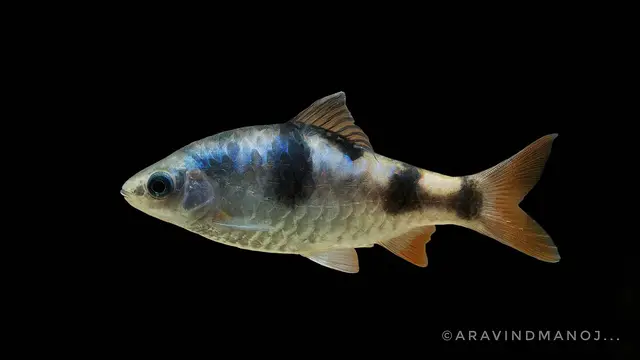
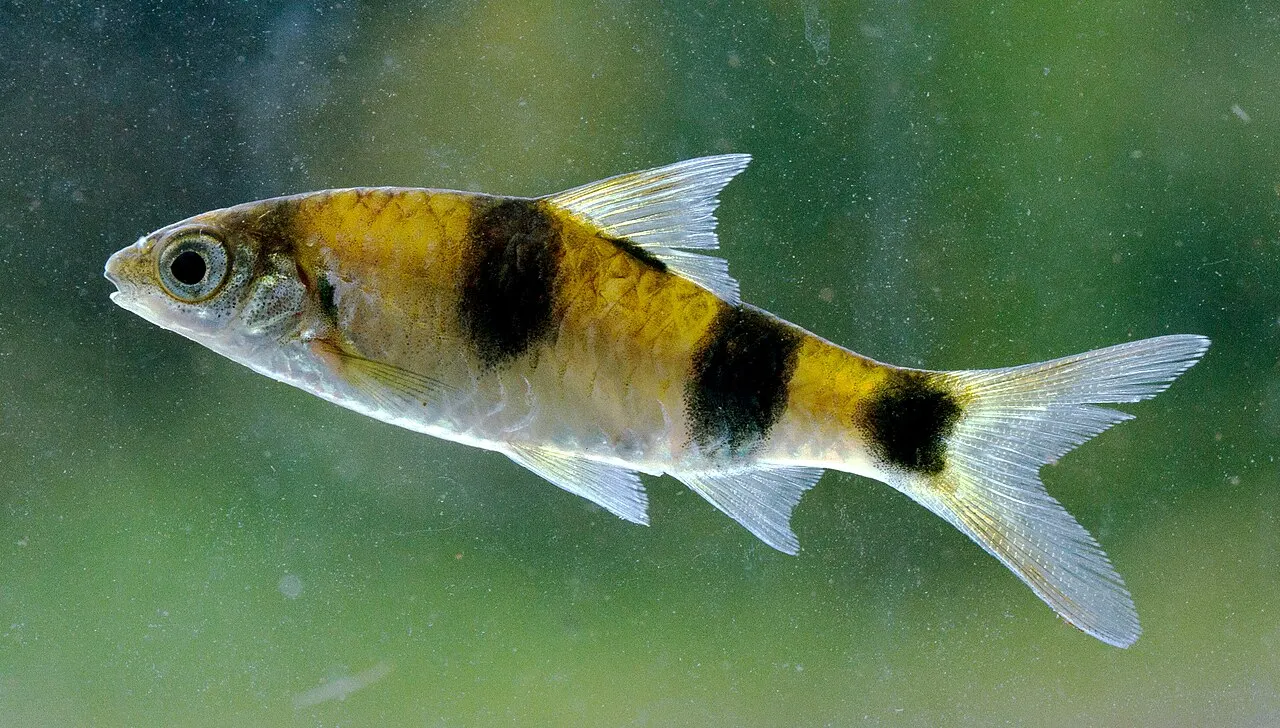
It's a barb of the carp family that reaches about 10 cm. Adults stand out from similar Sri Lankan barbs by bold black markings on the body ahead of the anal fin. The mouth sits low on the head, and the lower lip is absent in the middle.
Senanayake described it in 1985 as Barbus srilankensis. It later sat in the genus Puntius before being moved to Dawkinsia.
Where it lives
The species is endemic to Sri Lanka and is tied to the Kalu River. Older descriptions place it on the eastern slopes of the Knuckles Hills, at the Kalu River near Pallegama, at 300 to 500 m, and call that the only known population.
The 2019 IUCN assessment is broader. It counts five locations between 67 and 561 m, an extent of occurrence of about 1,741 square kilometres and an area of occupancy of about 124 square kilometres. Its habitat is permanent rivers and streams.
Pins are Wikidata “endemic to” fields. Orange dots, when present, are GBIF occurrence tiles — survey bias included.
How it lives
It's a fish of open water in fast, pebbly stretches, and it isn't found over silty beds. Each one keeps its own patch of river a few square metres across, and fish of similar size often gather in loose shoals. The IUCN lists it as not a migrant.
Why it is in trouble
The IUCN rates dams (size unknown) as the most serious threat, with a medium impact across most of the range. Mining and quarrying, soil erosion and silting, and small-scale harvesting are each scored as low impact. Older descriptions blame silt from upstream gem mining for choking the Kalu, a serious problem for a fish that needs clean pebbles.
The IUCN also records use of the species as food and as a pet or display fish. The aquarium trade isn't thought to be large, since older accounts say wild stocks are too small to export.
What is being done
The IUCN lists site and habitat protection as the actions needed. It records no species recovery plan and no monitoring scheme, and says the fish occurs in at least one protected area. It has reportedly been bred at the Dehiwala zoo in Colombo, now the National Zoological Gardens.
In January 2024 the zoo's aquarium section reported breeding about ten endemic Sri Lankan fish and planned to seek wildlife department approval to release some. That report didn't name this species among those listed.
Sources
Written for this catalog in our own words from the sources below, checked against them on 12 November 2026. Population figures are estimates and carry the year they were made. Status and assessment year: IUCN. 2026. The IUCN Red List of Threatened Species. Version 2026-1. iucnredlist.org.
- IUCN Red List assessment, Dawkinsia srilankensis (2019)
- US Fish and Wildlife Service, Ecological Risk Screening Summary, Blotched Filamented Barb (2019 revision, quoting FishBase)
- Dawkinsia srilankensis (encyclopedia entry)
- Sunday Times (Sri Lanka), zoo captive breeding of endangered fish, 28 January 2024