Endangered
Dawkinsia exclamatio
Dawkinsia exclamatio
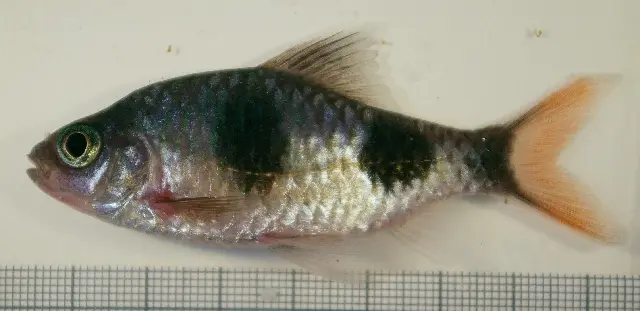
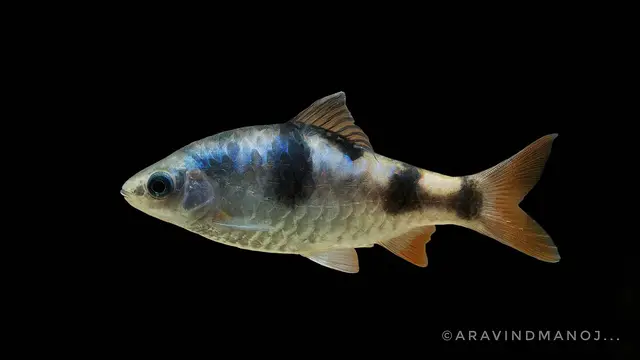
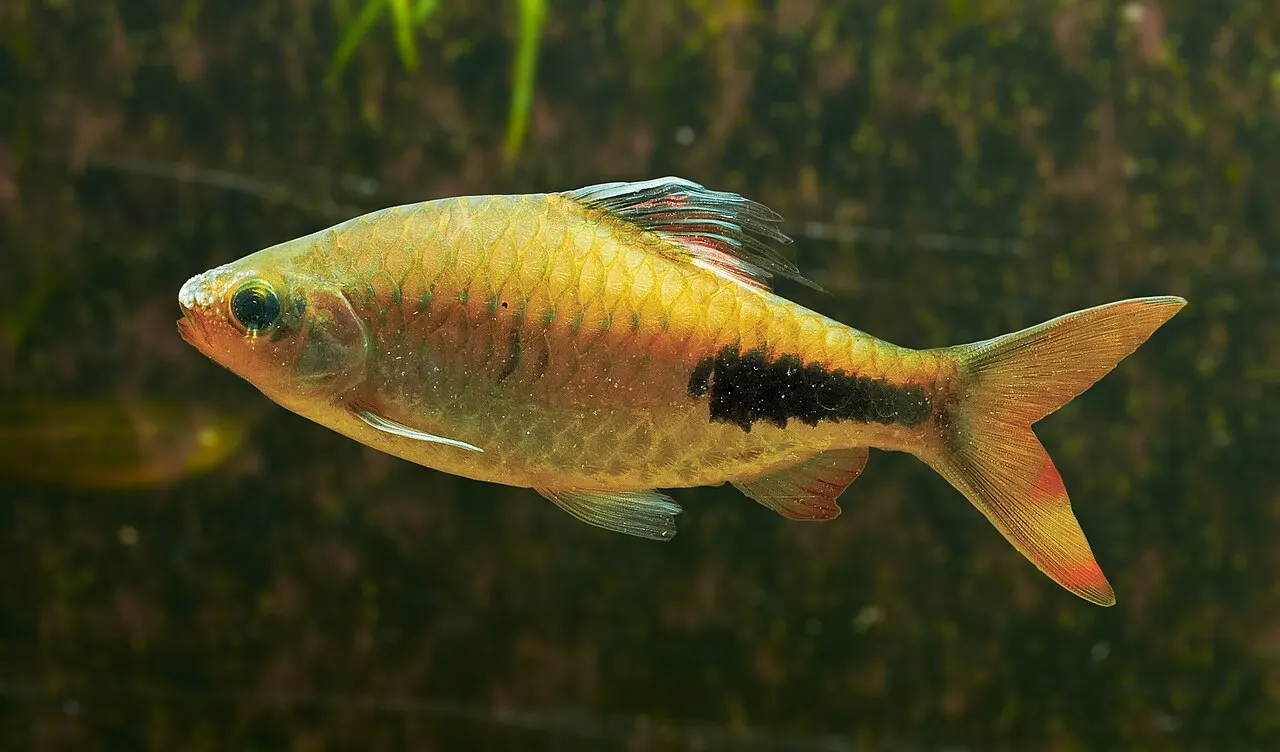
The exclamation barb (Dawkinsia exclamatio) is a small, black-marked freshwater fish known only from the Kallada River in Kerala, southern India. The IUCN Red List rated it Endangered in 2015 because it lives in just two locations. Its name comes from the way its flank markings look like an exclamation mark.
How to recognise it
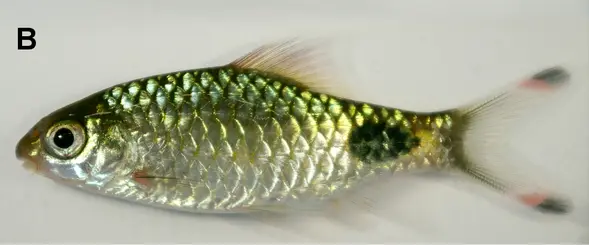
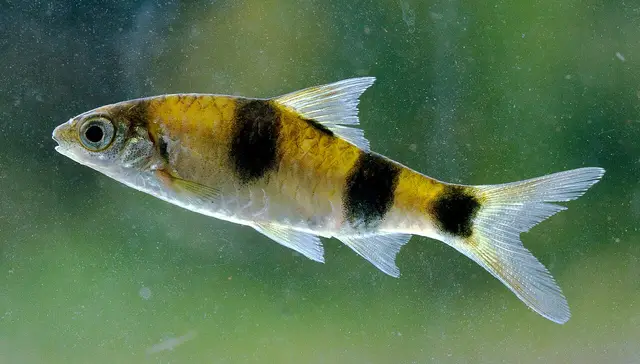
This is a slim, torpedo-shaped barb with two black blotches on each side. Other fish in its genus have one or three, which is the easiest way to pick it out. The species name refers to the pattern, which resembles an exclamation mark when the fish is seen snout down.
Sources give different maximum sizes: 8.3 cm in standard length in FishBase, and about 10 cm in a hobbyist reference. It was first described in 2005 as Puntius exclamatio and later moved to Dawkinsia, a genus named in honour of the biologist Richard Dawkins.
Its identity may not be settled. One hobbyist reference raises a case that it is a natural hybrid between two other barbs that live alongside it at the type locality, and no formal revision is cited.
Where it lives
It is recorded from the Kallada River in southern Kerala and may occur nowhere else. The original specimens came from about 3 km downstream of the Thenmalai Dam. The IUCN assessment gives two locations, a range of about 1,515 square kilometres and an area actually occupied of about 50 square kilometres, at elevations between 50 and 800 m.
Its river habitat is clear water over pebbles, rock and granite boulders. At the type locality, the original fish were collected from shallow, slow-flowing water under about 50 cm deep. FishBase describes it in both slow pools and faster-flowing stretches, at depths down to about 2 m. The Red List also counts reservoirs of more than 8 hectares as habitat.
Pins are Wikidata “endemic to” fields. Orange dots, when present, are GBIF occurrence tiles — survey bias included.
How it lives
Little is documented about its behaviour in the wild. A hobbyist reference describes wild fish as likely foraging omnivores and the species as a schooling fish. Annual monsoons raise the water volume and turbidity of the Kallada and change its chemistry, so conditions shift through the year.
Why it is in trouble
The Red List links the species to soil erosion and sedimentation, large dams and accidental capture in small-scale fishing. Its area of occupancy is still shrinking, according to the 2015 assessment, though the population trend is listed as unknown and no population size has been published.
The fish is also taken for the pet trade and for food, according to the IUCN. In the aquarium hobby it is rare, and it occasionally arrives as bycatch among similar-looking barbs such as Dawkinsia assimilis.
What is being done
The species is recorded in at least one protected area, and conservation sites have been identified over part of its range. There is no recovery plan, no monitoring scheme, no harvest management plan and no captive breeding. The IUCN lists invasive species control, harvest management, site management and awareness work among the actions needed.
Sources
Written for this catalog in our own words from the sources below, checked against them on 12 November 2026. Population figures are estimates and carry the year they were made. Status and assessment year: IUCN. 2026. The IUCN Red List of Threatened Species. Version 2026-1. iucnredlist.org.