Endangered
Procambarus milleri
Procambarus milleri
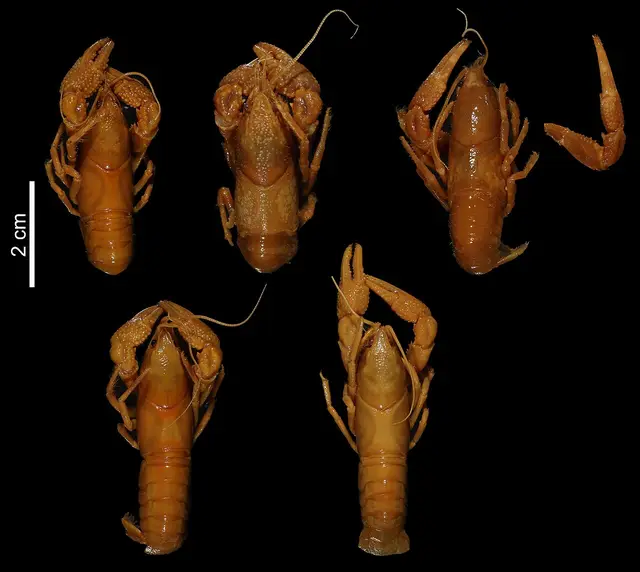
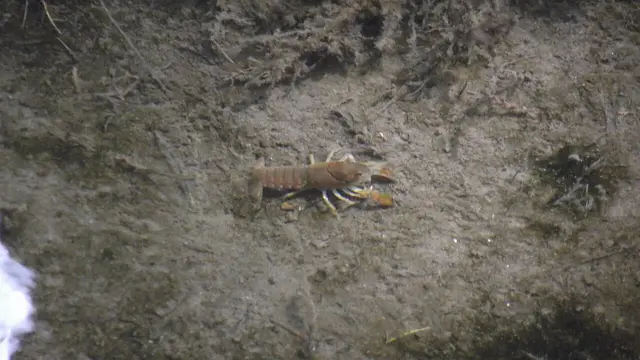
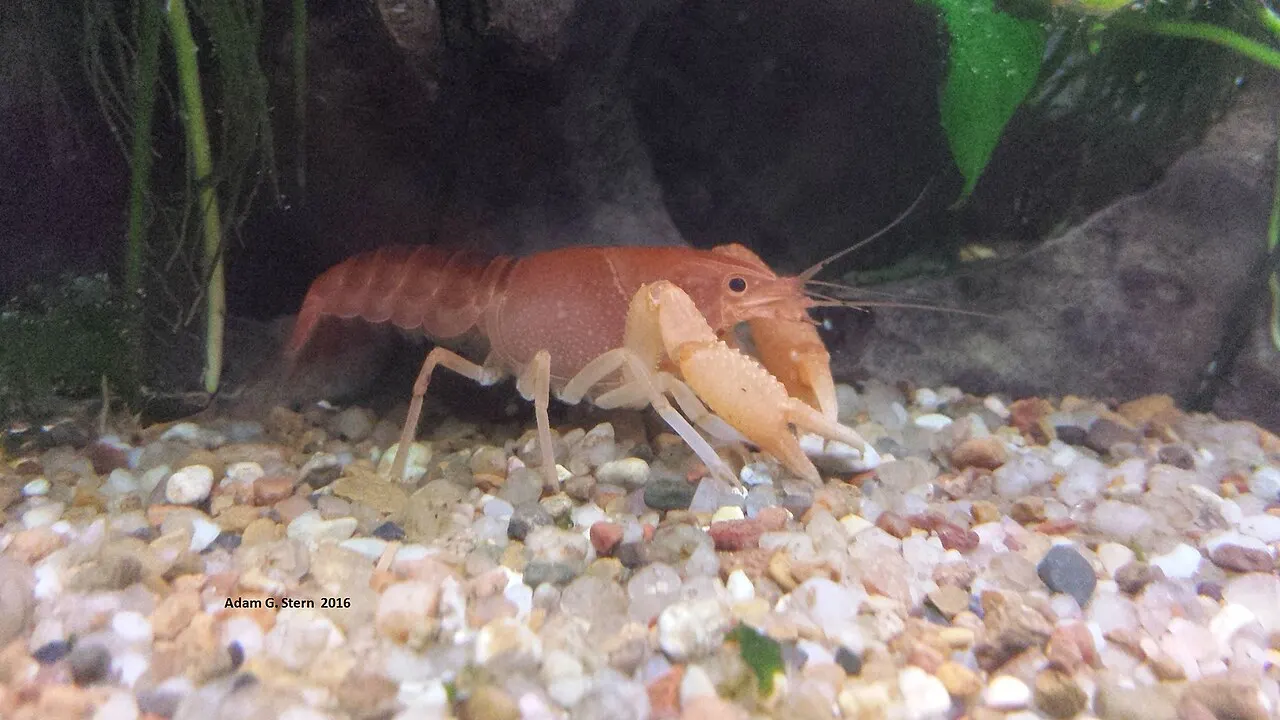
The Miami cave crayfish (Procambarus milleri) is a small orange crayfish that lives in the freshwater aquifer beneath Miami-Dade County, Florida, and nowhere else. The IUCN Red List rated it Endangered in 2010. Unlike many cave crayfish, it still has pigment and working eyes.
How to recognise it
It's a medium-small crayfish, orange with one or two more intense stripes down the back of the abdomen, and faceted eyes with a black pigment spot. Wild adults have a carapace 8 to 27.4 mm long, and a total body length of at least 38 mm has been recorded in the wild. Captive animals have reached 64 mm. Males and females are about the same size.
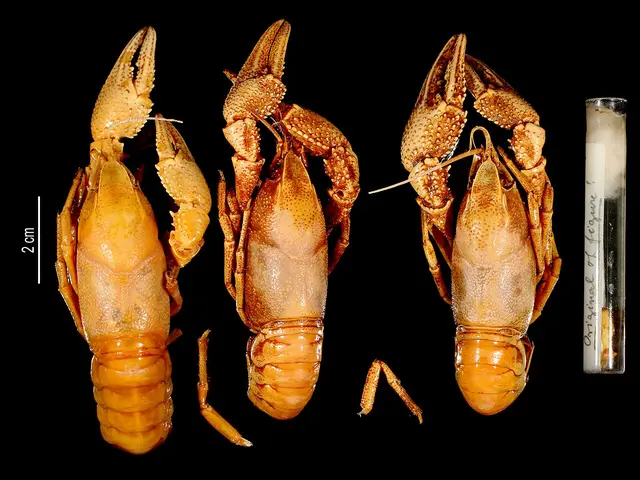
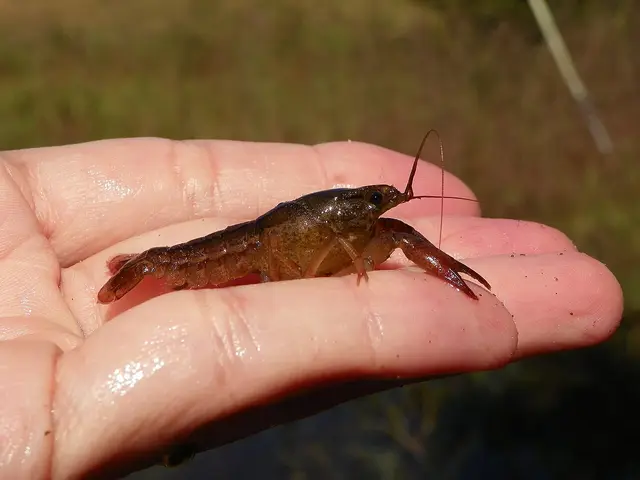
Telling it from other crayfish takes an expert. It is the only cave-dwelling crayfish known from southern Florida. Its surface-living close relative, the Everglades crayfish (Procambarus alleni), is plain brown and grows to 100 mm. Horton Hobbs Jr. described the species in 1971.
Where it lives
It lives in the Biscayne Aquifer along the Atlantic Coastal Ridge in southern and central Miami-Dade County. Specimens have come from wells and excavations 2.4 to 11 m deep, mostly in Miami Limestone and Fort Thompson limestone. Sampling in wells of similar depth in Everglades National Park found none.
All known sites fit in an area of roughly 30 km by 7 km. The IUCN assessment counts 1 to 3 locations and an extent of occurrence of about 210 square kilometres. The species is known from more than a dozen sites, mostly wells, and many if not all are probably connected underground.
Pins are Wikidata “endemic to” fields. Orange dots, when present, are GBIF occurrence tiles — survey bias included.
How it lives
Bits of plants and other detritus wash down through holes and crevices in the limestone, and the crayfish eats that along with small crustaceans such as isopods and amphipods. In captivity it takes algae-based fish food.
Females carry black eggs about 2 mm across on the abdomen, and the young stay attached while they molt and grow. In captivity breeding goes on all year, peaking from late summer to early winter. Lifespan and age at maturity are unknown, though underground crayfish generally live longer than surface species, sometimes for several decades.
An orange aquarium strain, known as the Mandarin or Tangerine crayfish, has been selectively bred from it.
Why it is in trouble
The aquifer lies under one of the most heavily built-up parts of the United States. The Red List names groundwater pumping for household, farm and commercial use as threats. The Florida Natural Areas Inventory adds saltwater intrusion and sea level rise, pollution and mining, and ranks the species G1/S1, critically imperiled.
No one has counted the population, and most of its habitat can't be reached, so a decline could go unnoticed. It was included in a 2010 petition to list it under the Endangered Species Act, and the US Fish and Wildlife Service was evaluating it in 2022. Protecting groundwater quality and quantity along the Miami rockland ridge is the main conservation need.
Sources
Written for this catalog in our own words from the sources below, checked against them on 12 November 2026. Population figures are estimates and carry the year they were made. Status and assessment year: IUCN. 2026. The IUCN Red List of Threatened Species. Version 2026-1. iucnredlist.org.