Endangered
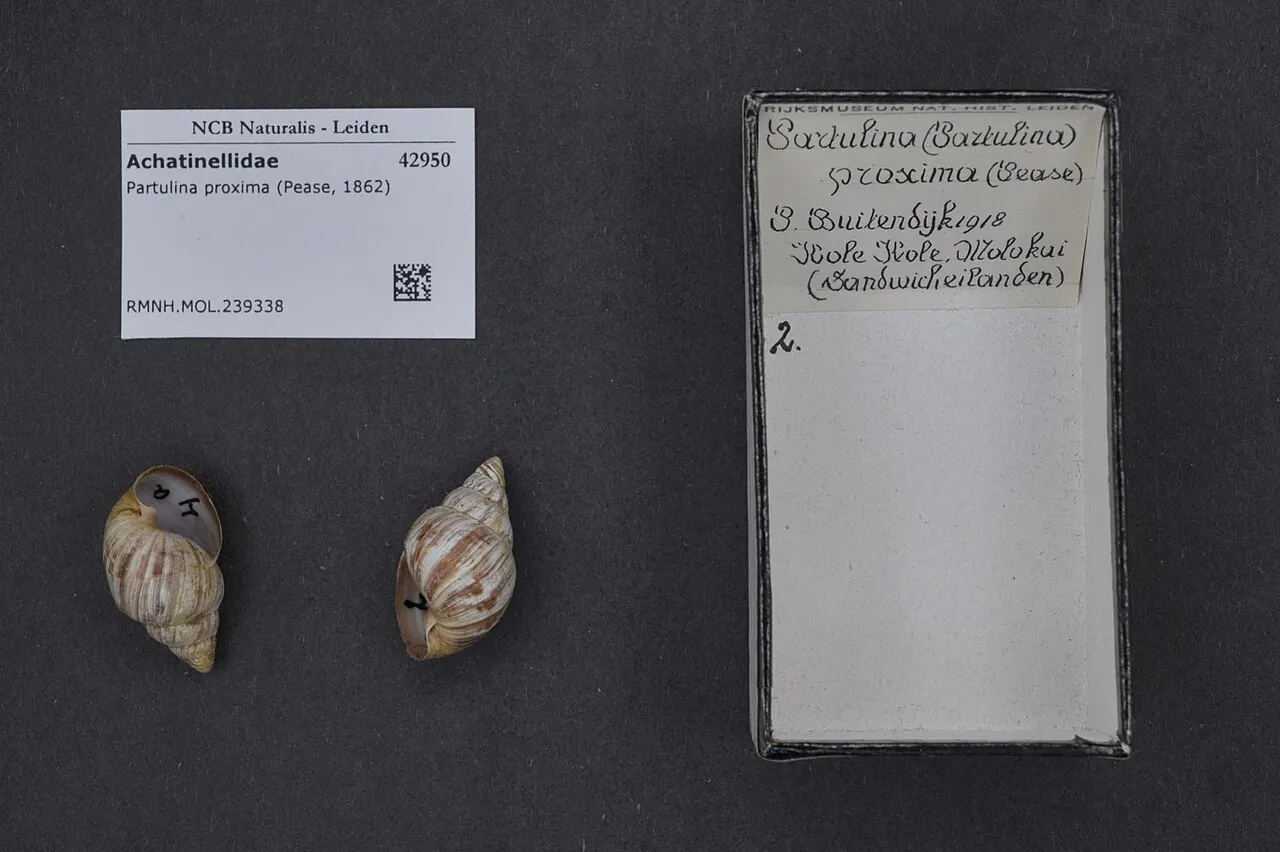
Partulina proxima
Partulina proxima
Partulina proxima is a small tree snail found only on the island of Molokai in Hawaii. It lives on native trees and shrubs in humid forest. The IUCN rated it Endangered in 1996, and that remains its latest assessment, though other sources now describe it as critically endangered.
How to recognise it
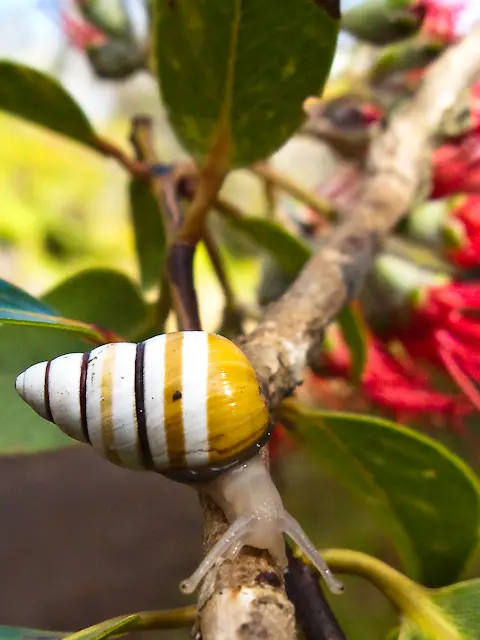
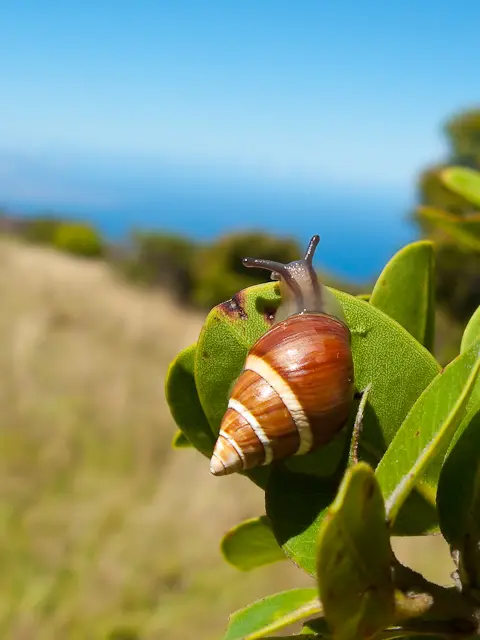
It is a land snail with a smooth shell 1.5 to 2 centimetres long, and the whole animal weighs less than a gram. The shell is polymorphic, meaning individuals vary in pattern. William Harper Pease named it in 1862. It belongs to the Achatinellidae, a family of Hawaiian tree snails that breathe air with a lung.
Where it lives
The species is native to Molokai and found nowhere else. It lives in humid tropical forest with steady rain, usually at mid to high elevations, and is arboreal, living on the leaves and branches of native trees and shrubs rather than on the forest floor.
Its range has shrunk as forest was lost. Populations have vanished from places where it was once common, leaving isolated groups.
Pins are Wikidata “endemic to” fields. Orange dots, when present, are GBIF occurrence tiles — survey bias included.
How it lives
It comes out at night, when the air is damp, and hides under leaves and in small crevices by day. It grazes the thin film of fungi, algae and other microbes that grows on leaf surfaces rather than eating the leaf itself.
Breeding is slow. A 2015 PeerJ review of captive Hawaiian tree snails notes that these snails generally produce fewer than five young per adult per year, and cites a 1989 Pacific Science study on Molokai that estimated about 6 per year for wild P. proxima. That study followed marked snails for three years in 17 bimonthly rounds. Some relocated snails have reportedly gone back to their original tree.
Why it is in trouble
Habitat destruction, invasive species and climate change are the threats most often named. On Molokai, rats are a proven danger to tree snails. At Kamakou Preserve, monitored numbers of a relative, Partulina redfieldi, rose from 1983 to 1995 and then fell by 85 percent as rats moved in, even after baiting began (Honolulu Star-Bulletin, 2009).
The Red List assessment of this species dates from 1996 and uses the older version 2.3 categories. It lists no threats or population figures, so the current state of wild populations is poorly documented. NatureServe reportedly ranks it as critically imperiled, and a 2015 PeerJ review lists it as critically endangered, with a minimum of 16 wild snails seen in surveys over the previous ten years.
What is being done
A captive colony was started at the University of Hawaii in 1994 from four snails collected on Molokai. It was lost in 2010, according to the 2015 PeerJ review of captive tree snail populations.
The Snail Extinction Prevention Program, started in 2012 by the US Fish and Wildlife Service, Hawaii's Division of Forestry and Wildlife and the University of Hawaii, now breeds close to 40 rare Hawaiian snail species and runs predator-proof enclosures in the field. This species is reportedly among those it covers, though the program's own pages do not name it.
Sources
Written for this catalog in our own words from the sources below, checked against them on 12 November 2026. Population figures are estimates and carry the year they were made. Status and assessment year: IUCN. 2026. The IUCN Red List of Threatened Species. Version 2026-1. iucnredlist.org.
- IUCN Red List assessment
- Partulina proxima (article)
- Honolulu Star-Bulletin, 27 Sept 2009, rats killing native snails on Molokai
- Hawaii DLNR Snail Extinction Prevention Program
- PeerJ 2015, ex situ populations in fifteen species of Hawaiian tree snails
- Hadfield and Miller 1989, Pacific Science 43(1): 1-16