Critically Endangered
Partulina dubia
Partulina dubia
Partulina dubia is a small Hawaiian land snail in the family Achatinellidae, a group known as tree snails. It is endemic to Hawaii, and reference sources place it on Oahu. The IUCN Red List rated it Critically Endangered in 1996, and that assessment has not been updated since.
How to recognise it
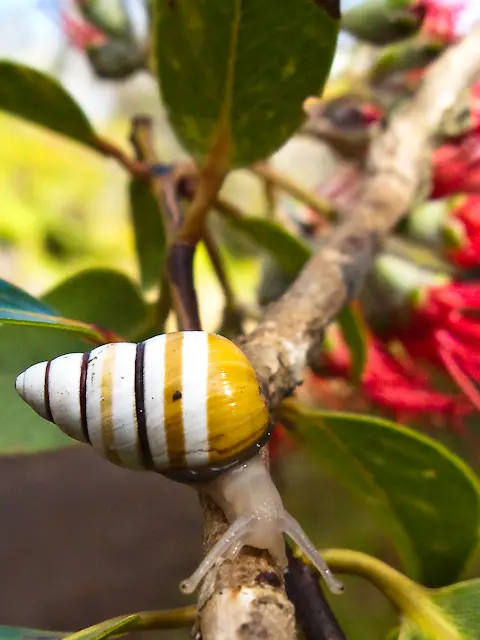
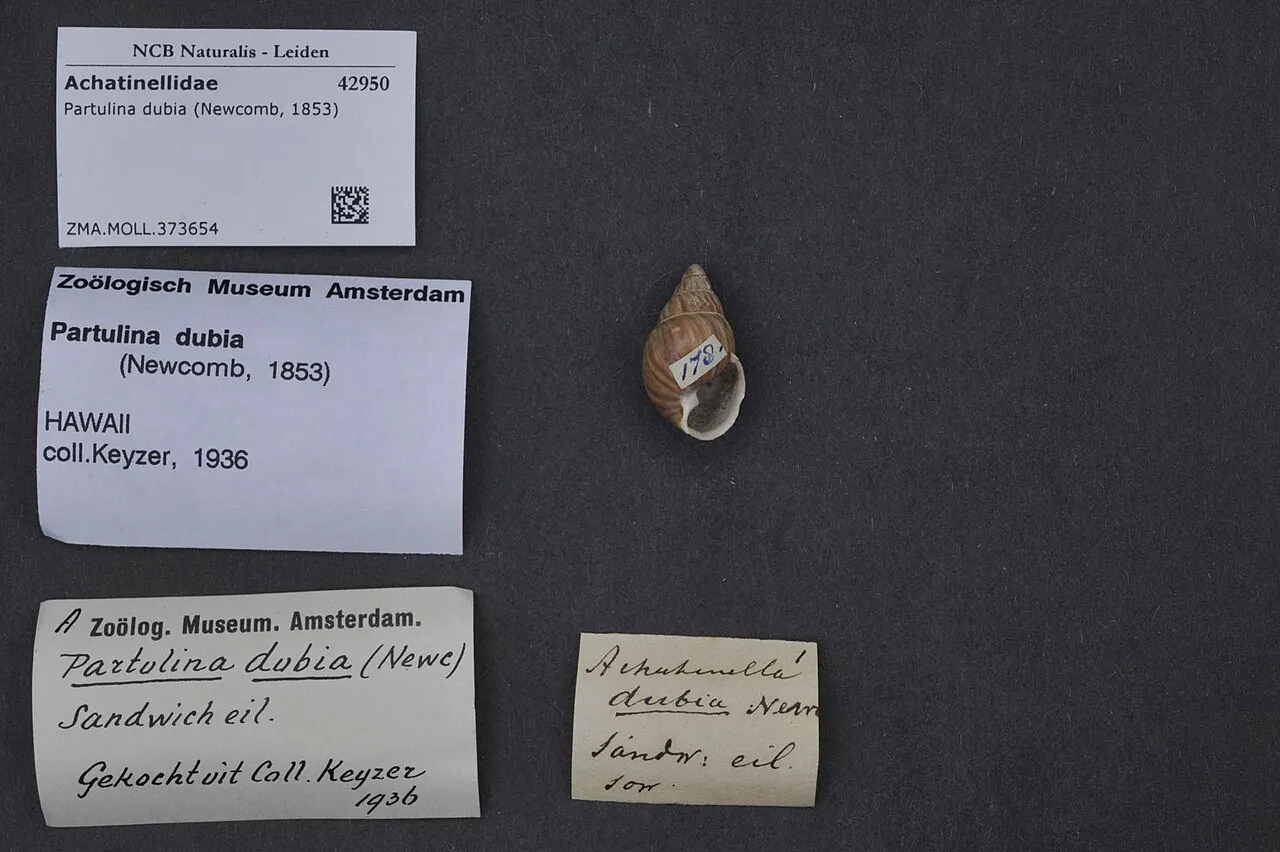
Little has been recorded about this snail beyond its shell. Newcomb's original 1853 description calls it thin and conical, with six whorls and an egg-shaped opening. The color is a pale, horn-like tone with zigzag bands and pale blotches.
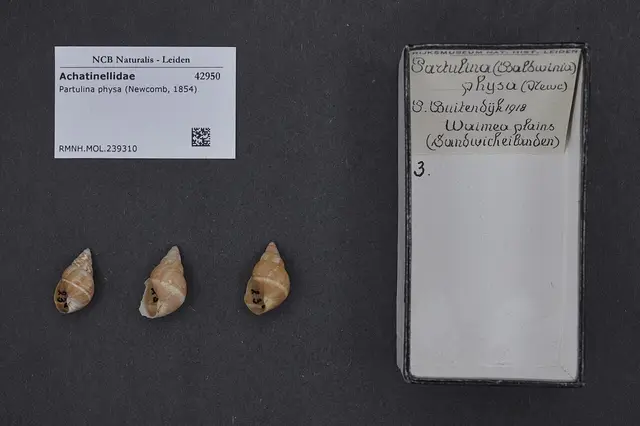
The type shell measures about 20 mm long and 14 mm across. The lip is thickened and slightly flared, and a small open slit (the umbilicus) sits beside the base of the shell. Older names for the same snail include Achatinella pexa and Achatinella morbida, and one subspecies, Partulina dubia perantiqua, was named in 1952.
Where it lives
The species is endemic to Hawaii, and Oahu is reportedly the only island it occurs on. The Red List entry records only the Hawaiian Islands and the United States. A 1921 paper in the Biodiversity Heritage Library, on hunting this snail and Achatinella meineckei in the Waianae Mountains of Oahu, suggests that at least part of its range lay in that western range.
Current survey results are hard to find. The assessment gives no population size, no elevation range and no habitat details, so how many survive, if any, is unclear.
Pins are Wikidata “endemic to” fields. Orange dots, when present, are GBIF occurrence tiles — survey bias included.
Why it is in trouble
No threats are listed in this species' own assessment, which dates from 1996 and uses version 2.3 of the Red List system. It was rated under criteria A1ce and B1+2abcde, which cover a population decline and a small, shrinking range.
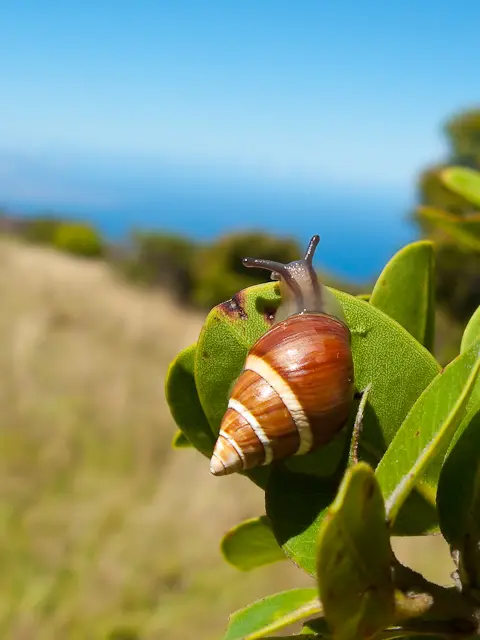
For Hawaiian tree snails as a group, the causes are better documented. A shell-collecting craze that began around 1850 took large numbers of snails. Rats eat them, and the rosy wolfsnail (Euglandina rosea), a carnivorous snail brought from Florida and released in 1955 to control the giant African snail, preys on native snails. These snails also breed slowly. They live about ten years, take five to seven to mature, and give birth to one young at a time. Whether each of these pressures has hit Partulina dubia specifically has not been published.
What is being done
No action aimed at this species was found. Hawaii's Snail Extinction Prevention Program surveys native snails, controls predators, builds predator-proof fences and breeds some of the most threatened kinds in captivity. In 2013 it moved one of the last wild Oahu tree snail groups into a rat-proof exclosure in Honouliuli Forest Reserve, though that group was not named as this species. NatureServe is reported to rank Partulina dubia as globally critically imperiled.
Sources
Written for this catalog in our own words from the sources below, checked against them on 12 November 2026. Population figures are estimates and carry the year they were made. Status and assessment year: IUCN. 2026. The IUCN Red List of Threatened Species. Version 2026-1. iucnredlist.org.