Extinct in the Wild
Partula varia
Partula varia
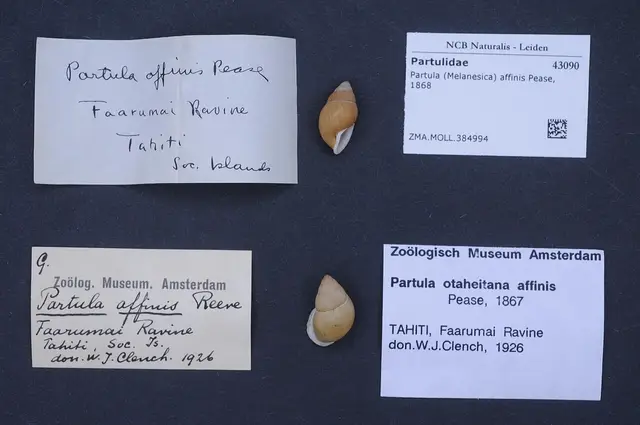
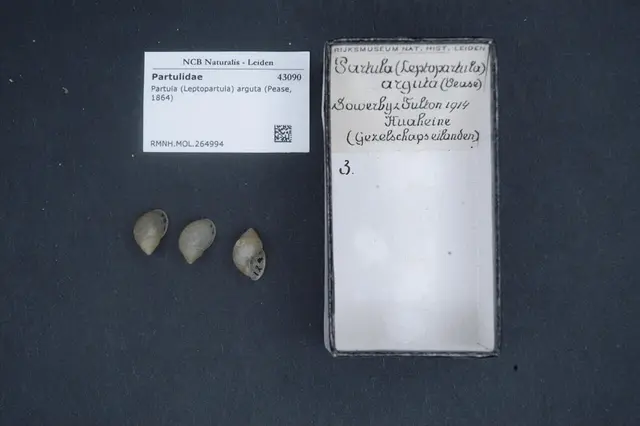
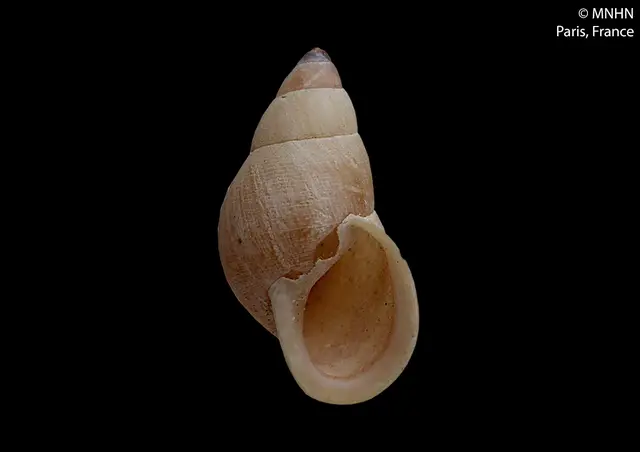
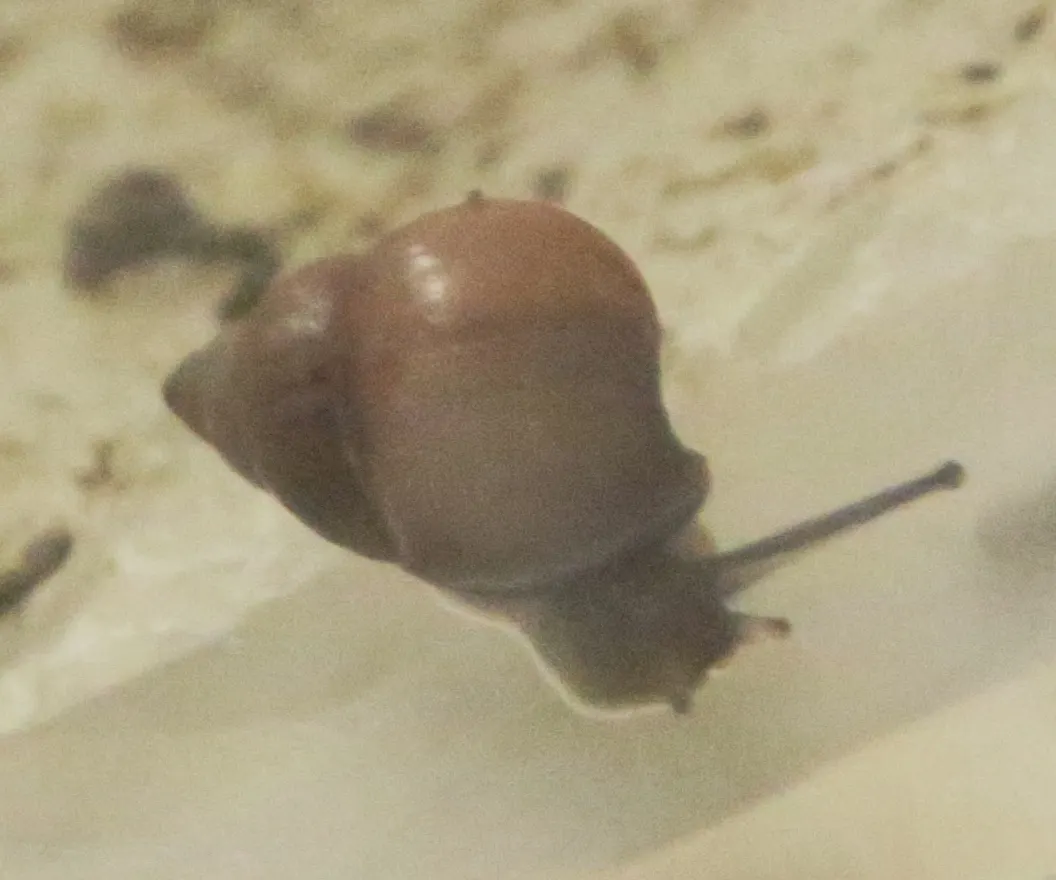
Partula varia, the Polynesian tree snail, is a small tree snail from Huahine in French Polynesia. It vanished from the wild after a predatory snail arrived, and the IUCN Red List rated it Extinct in the Wild in 2022. Zoo-bred snails have been released on Huahine, and a wild-born juvenile was reported in 2025.
Where it lives
Partula varia is endemic to Huahine, one of the Society Islands. William Broderip described it in 1832. The Red List gives its main English name as Polynesian tree snail, and also lists variable Huahine tree snail and areho. Another site calls it the Mauru tree snail.
The Red List gives the habitat as subtropical or tropical moist lowland forest. The last wild record reportedly dates from before 2000.
Pins are Wikidata “endemic to” fields. Orange dots, when present, are GBIF occurrence tiles — survey bias included.
How it lives
Detailed studies of this species in the wild are scarce, but Partula snails in general live on tree trunks and the undersides of leaves and eat mostly decaying plant matter. In dry spells they stay fixed to leaves, then come out to feed and mate when it rains.
The genus bears live young after about three months. A newborn measures only 1 to 2 mm and reaches adulthood in 3 to 6 months. Adult shells in the genus range from about 12 mm to nearly 30 mm.
Why it is in trouble
The carnivorous rosy wolfsnail was introduced to the Society Islands to control the giant African land snail. It hunted native Partula instead, and wild populations collapsed in the 1980s and early 1990s. Partula varia was lost from Huahine's forests, and the Red List gives its wild population size as zero in the 2022 assessment.
The Red List rated it Endangered in 1994 and Critically Endangered in 1996, then Extinct in the Wild in 2009 and again in 2022.
What is being done
The Red List records the species as subject to ex-situ conservation, with captive breeding and reintroduction as conservation actions. Zoo colonies in Europe and the US hold it, and the Zoological Society of London leads the reintroductions.
In 2019 captive-bred Partula varia were returned to Huahine, part of a programme that conservationists described at the time as one of the biggest reintroduction efforts ever attempted. Each released snail gets a dab of white paint that glows blue under ultraviolet light. Because the snails are most active at night, the mark helps teams find them and tell them apart from wild-born descendants.
A ZSL release announced in November 2025 sent more than 7,000 zoo-bred Partula to four islands. During it the team found an unmarked juvenile Partula varia on Huahine, which ZSL described as the first wild-born member of the reintroduced species seen in over 30 years and evidence that it is breeding there. The official Red List category remains Extinct in the Wild (2022), and a later assessment could change it.
Sources
Written for this catalog in our own words from the sources below, checked against them on 12 November 2026. Population figures are estimates and carry the year they were made. Status and assessment year: IUCN. 2026. The IUCN Red List of Threatened Species. Version 2026-1. iucnredlist.org.