Critically Endangered
Partula clara
Partula clara
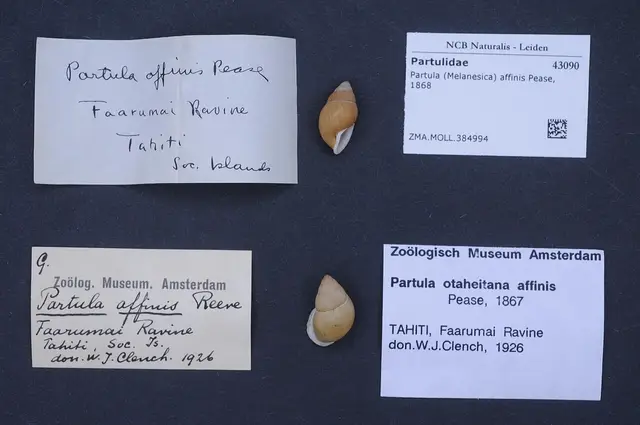
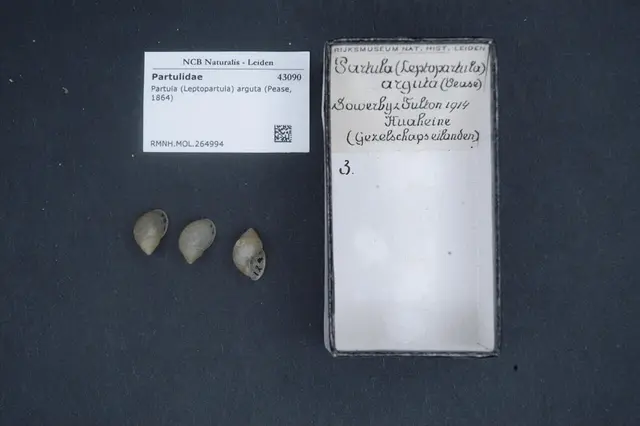
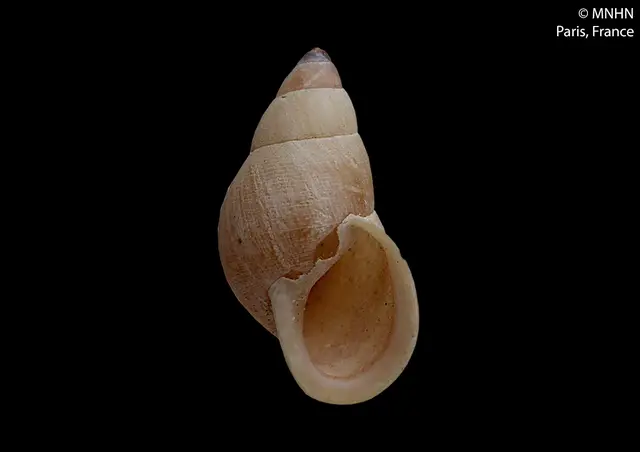
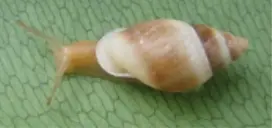
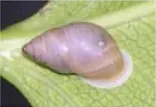
Partula clara is a small tree snail found only on Tahiti, in French Polynesia. The IUCN Red List assessed it as Critically Endangered in 2024. It is one of just two Tahitian Partula species still found across many valleys, having outlasted an introduced predator that wiped out most of its relatives.
Where it lives
This snail is endemic to Tahiti, the largest of the Society Islands. The IUCN assessment records it from about 20 locations, at elevations up to 300 metres, in moist lowland and montane forest. Its range is restricted: the estimated area it actually occupies is only 5 to 10 square kilometres.
It was once spread across most of the island. When the zoologist Henry Crampton surveyed Tahitian valleys in 1906 to 1909, he recorded it in 43 of 62. It was never the dominant snail in a valley, though. It made up about 3 percent of the snails he collected, and usually less than 5 percent of the snails in any one valley.
Pins are Wikidata “endemic to” fields. Orange dots, when present, are GBIF occurrence tiles — survey bias included.
How it lives
Partula clara belongs to Partulidae, a family of small, tree-dwelling snails that live on Pacific islands. It is closely related to Partula hyalina, the other Tahitian species that survives widely in the wild. The two are described as colour forms of a single lineage that reached Tahiti from neighbouring Moorea.
A study in the journal Oryx by Bick, Ó Foighil and Coote, published in 2014, compared the survivors with their extinct relatives. Both had been uncommon a century earlier, so abundance does not explain why they lasted. P. clara produced larger clutches than the species that disappeared, and higher fecundity may have helped it hang on.
Relict groups of the snail have also turned up in woodland of mape, the Tahitian chestnut (Inocarpus fragifer). That find fed a proposal that tall trees with bare, dry trunks act as refuges, because they put off the predatory rosy wolfsnail.
Why it is in trouble
The main cause was a deliberate introduction. The rosy wolfsnail (Euglandina rosea) was brought in to control the giant African land snail and was released in French Polynesia in 1974. Instead it hunted the native Partula. By 1994 it had eliminated 43 of the region's 61 native snail species, and a 2026 Oryx paper by Gerlach and colleagues puts the near-total loss of wild Partula populations between 1982 and 1995.
Partula clara was among the few to persist. Surveys between 2004 and 2010 found it in 20 of the 38 Tahitian valleys where native Partula still lived. Another invasive predator, the New Guinea flatworm (Platydemus manokwari), is now described as the primary predator of tree snails on the islands. The IUCN lists no population size and gives the trend as unknown.
What is being done
The species is held in captivity as part of the international Partula breeding effort. The Zoological Society of London's rescue programme began in 1991 and now involves 15 zoos. It has returned more than 30,000 snails of various species to Moorea, Tahiti and other Pacific islands, with releases going into predator-proof sites. The IUCN lists captive breeding, reintroduction and awareness work as actions for this snail, though published release results mostly concern other Partula species.
Sources
Written for this catalog in our own words from the sources below, checked against them on 12 November 2026. Population figures are estimates and carry the year they were made. Status and assessment year: IUCN. 2026. The IUCN Red List of Threatened Species. Version 2026-1. iucnredlist.org.