Critically Endangered
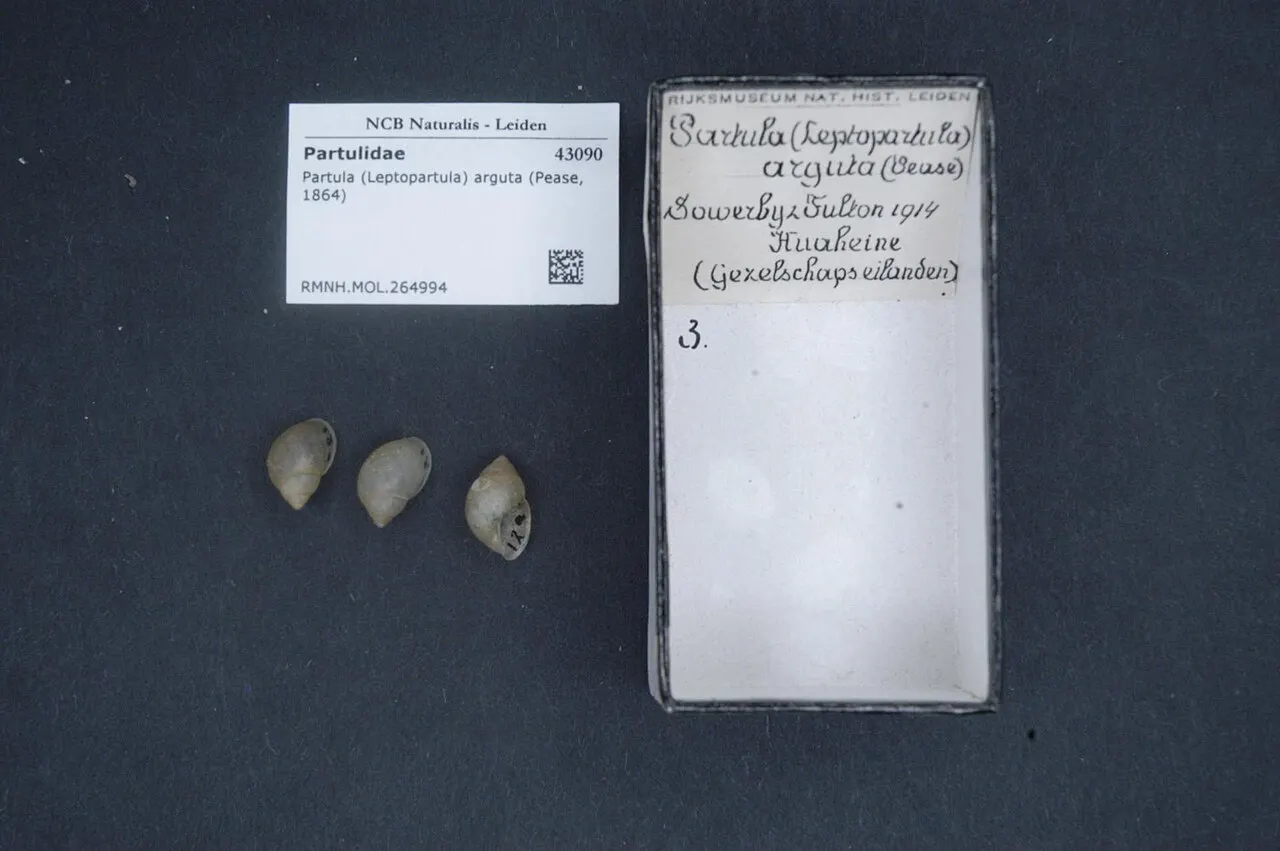
Partula arguta
Partula arguta
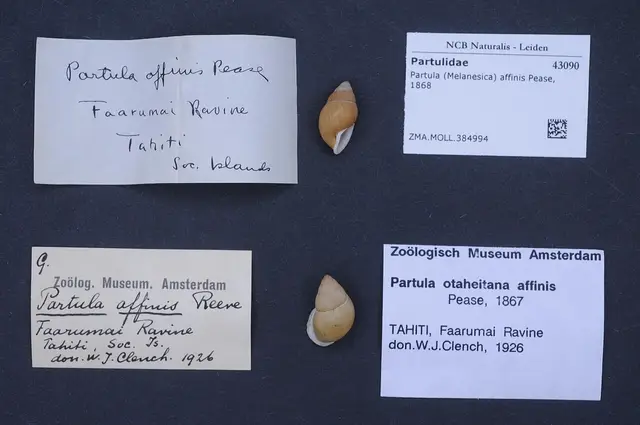
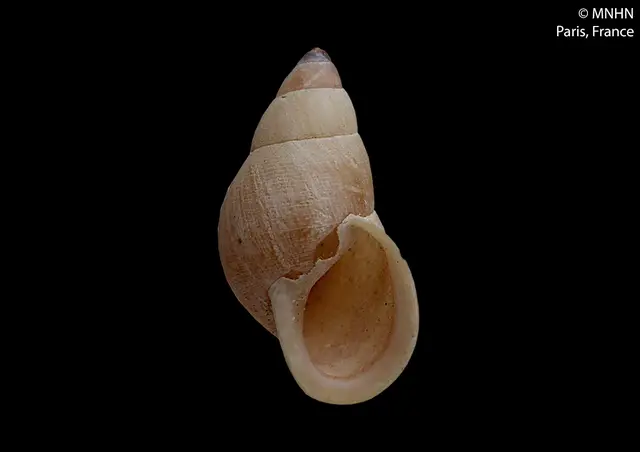
Partula arguta is a tree snail from Huahine, in the Society Islands of French Polynesia. A 1987 survey called it a rare mountain species, but no living animal has been found since 1991. The IUCN Red List rated it Critically Endangered (Possibly Extinct) in 2022, and the last captive snail died in 1994.
Where it lived
The species was described by William Harper Pease in the 1860s and lived only on Huahine, one of the Society Islands. Biologists who surveyed the islands in June and July 1987 (reported in Pacific Science in 1988) called it a rare montane species. The Red List lists its habitat as tropical moist lowland forest, so sources differ on exactly where on the island it lived.
It was a canopy-dwelling snail, which is one reason a few animals could in theory have outlasted the last records.
Pins are Wikidata “endemic to” fields. Orange dots, when present, are GBIF occurrence tiles — survey bias included.
What happened
In 1967 the giant African snail was brought to Tahiti for food, and it spread through the Society Islands as a serious crop pest. Authorities then introduced a predatory snail, the rosy wolfsnail (Euglandina rosea), as a control. The 1988 report found no evidence it had ever controlled the African snail, and its effect on native Partula was disastrous. The wolfsnail was introduced to the islands in the 1970s and early 1980s, and more than 50 Partula species are now extinct.
In 1987 the wolfsnail had not yet reached Huahine, and its Partula were still flourishing. The survey team saw no reason to think Partula arguta was in danger and urged that the predator never be introduced to other islands. The warning came too late. The Red List says the wolfsnail reached Huahine in the early 1990s, and it names the wolfsnail as the likely cause of a very rapid decline across the whole species.
Is it extinct?
The Red List gives the population as zero and flags the species as possibly extinct. It hasn't been located since 1991 despite surveys, the most recent in 2017. It isn't declared extinct outright because survivors are not impossible. The Red List's own analysis put the probability of extinction at 0.85 to 0.90.
The last captive animal died on 14 April 1994. No conservation actions are recorded for the species, and none are in place now.
Sources
Written for this catalog in our own words from the sources below, checked against them on 12 November 2026. Population figures are estimates and carry the year they were made. Status and assessment year: IUCN. 2026. The IUCN Red List of Threatened Species. Version 2026-1. iucnredlist.org.