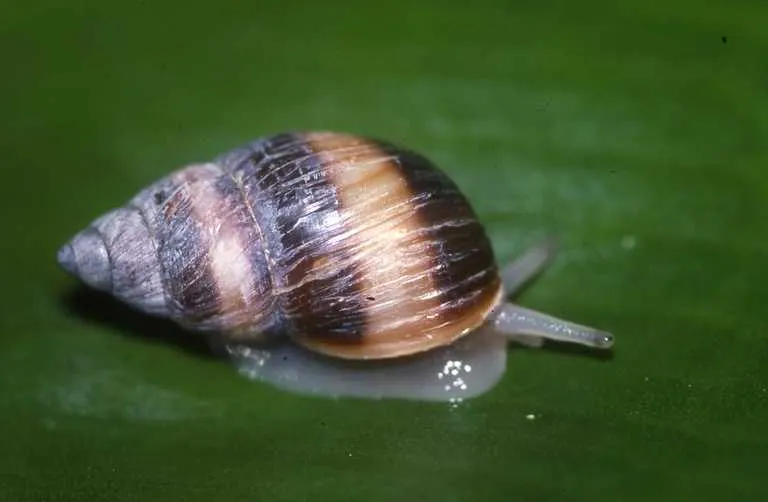
Extinct in the Wild
Partula suturalis
Partula suturalis
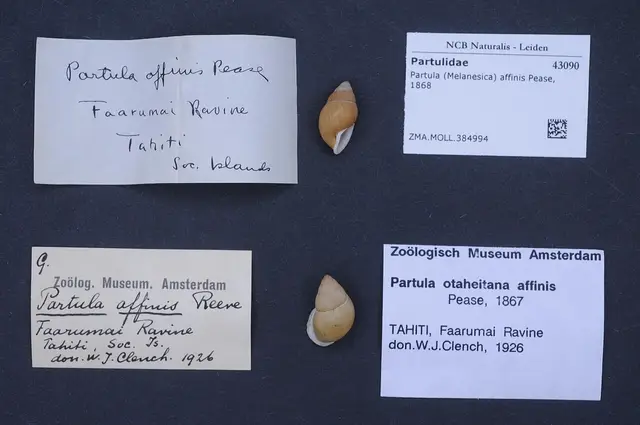
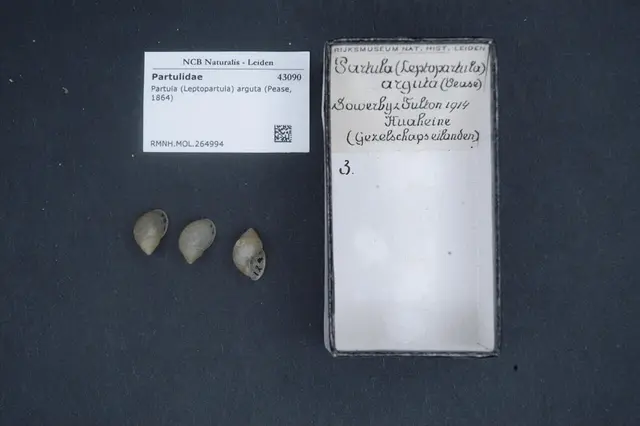
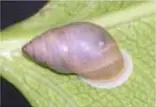
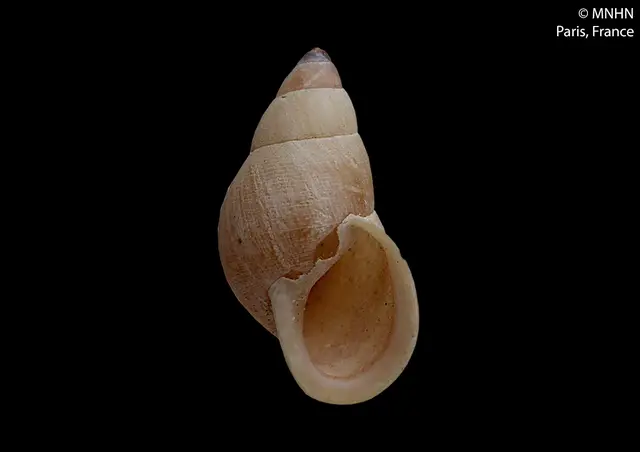
The sutural partula (Partula suturalis) is a tiny tree snail that once lived only on Moorea, in French Polynesia. The IUCN Red List rated it Extinct in the Wild in its 2022 assessment. No wild population remains, and the species survives only in zoo colonies.
Where it lived
This snail was endemic to Moorea, the small volcanic island next to Tahiti. The Red List gives its main English name as sutural Partula, and also lists Moorean viviparous tree snail, Polynesian tree snail and areho.
Four subspecies have been named: suturalis, dendroica, strigosa and vexillum. Captive populations were reportedly set up for two of them before the wild ones disappeared. The Red List gives the habitat as subtropical or tropical moist lowland forest.
Pins are Wikidata “endemic to” fields. Orange dots, when present, are GBIF occurrence tiles — survey bias included.
How it lives
Few details are recorded for this species alone, but Partula snails in general live on tree trunks, stems and the undersides of leaves, and feed mainly on decaying plant matter. In dry spells they stay fixed to leaves, then come out to feed and mate when it rains.
The genus gives birth to live young. Gestation takes about three months, and a newborn measures only 1 to 2 mm. Adult shells in the genus range from about 12 mm to nearly 30 mm, and some species live up to 17 years.
Why it is in trouble
In 1977 biologists released the rosy wolfsnail (Euglandina rosea) on Moorea to control the giant African land snail, itself an earlier introduction. The wolfsnail hunted the native tree snails instead. All nine Moorean Partula species were wiped out in the wild, and by 1987 no wild Partula suturalis remained.
The Red List rated the species Extinct in 1988, 1990 and 1994, then Extinct in the Wild in 1996, 2009 and 2022, because captive animals survive. The 2022 assessment gives the wild population size as zero.
What is being done
Zoos hold the survivors, and the Partulid Global Species Management Programme coordinates the captive population. Partula snails are bred in zoos in the UK, US and Germany, and a consortium led by the Zoological Society of London runs the programme.
A first attempt to reintroduce Moorean Partula, including Partula suturalis, began in 1994. Captive-bred snails reproduced in the wild, but the Moorea reserve was closed in 1998 after repeated predator incursions.
Newer releases have used other species. In April 2023 a team released more than 5,000 snails of seven species on Tahiti and Moorea, and wild-born Partula tohiveana were found on Moorea in 2024. The Red List lists reintroduction as a conservation action for Partula suturalis, but a release of this species after the 1990s experiment has not been reported.
Sources
Written for this catalog in our own words from the sources below, checked against them on 12 November 2026. Population figures are estimates and carry the year they were made. Status and assessment year: IUCN. 2026. The IUCN Red List of Threatened Species. Version 2026-1. iucnredlist.org.