Extinct in the Wild
Partula rosea
Partula rosea
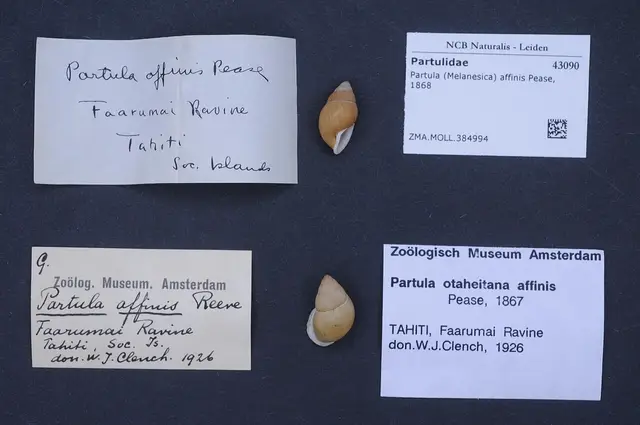
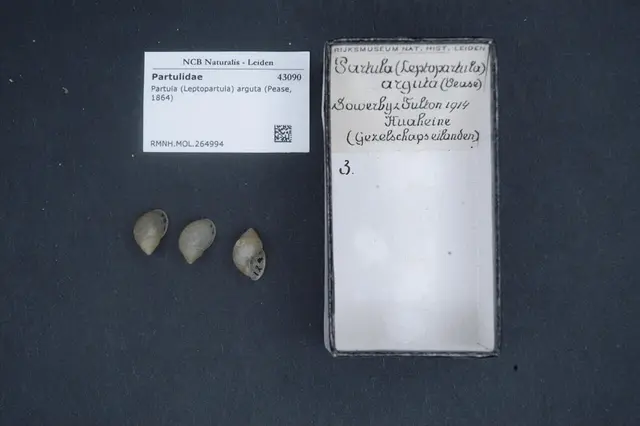
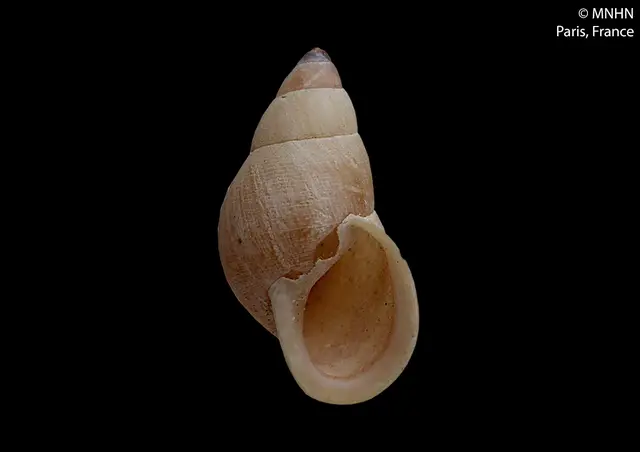
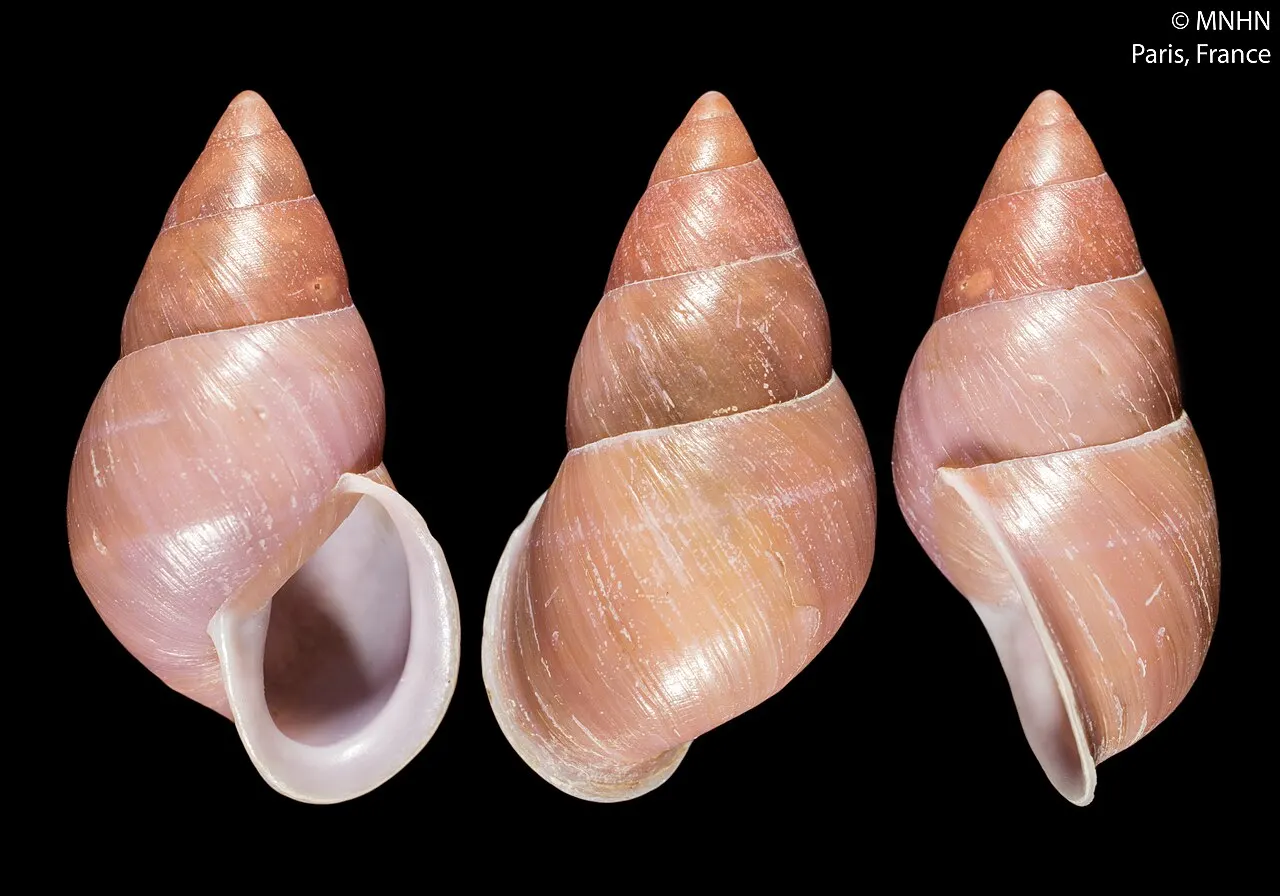
Partula rosea, the rosy tree snail, is a small land snail reportedly found only on Huahine in French Polynesia. The IUCN lists it as Extinct in the Wild (2022 assessment) and records the wild population as zero. Zoo-bred stock was reportedly returned to Huahine in 2019.
What it is
Partula rosea belongs to the Partulidae, the Polynesian tree snails, a family of small air-breathing land snails. William Broderip described it in 1832, and the older name Partula purpurascens is now treated as a synonym. Besides rosy tree snail, it goes by Polynesian tree snail, and areho is a Tahitian name used for Partula snails.
Partula snails are tiny at birth, about the size of a grain of rice, and grow to roughly 2 centimetres. Shells of this species were reportedly strung into garlands (lei) on Huahine, as were those of Partula varia from the same island.
Where it lived
The IUCN treats the species as native only to French Polynesia, within the Society Islands, and it is reportedly restricted to Huahine. Its recorded habitat is subtropical or tropical moist lowland forest.
Partula snails live high in the tree canopy and are most active at night. They eat decaying plant matter and fungi, which helps recycle nutrients through the forest.
Pins are Wikidata “endemic to” fields. Orange dots, when present, are GBIF occurrence tiles — survey bias included.
Why it vanished
The rosy wolf snail (Euglandina rosea) was brought to the Society Islands to control the giant African land snail. It preyed on the native tree snails instead. Across the islands, wild Partula populations were devastated in the 1980s and early 1990s.
The IUCN lists the rosy wolf snail as a past cause of very rapid decline across the whole range, one that could return, and the New Guinea flatworm (Platydemus manokwari) as an ongoing threat. A 2023 Mongabay report said the wolf snail is now extremely rare on the islands, partly because the flatworm seems to be suppressing it.
Captive breeding and return
The last survivors of 15 Partula species and subspecies were rescued in the early 1990s and bred in zoos. The programme is coordinated by the Zoological Society of London with French Polynesia's environment department, and zoos in the UK, France and the United States take part.
Zoo-bred Partula have been flown to French Polynesia and released every year since 2015, nearly 40,000 snails in ten years according to the Royal Zoological Society of Scotland. Each year's batch is dabbed with a different colour of UV-reflective paint, so teams can find snails at night and tell them apart from wild-born young. Partula rosea and Partula varia were reportedly released on Huahine in 2019.
In 2025, teams found an unmarked juvenile Partula varia on Huahine, the first wild-born one of that reintroduced species seen in over 30 years. The IUCN lists captive breeding and reintroduction as conservation actions for Partula rosea, and its 2022 assessment still lists the species as Extinct in the Wild.
Sources
Written for this catalog in our own words from the sources below, checked against them on 12 November 2026. Population figures are estimates and carry the year they were made. Status and assessment year: IUCN. 2026. The IUCN Red List of Threatened Species. Version 2026-1. iucnredlist.org.