Endangered
Perverse Tahiti tree snail
Perverse Tahiti tree snail
Perverse Tahiti tree snail is a small tree snail found only on the island of Tahiti, in French Polynesia. It survives at 5 to 10 locations in moist forest, from near sea level to high in the hills. The IUCN Red List rates it Endangered (2024 assessment), and introduced predatory animals are the main cause.
How to recognise it
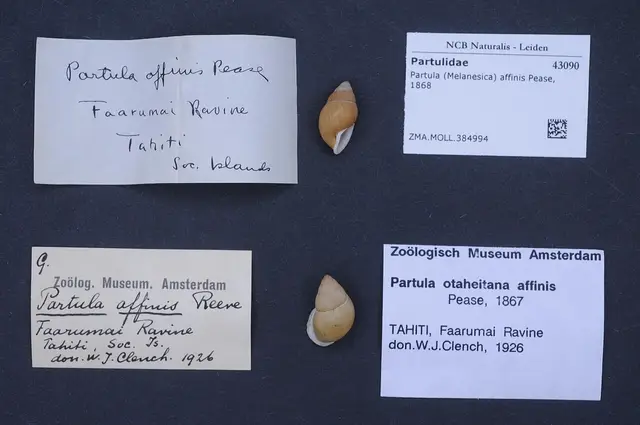
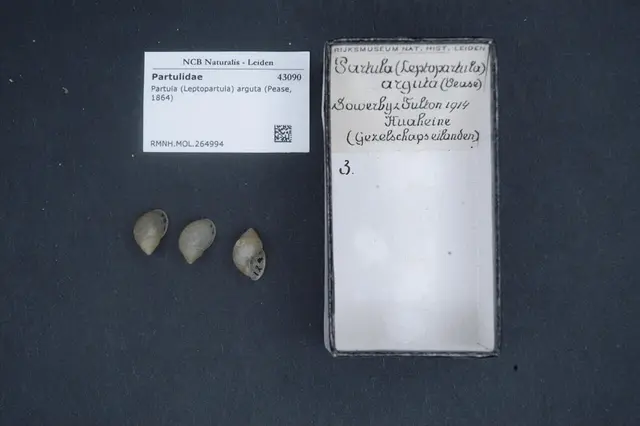
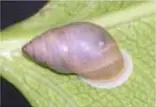
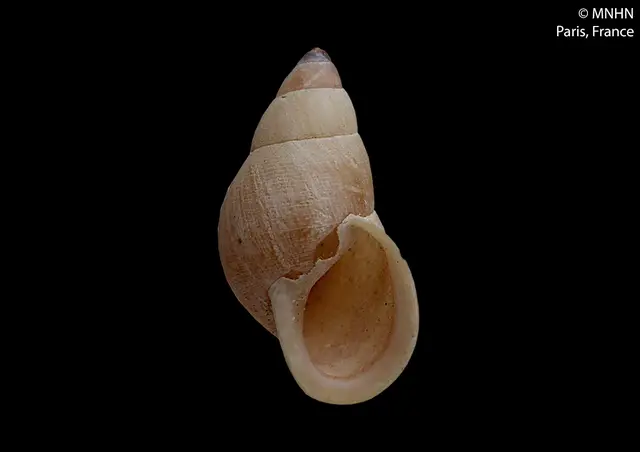
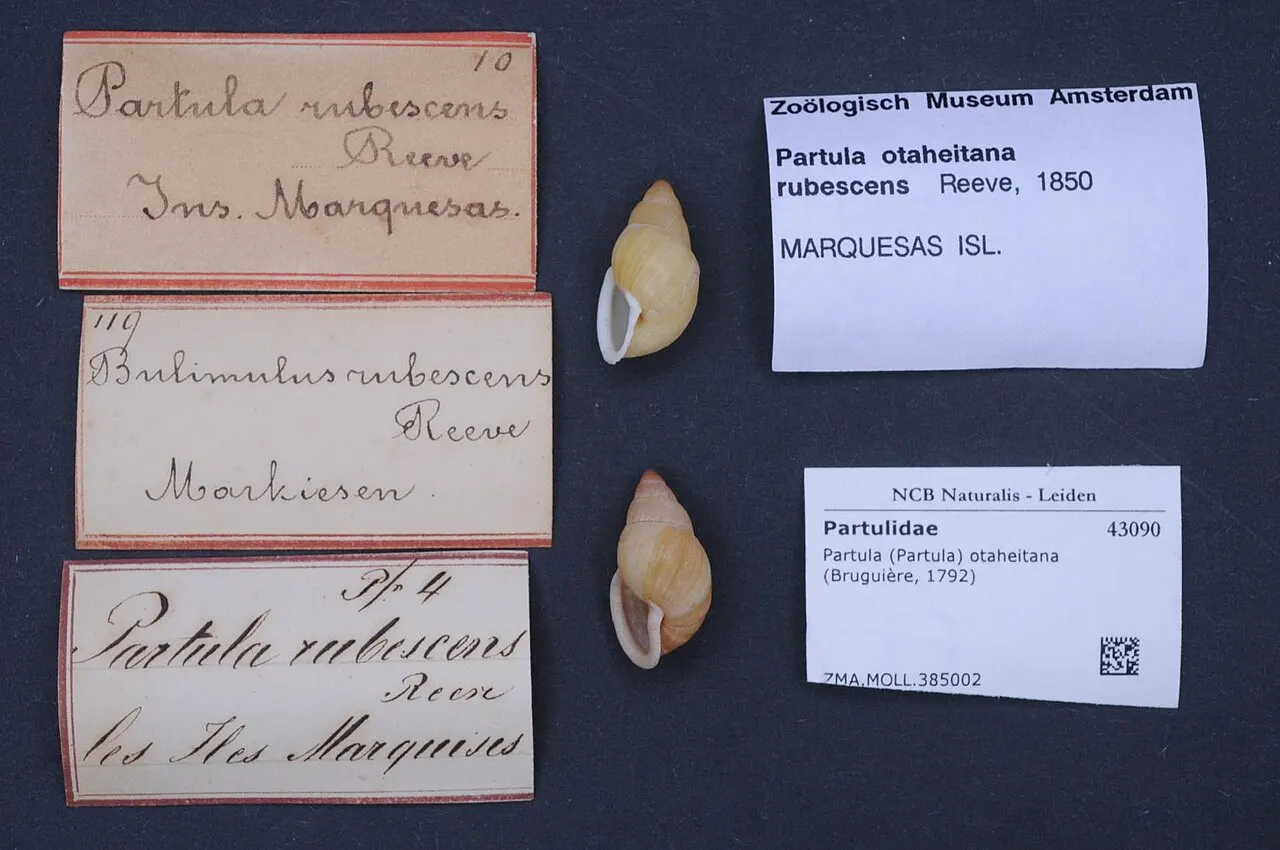
Partula snails have small, glossy, coiled shells, and the genus averages about 13 to 19 mm long. This species was named by the French naturalist Bruguière in 1792, as Bulimus otaheitanus, after shells from Captain Cook's voyages reached France.
Tahitian partulids vary from valley to valley, because steep terrain isolates snails in deep valleys. A shell collectors' review cites this species as an example of a widespread snail that split into local forms, and lists named forms such as lignaria, rubescens and sinistrorsa, with solid brown and banded shells among them. Some of these names may now be treated as separate species.
Where it lives
It is endemic to Tahiti, the main island of the Society Islands. The Red List records it from 5 to 10 locations between about 95 and 1,800 m above sea level, with a total extent of occurrence of roughly 144 square kilometres and an area actually occupied of about 20 to 40 square kilometres (2024). Its habitat is moist tropical forest, both lowland and montane.
Pins are Wikidata “endemic to” fields. Orange dots, when present, are GBIF occurrence tiles — survey bias included.
Why it is in trouble
The main cause is the rosy wolfsnail (Euglandina rosea), a carnivorous snail brought to Tahiti to control the invasive giant African land snail. It ate the native tree snails instead. Most Partula species of Tahiti and neighbouring islands were gone from the wild by the late 1980s. The Red List names this predator as an ongoing threat affecting most of the population, along with a second invader, the New Guinea flatworm (Platydemus manokwari), which also preys on snails.
Smaller pressures include utility and service lines and tourism and recreation developments. The Red List records the population trend as decreasing, with the occupied area still shrinking and numbers prone to extreme swings.
What is being done
From 1986 zoos in the United Kingdom, the United States and Germany bred surviving Partula snails. The Red List says this species is held in captive breeding. It also lists awareness work, site protection and reintroduction among the conservation actions.
Captive-bred snails have been released on Tahiti since the mid 2010s, including 100 into a predator-proof reserve and 150 into forest in July 2015, and thousands more since. Published release reports name Partula affinis, P. hyalina and P. nodosa for Tahiti, not this species, so its future depends mostly on the wild remnants. Earlier Red List assessments rated it Critically Endangered (2009), before the 2024 listing as Endangered.
Sources
Written for this catalog in our own words from the sources below, checked against them on 12 November 2026. Population figures are estimates and carry the year they were made. Status and assessment year: IUCN. 2026. The IUCN Red List of Threatened Species. Version 2026-1. iucnredlist.org.
- IUCN Red List assessment, Perverse Tahiti tree snail (2024)
- Wikipedia, Perverse Tahiti tree snail
- Wikipedia, Partula (gastropod)
- The Partulidae of French Polynesia (Jacksonville Shell Club)
- Island Biodiversity, Partula reintroduction
- Mongabay, tiny snails make a big comeback (2024)
- Wikipedia, Platydemus manokwari