Extinct in the Wild
Moorean viviparous tree snail
Moorean viviparous tree snail
Moorean viviparous tree snail, the Moorean viviparous tree snail, is a small left-coiled land snail from Moorea in French Polynesia. The IUCN lists it as Extinct in the Wild (2022 assessment), and the only animals left live in zoos. Zoo-bred snails went to Moorea in 2024.
How to recognise it
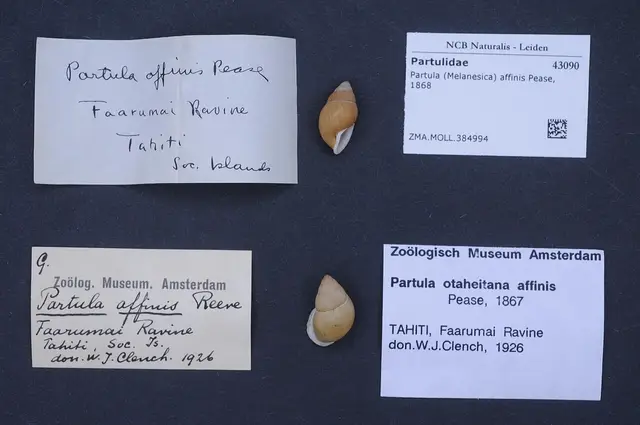
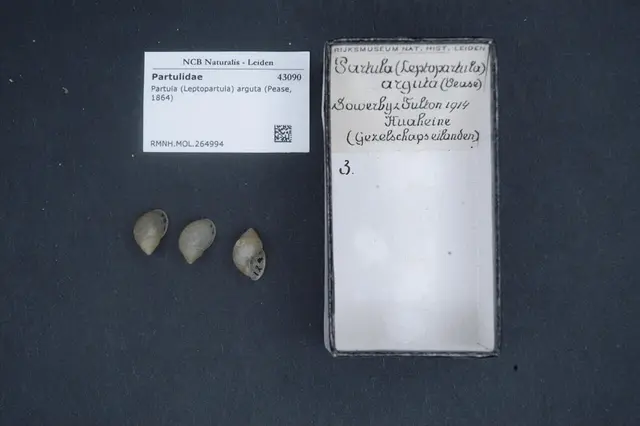
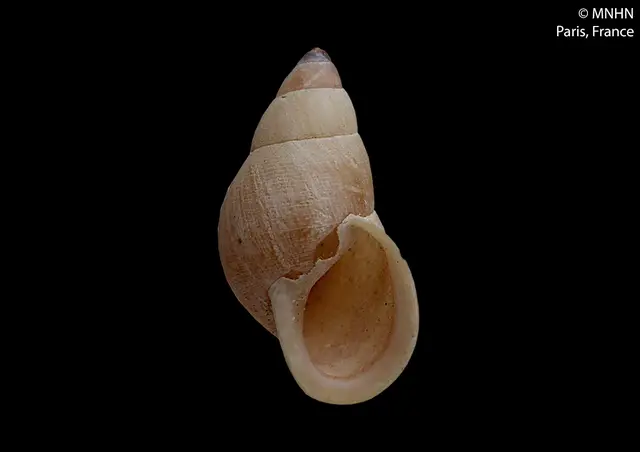
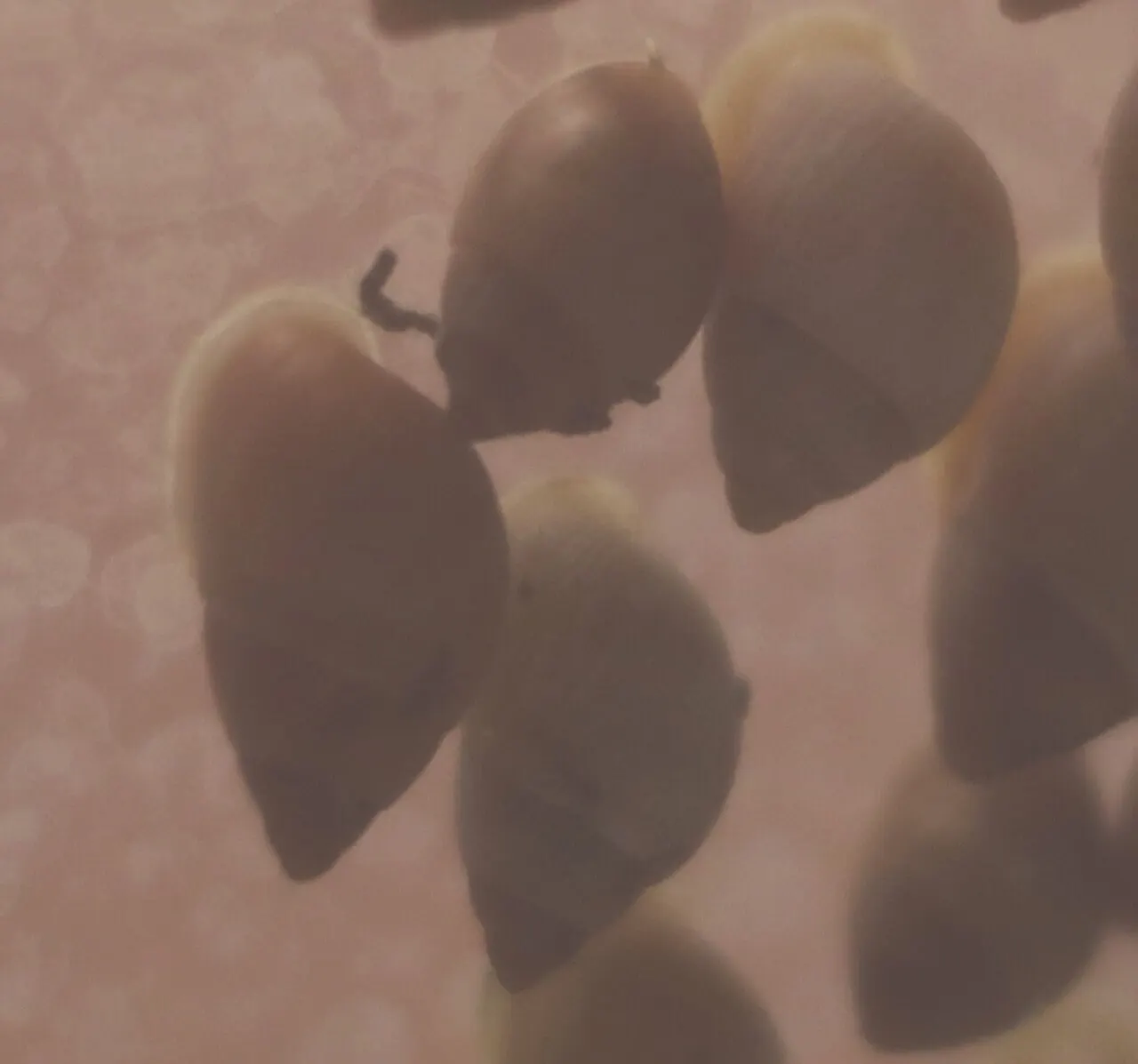
William Hartman described the species in 1880 and gave the shell as about 18 millimetres long and 9 across. The shell coils to the left, is oval and elongated, thin and translucent, and pale yellowish horn in colour with a darker tip. It has about five whorls, and the last may carry one to three narrow pale brown bands, or none.
The mouth is roughly half the shell's length, with a white, slightly flared lip and a prominent tooth on the inner side. The collector Andrew Garrett reported that all of about 1,500 specimens he examined were left-coiled and toothed.
Where it lived
The species is endemic to Moorea, in the Society Islands. Hartman's description is based on Garrett's collecting in Vaianai Valley, where the snail was noted as not uncommon on bushes. The IUCN lists its habitat as subtropical or tropical moist lowland forest.
Partula snails are most active at night and live high in the trees. They eat decaying plant matter and fungi, which helps recycle nutrients through the forest.
Pins are Wikidata “endemic to” fields. Orange dots, when present, are GBIF occurrence tiles — survey bias included.
Why it vanished
The rosy wolf snail (Euglandina rosea) was introduced to French Polynesia to control the giant African land snail. It hunted the native tree snails instead, and wild Partula populations were devastated through the 1980s and early 1990s.
The IUCN lists the rosy wolf snail as a past cause of very rapid decline that could return, and the New Guinea flatworm (Platydemus manokwari) as an ongoing threat. It records the wild population as zero.
What is being done
Zoos in several countries breed Partula under a programme coordinated by the Zoological Society of London. Marwell Zoo in England says it houses and breeds the only Moorean viviparous tree snail left anywhere in the world.
In September 2024 Marwell reported that more than 6,000 zoo-bred Partula from European zoos had travelled to French Polynesia. Marwell's share was 1,640 snails, including 100 Moorean viviparous tree snail, which went to Moorea. Each released snail is marked with UV-reflective paint so that wild-born young can be told apart. The IUCN lists captive breeding and reintroduction as its conservation actions for the species.
Sources
Written for this catalog in our own words from the sources below, checked against them on 12 November 2026. Population figures are estimates and carry the year they were made. Status and assessment year: IUCN. 2026. The IUCN Red List of Threatened Species. Version 2026-1. iucnredlist.org.