Critically Endangered
Mussismilia leptophylla
Mussismilia leptophylla
The knob coral (Mussismilia leptophylla) is a stony reef coral found only in Brazil, in shallow water on rocky and coral reefs. The IUCN Red List rated it Critically Endangered in 2022, because modelled bleaching under warming seas is projected to cut its population by at least 80 percent within three generations.
How to recognise it
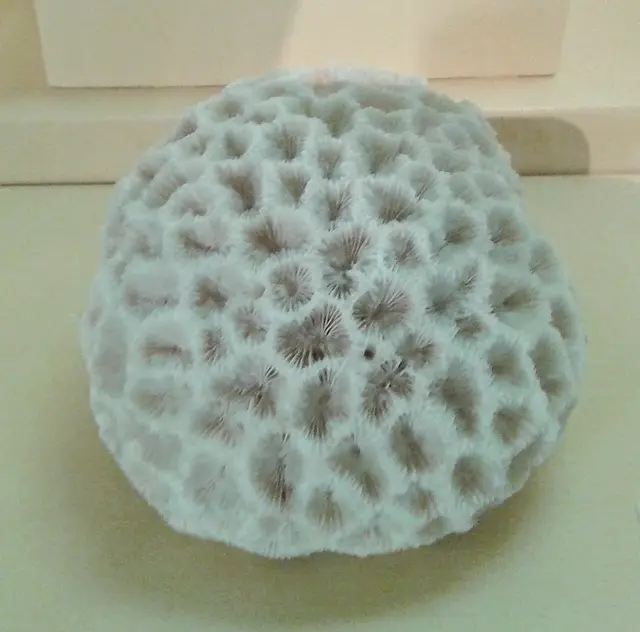
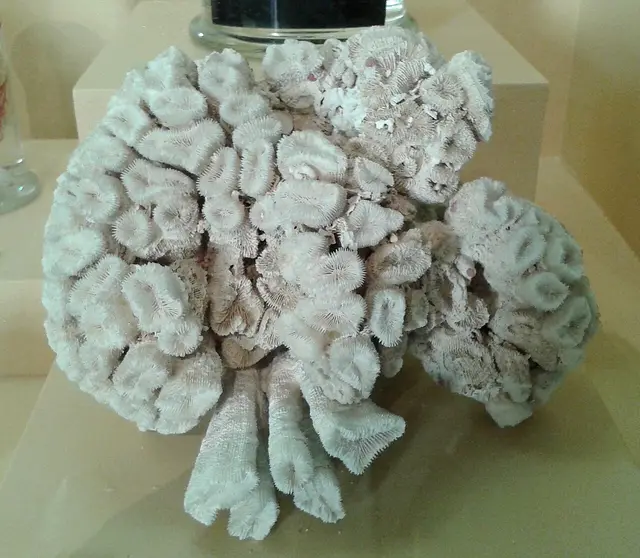
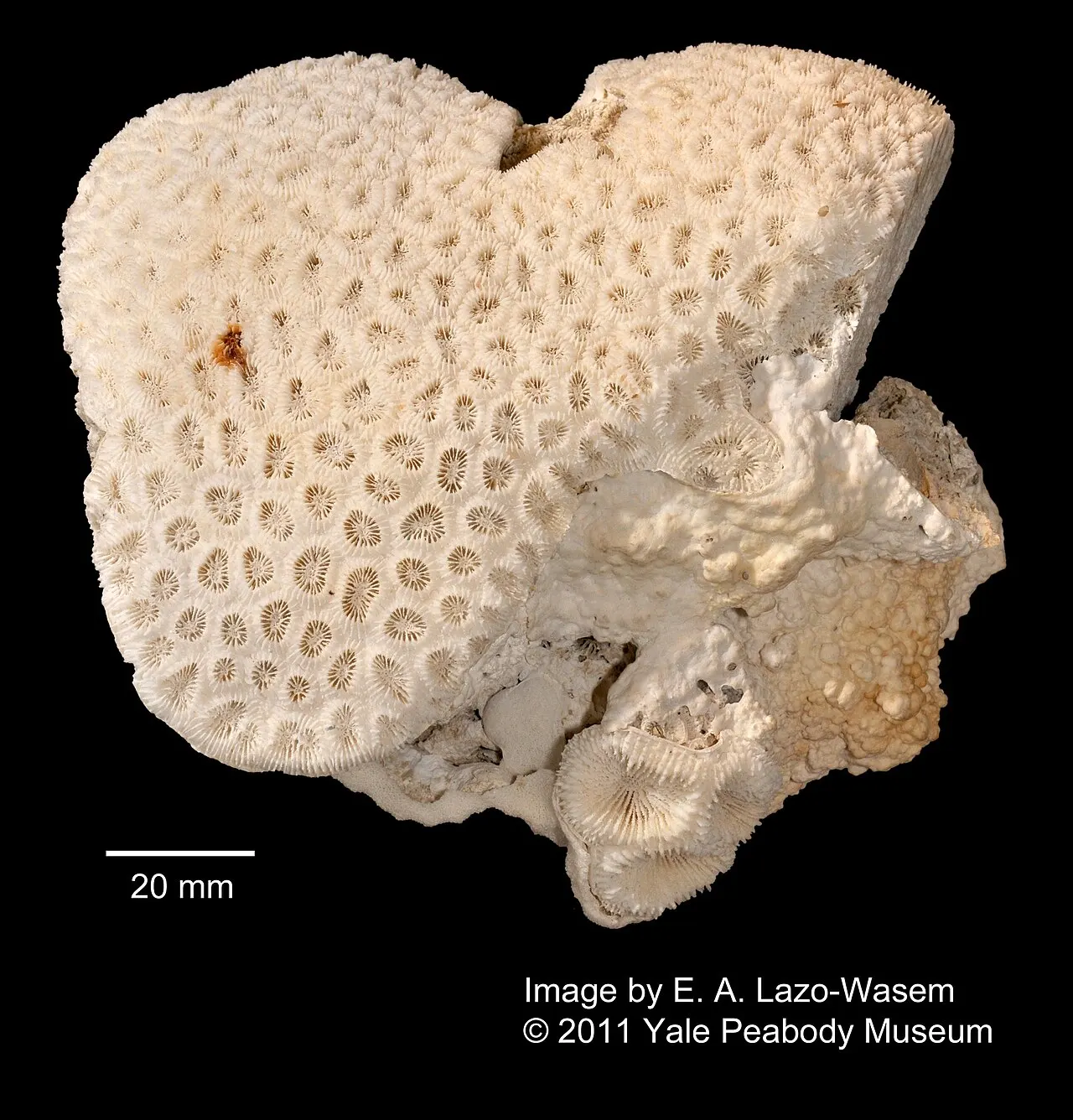
Reef-aquarium reference profiles describe the knob coral as forming flattened, massive colonies rather than domes. The colour is a uniform dark grey with paler grey mouth discs, and the individual cups are compact, rounded and fairly even in size, with evenly spaced ridges that stand slightly proud of the cup rim.
Colony size is unclear. The one profile that describes the species gives both over a metre across and a maximum of 25 cm, so treat any size as approximate.
A coral that changed genus
The American naturalist Addison Verrill described it in 1868 as Favia leptophylla. For a long time it stayed in Favia because it was thought to lack the multiple fan-shaped skeletal systems seen in the Brazilian genus Mussismilia.
Later work found that it does have more than one such fan system and shares other features with Mussismilia, so it was moved there. The current accepted name is Mussismilia leptophylla (Verrill, 1868).
Where it lives
The knob coral is endemic to Brazil. The IUCN lists Brazil as its only country, and 781 of the 784 occurrence records in the GBIF database are Brazilian. Its records include the Abrolhos reefs off Bahia, and the IUCN gives a total area of occupied reef of about 517 square kilometres.
It lives in shallow, sunlit water, from about 3 to 25 m deep according to the IUCN. A reef-aquarium profile gives 0 to 30 m. The listed habitats are subtidal rocky reef and coral reef, and at least one protected area holds it.
Pins are Wikidata “endemic to” fields. Orange dots, when present, are GBIF occurrence tiles — survey bias included.
How it lives
Like the rest of its genus, it is probably a mixed feeder. Algae living in its tissue supply energy from sunlight, and it can also catch zooplankton with its tentacles. Nothing species-specific has been published on how it breeds.
Surveys of the Abrolhos reefs found it to be a small share of living coral cover, mostly under 4 percent. The IUCN estimates a generation at about 10 years, so the three generations used to measure decline cover about 30 years.
Why it is in trouble
The 2022 listing uses criterion A3c, which covers a projected population decline linked to loss of habitat quality. The assessors inferred a past decline of about 32 percent since 1989 from global coral monitoring data. They then projected a decline of at least 80 percent by 2050, based on when reefs are expected to face severe bleaching every year.
Bleaching happens when warm water makes corals expel the algae they depend on, and corals often die if the heat lasts. Coral disease is another danger. Black band disease has been seen on this species in the Abrolhos reefs.
The assessment also lists coastal housing and commercial development, tourism, shipping lanes, soil erosion and sediment on reefs, storms, and small-scale harvesting.
What is being done
The assessment lists site protection, site management, habitat restoration and species recovery among the relevant conservation actions. It also names captive breeding and a genome resource bank as possible tools. A dedicated recovery programme for this coral turned up in none of the sources read.
Sources
Written for this catalog in our own words from the sources below, checked against them on 12 November 2026. Population figures are estimates and carry the year they were made. Status and assessment year: IUCN. 2026. The IUCN Red List of Threatened Species. Version 2026-1. iucnredlist.org.