Endangered
Montipora digitata
Montipora digitata
Montipora digitata is a stony reef coral that grows in branching, bushy colonies across the tropical Indo-West Pacific, from East Africa to the western Pacific. The IUCN Red List rated it Endangered in 2024, after a Least Concern rating in 2008, even though it is still described as a common coral on many reefs.
How to recognise it
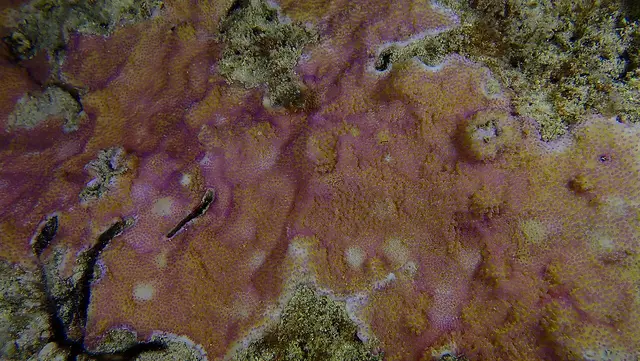
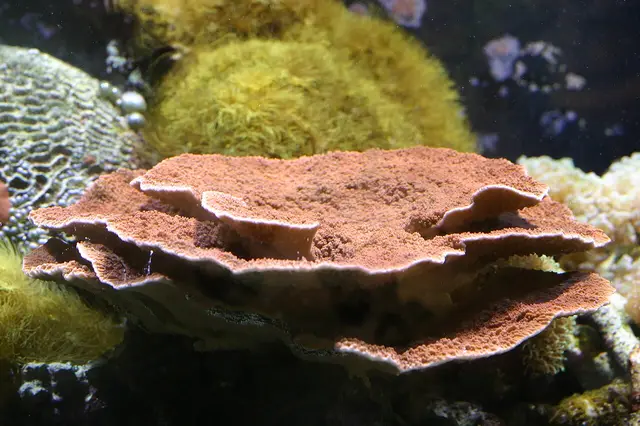
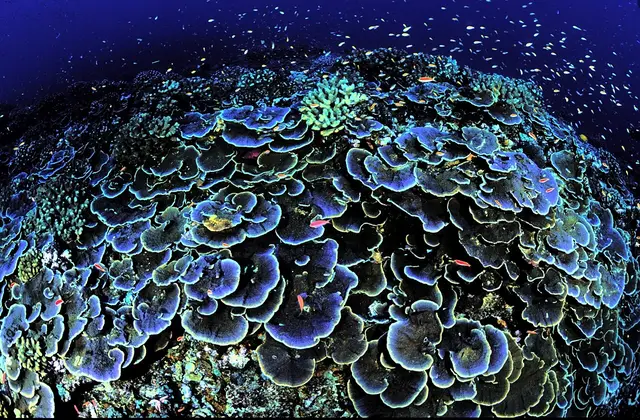
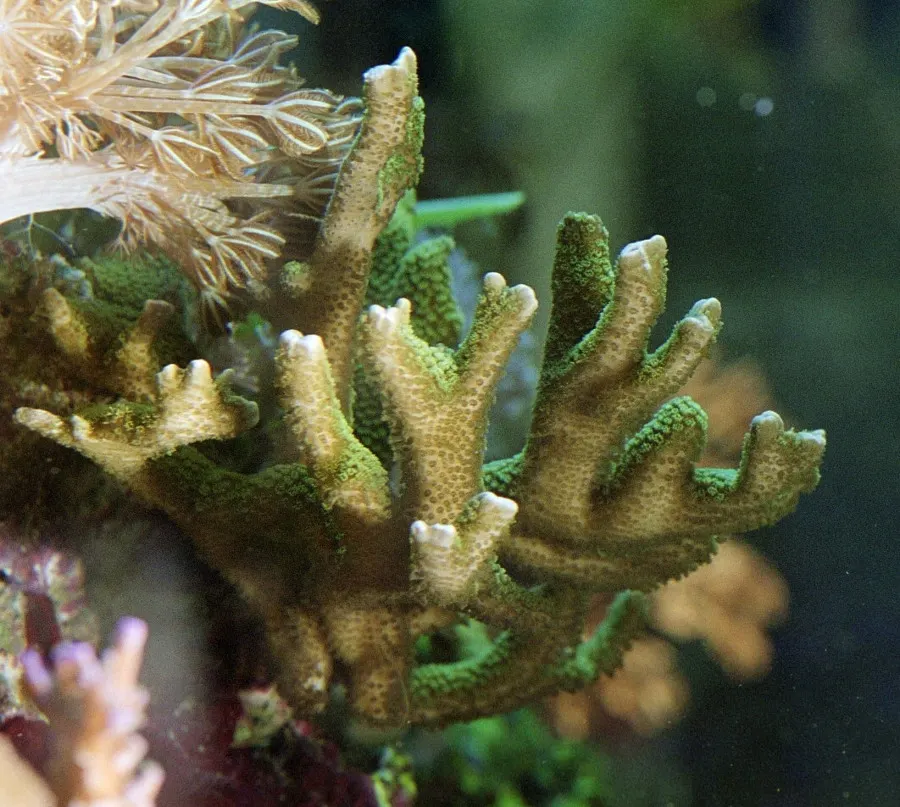
Colonies are branching or bushy, with upright branches that join and fuse with one another. Some form rounded mounds 40 cm (16 inches) or more across. The corallites, the small cups that hold the polyps, are tiny and sunk into the skeleton, which gives the surface a pitted look.
Colour is usually pale cream, pale yellow or brown, and occasionally pink or blue. It looks a lot like Montipora samarensis. Its boundary with Montipora tortuosa is unsettled: Corals of the World treats M. digitata as a species complex that needs further study, and some databases list M. tortuosa among its synonyms. Descriptions and records can therefore blend the two.
Where it lives
The range runs through the tropical Indo-West Pacific, roughly between 29 degrees north and 27 degrees south. The Red List records it in dozens of countries and territories, from Kenya, Tanzania, Mozambique, Madagascar and the Indian Ocean islands to India, Southeast Asia, China, Japan, Australia and Pacific islands such as Fiji, Palau and Vanuatu.
It is a reef animal, found from the surface down to about 33 m (108 feet). In shallow water it can dominate muddy reef flats.
Pins are Wikidata “endemic to” fields. Orange dots, when present, are GBIF occurrence tiles — survey bias included.
How it lives
Like most reef-building corals, it hosts microscopic algae in its tissue, and these can supply a large share of its energy (one source says up to 90 percent). The polyps also catch plankton.
It is a hermaphrodite, with each colony producing both eggs and sperm. Colonies in one area reportedly spawn together once a year, releasing buoyant egg and sperm packets that rise to the surface. The fertilised eggs develop into swimming larvae that eventually settle on hard ground.
Why it is in trouble
The Red List lists it as Endangered under criterion A3ce, assessed in April 2023 and published in 2024. The 2008 assessment was Least Concern. The coral is not rare, but the Red List records a decreasing population and lists many pressures on the reefs where it lives.
Pressures recorded include temperature extremes, storms and flooding, sediment washing onto reefs, coastal housing, tourism and recreation, commercial development and shipping lanes. Climate-driven warming and ocean acidification are widely cited as the main long-term threats to reef corals.
What is being done
All stony corals are on Appendix II of CITES, which means international trade in them is monitored. The Red List notes site protection and management, habitat restoration, captive breeding and artificial propagation, and a genome resource bank as actions in place or needed. Reef protection helps this coral only where local pressure, not warming, is the main driver.
Sources
Written for this catalog in our own words from the sources below, checked against them on 12 November 2026. Population figures are estimates and carry the year they were made. Status and assessment year: IUCN. 2026. The IUCN Red List of Threatened Species. Version 2026-1. iucnredlist.org.