Critically Endangered
Kokas Rainbowfish
Melanotaenia kokasensis
The Kokas rainbowfish (Melanotaenia kokasensis) is a small freshwater fish known only from one forest stream near Kokas village on the Fakfak Peninsula of western New Guinea, Indonesia. The IUCN Red List assessed it as Critically Endangered in 2020. Everything known about it comes from a single pool and the stream around it.
How to recognise it
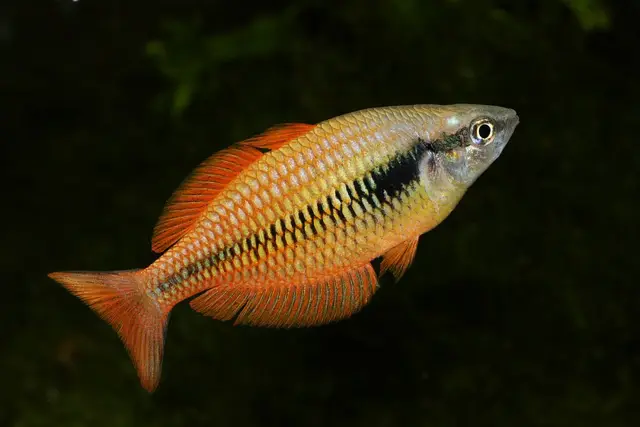
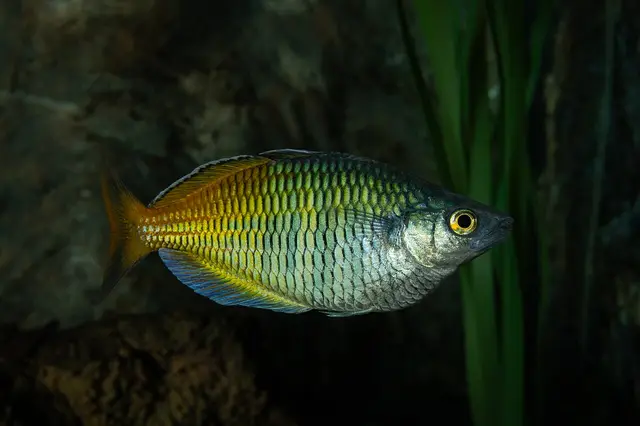
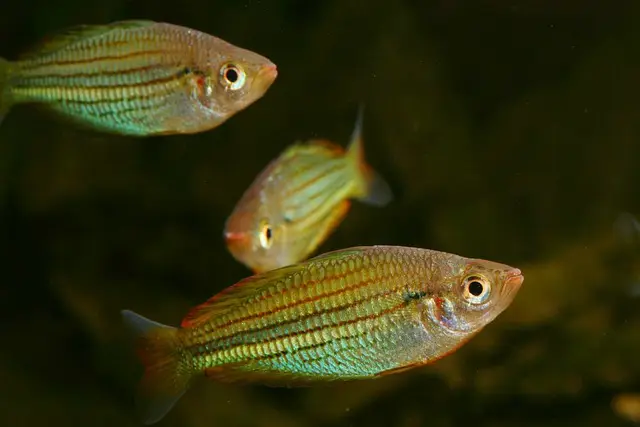
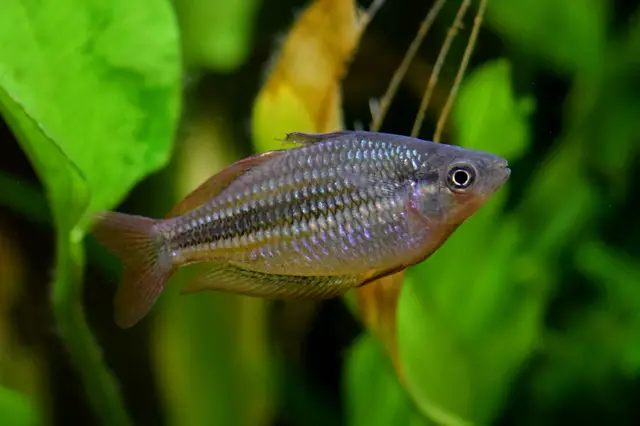
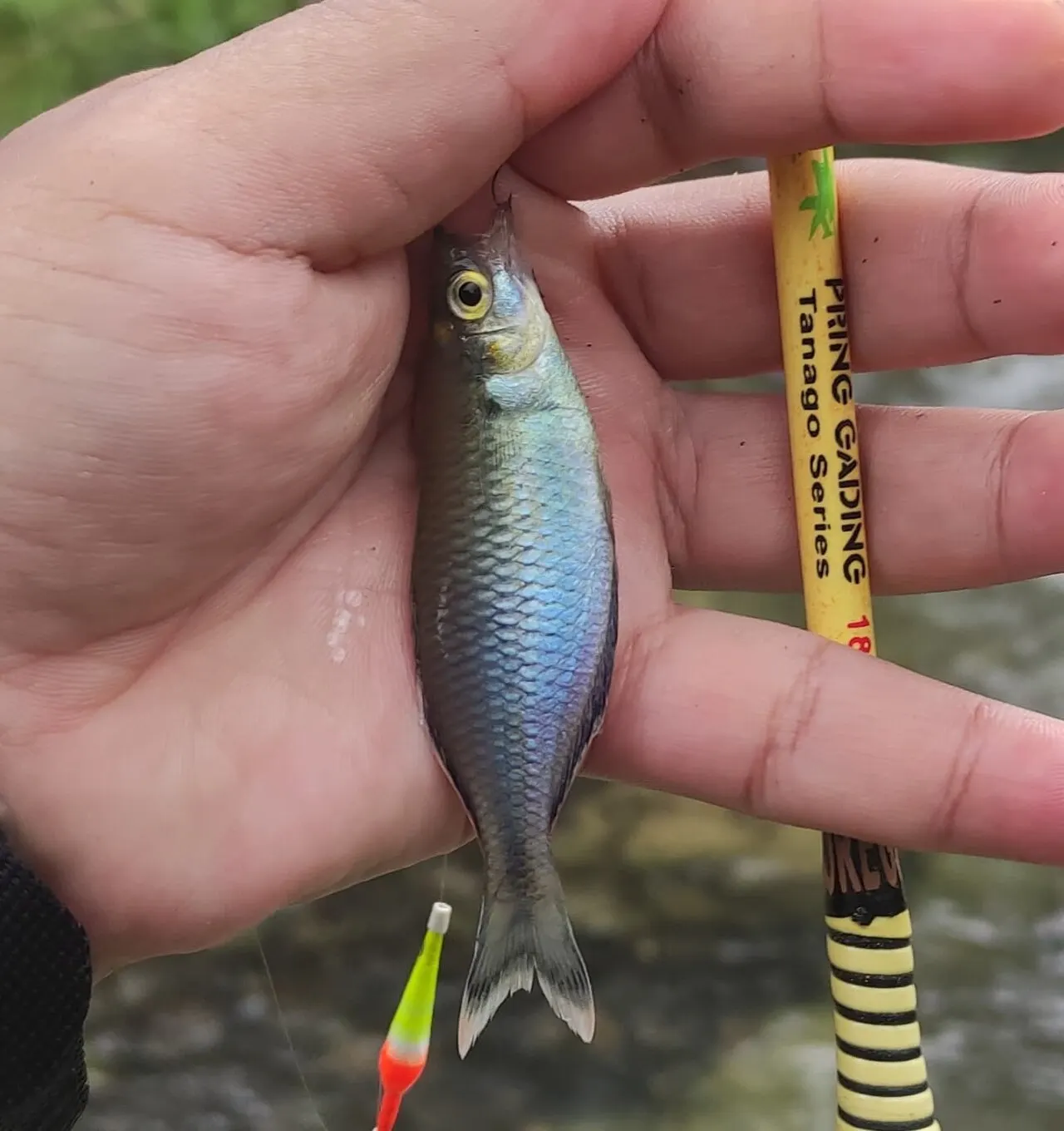
Adult males are pale blue-grey with a blackish band along the middle of the body, solid toward the tail and broken toward the front. Narrow orange stripes run between the scale rows on the upper body. The head is greyish above and white below, the pelvic fins are bright yellow, and a bluish patch sits on the lower body below the pectoral fin.
Females look similar but are less vivid, with whitish pelvic fins. The sexes are hard to tell apart by body depth or other outward features. Males and unsexed fish reach about 6.9 centimetres in standard length, and females about 5.9 centimetres.
Where it lives
The fish was described in 2008 by Gerald Allen, Peter Unmack and Renny Hadiaty, from fish collected that year by Allen and Max Ammer. It is named for Kokas, a village near the type locality on the northern Fakfak Peninsula, in the Birds Head region of Papua Barat Province.
It is known only from a small stream with a limestone bed running through primary forest. The stream drops about 20 metres down a steep ramp into a mangrove-lined inlet, and the specimens came from a circular pool 15 to 20 metres across and up to about 0.5 metres deep, roughly a kilometre upstream. The pool lies below limestone fissures that appear to be the stream's underground source. The Red List counts one location with an area of occupancy of about 4 square kilometres, and lists small pools and streams as habitat.
Pins are Wikidata “endemic to” fields. Orange dots, when present, are GBIF occurrence tiles — survey bias included.
Why it is in trouble
With one location, any change to that stream could affect the entire species. The 2020 assessment records a continuing decline in habitat area and lists two threats, both affecting essentially the whole population: housing and urban development, and unintended effects of small-scale harvesting. Both are linked to ecosystem conversion and degradation. The population trend is recorded as unknown, and no population count exists.
What is being done
No conservation actions are recorded as in place. Research on population size, distribution and trends is the one need listed. The species is not currently available in the aquarium hobby, though FishBase lists aquarium potential.
Sources
Written for this catalog in our own words from the sources below, checked against them on 12 November 2026. Population figures are estimates and carry the year they were made. Status and assessment year: IUCN. 2026. The IUCN Red List of Threatened Species. Version 2026-1. iucnredlist.org.