Critically Endangered
Lake Kurumoi rainbowfish
Melanotaenia parva
The Lake Kurumoi rainbowfish (Melanotaenia parva) is a small, red-finned freshwater fish known from one lake on the Bird's Head Peninsula of New Guinea. The IUCN rated it Critically Endangered in 2020 and flags it as possibly extinct in the wild. The lake had almost dried up by 2007.
How to recognise it
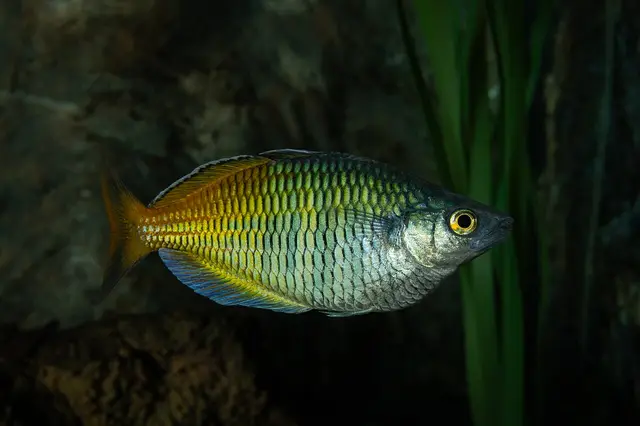
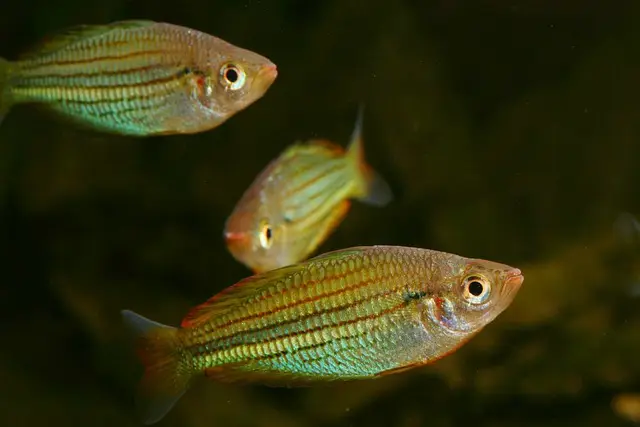
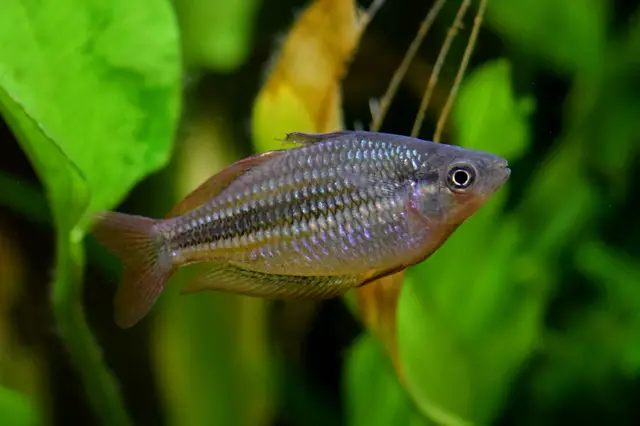
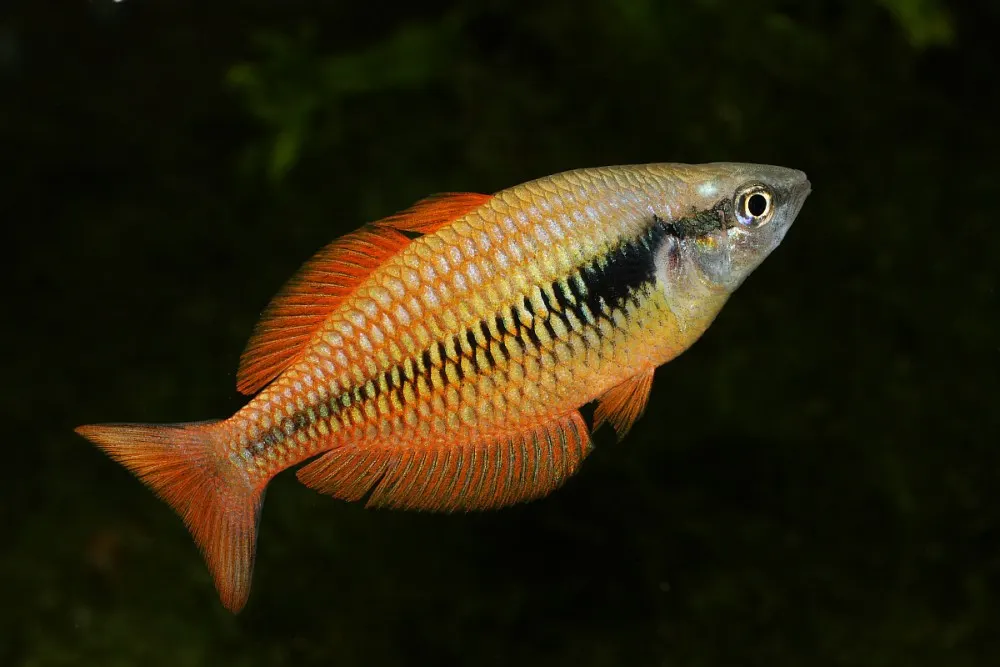
Gerald Allen described the species in 1990, from fish measuring 37.6 to 53 mm in standard length. The name parva is Latin for small, though aquarium fish are reported to reach 9 to 10 cm. Males come in two colour forms: bluish to mauve with a black stripe along the middle of the side, or silver with red speckles and thin red or orange lines between scale rows.
The fins are red in both forms. Young males are rosy-mauve and turn a brighter orange-red as they grow. Its closest relative, Melanotaenia angfa, lives in nearby streams, and Allen first wondered if the two were one species before finding differences in fin rays and cheek scales.
Where it lives
Lake Kurumoi is a small, isolated lake on the isthmus joining the Vogelkop (Bird's Head) Peninsula to the rest of New Guinea. The shore is muddy, the water very turbid, and some stretches are thick with hornwort (Ceratophyllum demersum). The lake is regarded as part of the Yakati River system, but its level sat well below the natural outlet and no outflow was visible.
When Allen collected there in 1989, during a conservation survey of the Bintuni Bay region, the fish was very abundant, mostly along the shoreline among dense vegetation. The IUCN assessment lists one location and gives both lake and stream habitat as suitable.
Pins are Wikidata “endemic to” fields. Orange dots, when present, are GBIF occurrence tiles — survey bias included.
Why it is in trouble
Allen noted that the water level seemed to have fallen dramatically in the years before his visit. A visit in June 2007, by scientists who had recently described another rainbowfish from the peninsula, found only about 1 hectare of water left. The lake was infested with introduced Mozambique tilapia (Oreochromis mossambicus), and the rainbowfish was much scarcer and hard to catch, living mainly in narrow creeks formed in the dry lake bed. Drought and the tilapia were given as the causes.
The 2020 IUCN assessment records a decreasing population and continuing decline in habitat, and flags the species as possibly extinct in the wild. It has probably vanished from its whole native range, but whether any wild fish survive is unknown. The latest field report found is from 2007.
What is being done
Heiko Bleher collected live fish in 1999, and these entered the aquarium hobby. After the 2007 visit, scientists started a domestication programme at a government aquaculture station in West Java, aimed at supporting conservation outside the wild and reducing collection from the lake.
The IUCN assessment records no conservation actions in place.
Sources
Written for this catalog in our own words from the sources below, checked against them on 12 November 2026. Population figures are estimates and carry the year they were made. Status and assessment year: IUCN. 2026. The IUCN Red List of Threatened Species. Version 2026-1. iucnredlist.org.