Endangered
Lake Eacham rainbowfish
Melanotaenia eachamensis
The Lake Eacham rainbowfish (Melanotaenia eachamensis) is a small Australian fish of the Atherton Tableland in north Queensland. It vanished from the crater lake that gave it its name by 1987 but survives elsewhere on the Tableland and in aquariums. The IUCN rated it Endangered in 2019.
How to recognise it
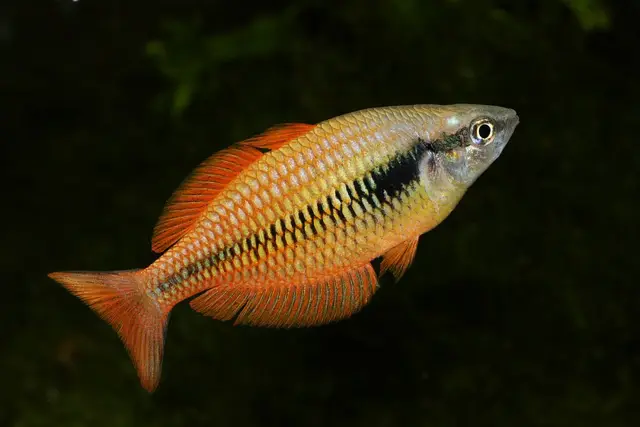
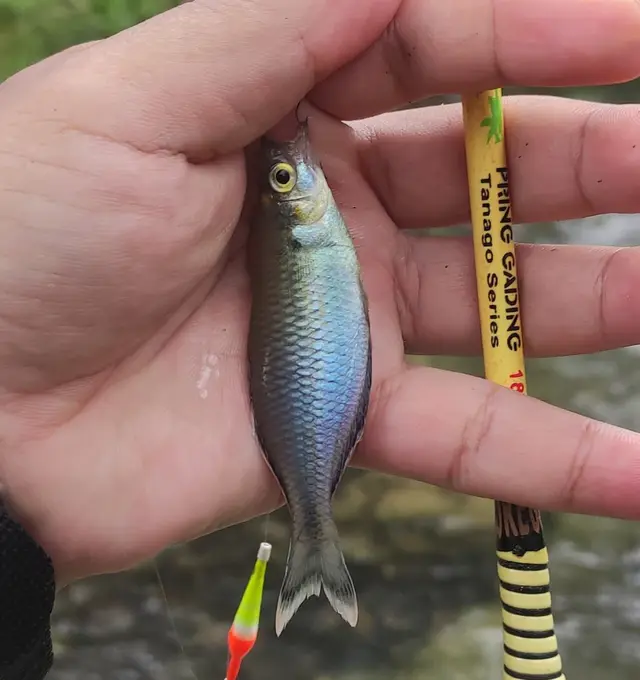
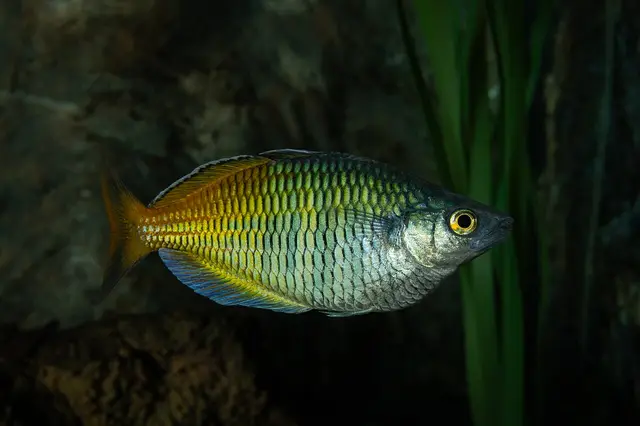
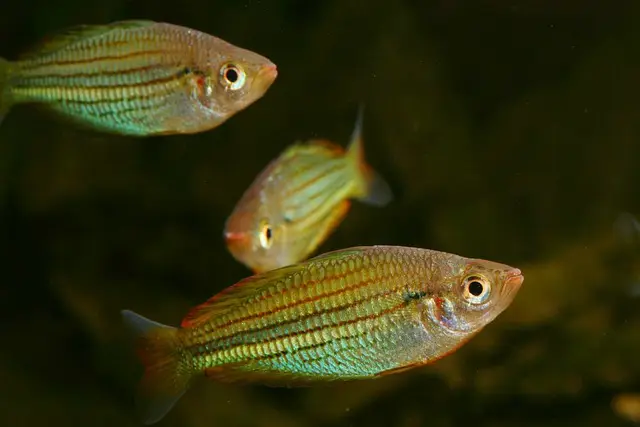
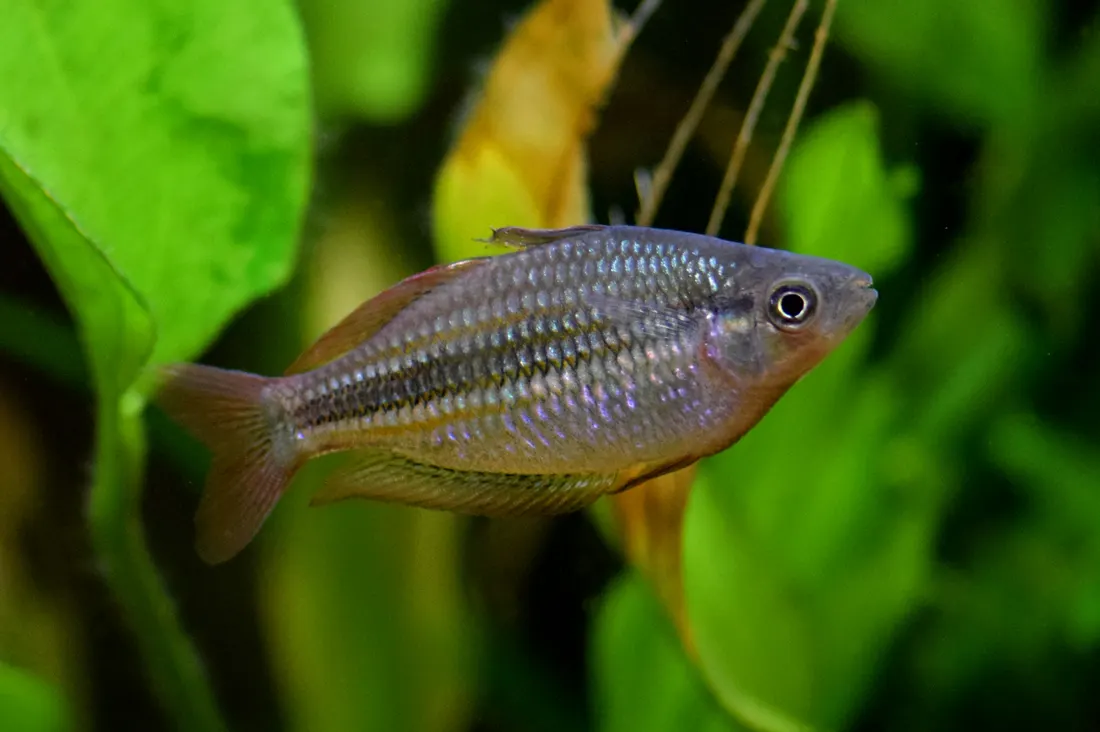
It is a small rainbowfish, usually under 6 cm long and at most about 8 cm (FishBase gives 6.5 cm). Both sexes mature at roughly 2 to 3 cm. Males from the original Lake Eacham population had a bronze body, a jet-black first dorsal fin, and maroon-red second dorsal and anal fins. Females are plainer, with smaller, more rounded fins.
Where it lives
Gerald Allen collected it in 1978, and Allen and Cross described it in 1982. The type locality, Lake Eacham, is a 43 hectare crater lake about 40 km southwest of Cairns, fed only by rain falling in its crater. Water temperature there runs from 18 to 28 degrees C.
Other populations are known from Dirran Creek, about 22 km south of the lake, and from Lake Euramoo. Genetic tests matched fish from both to the Lake Eacham fish. Many other Tableland populations once labelled with this name turned out to be other species, hybrids or mixed stock. The 2019 assessment counts 3 locations and an area of occupancy of about 72 square kilometres, between roughly 460 and 796 m above sea level. It lives in small creeks and crater lakes, gathering at shallow edges among water plants, logs and branches.
Pins are Wikidata “endemic to” fields. Orange dots, when present, are GBIF occurrence tiles — survey bias included.
Why it is in trouble
Rainbowfish were abundant in Lake Eacham during surveys in 1973, 1974 and 1978. Four native fish species that did not originally live there, including the barred grunter and the mouth almighty, were found between 1983 and 1985, presumably put in by people. A 1987 survey found no rainbowfish while those four were plentiful, and the mouth almighty was blamed most. More species have been stocked since, and the lake's condition has declined.
The Red List describes a decreasing population and habitat, with the population severely fragmented. It lists problematic native species and small-holder farming and grazing as threats.
What is being done
Hobbyists kept the fish alive. After a 1987 conference declared it extinct in the wild, the Australia New Guinea Fishes Association started a captive breeding project. Within two years it had produced many new populations in Australia, with eggs sent to North America and Europe.
One rainbowfish specialist, Adrian Tappin, doubts that much of today's captive stock is genuine, since look-alikes are widely bred under the same name. Control of problem species is the one conservation action the Red List assessment lists, and the fish occurs in at least one protected area.
Sources
Written for this catalog in our own words from the sources below, checked against them on 12 November 2026. Population figures are estimates and carry the year they were made. Status and assessment year: IUCN. 2026. The IUCN Red List of Threatened Species. Version 2026-1. iucnredlist.org.