Endangered
Lake Kutubu rainbowfish
Melanotaenia lacustris
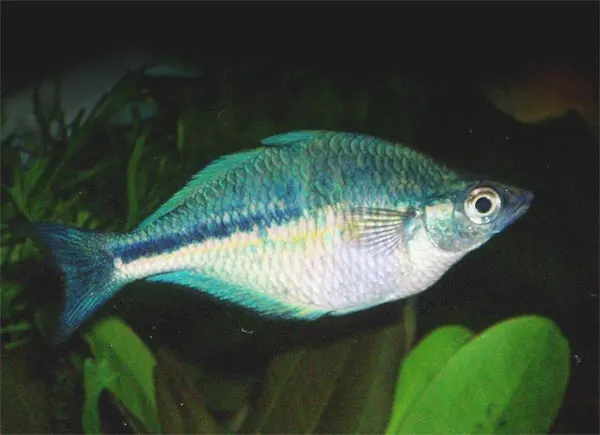
The Lake Kutubu rainbowfish (Melanotaenia lacustris) is a blue to turquoise fish that lives only in Lake Kutubu and its outlet, the Soro River, in Papua New Guinea. The IUCN Red List rated it Endangered in 2020, citing a single location, a shrinking range and oil and gas drilling nearby.
How to recognise it
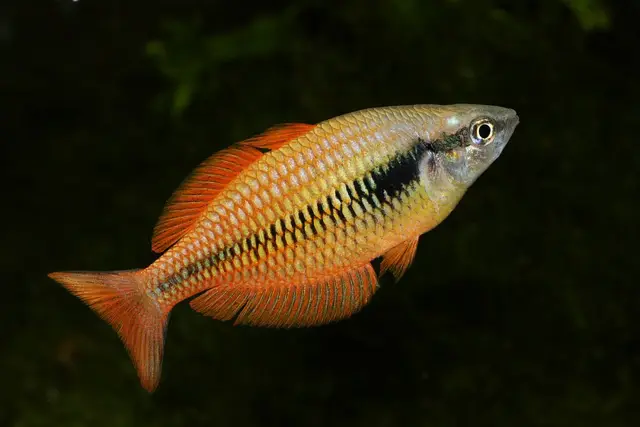
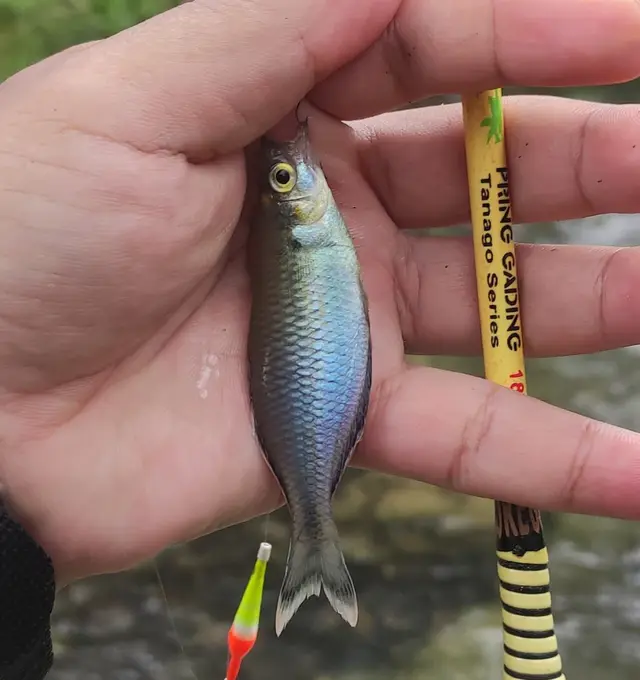
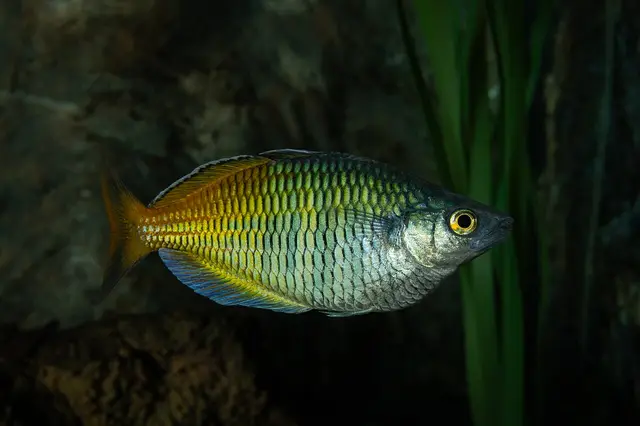
Adults grow to about 12 cm, though most stay under 10 cm. Their colour runs from cobalt and steel blue to aquamarine and turquoise, depending on water conditions and diet. Males are bigger, deeper in the body and brighter than females, and during spawning the nape turns bright orange or gold.
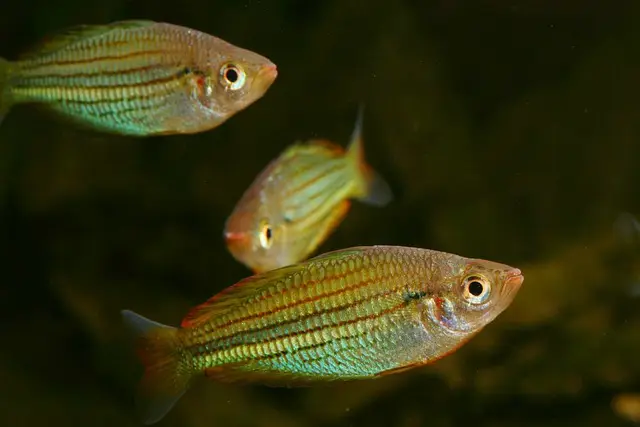
Young fish are much drabber. Aquarists report that full colour can take more than a year to appear.
Where it lives
Lake Kutubu sits in Southern Highlands Province, about 40 km from the town of Mendi. It is roughly 19 km long and 4 km wide at its widest, with a maximum depth of about 70 m, and it formed when volcanic debris dammed a valley. The Soro River is its only outlet and flows into the Kikori River system.
The water is clear. Rainbowfish gather around water plants, submerged roots and fallen logs. The lake is unusually rich in fish found nowhere else, but the tally depends on the source: one reference counts 13 endemic fish, while two aquarist sources say 10 of 14 recorded species are endemic. The IUCN assessment puts the rainbowfish's range at about 1,382 sq km and treats the whole population as living at a single location.
Pins are Wikidata “endemic to” fields. Orange dots, when present, are GBIF occurrence tiles — survey bias included.
How it lives
It is an omnivore that takes a wide range of foods. It is an egg scatterer: in aquaria the sticky eggs hang from fine threads on plants and hatch in 7 to 12 days, and adults will eat spawn if given the chance.
Why it is in trouble
The IUCN lists oil and gas drilling as a threat, records a continuing decline in the area the fish occupies and describes the population as decreasing. Oil development began at one end of the lake in the 1990s.
In January 2013 a fish kill began that lasted about six months. A 2016 study in Pacific Science by Smith and colleagues found disease signs consistent with epizootic ulcerative syndrome. They were most obvious in sleeper gobies and gudgeons, and less obvious in the rainbowfish and some other species. The kill coincided with an inflow of white particles from the northeast, where companies carried out extensive horizontal drilling in 2012 and 2013, but the study did not establish that drilling caused it.
The same paper reports that farmers began raising tilapia and common carp in earthen ponds in 2009, that heavy rains in 2010 to 2012 released farmed fish into the lake, and that by May 2015 fishers said tilapia dominated the catch. What the newcomers do to native rainbowfish has not been measured in the sources consulted.
One aquarist profile also names overfishing, much of it for the aquarium trade.
What is being done
Lake Kutubu was designated a Wetland of International Importance in 1998. The IUCN assessment lists site and area management as a conservation action needed, and records no conservation actions in place.
Sources
Written for this catalog in our own words from the sources below, checked against them on 12 November 2026. Population figures are estimates and carry the year they were made. Status and assessment year: IUCN. 2026. The IUCN Red List of Threatened Species. Version 2026-1. iucnredlist.org.