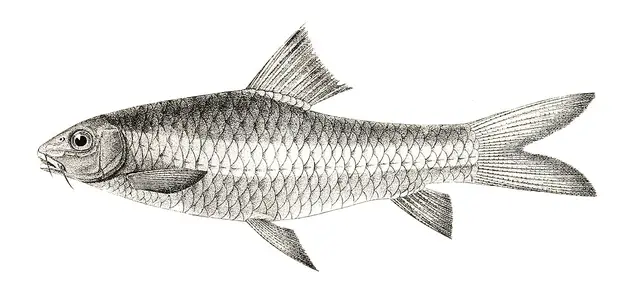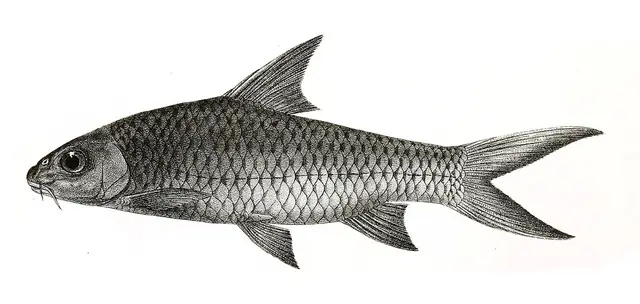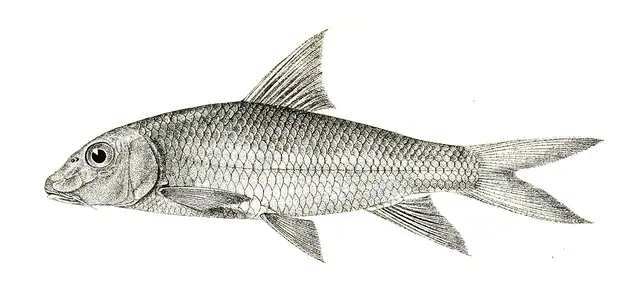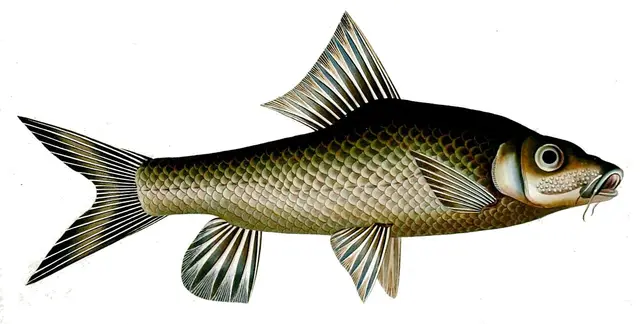
Endangered
Korhi Barb
Hypselobarbus micropogon
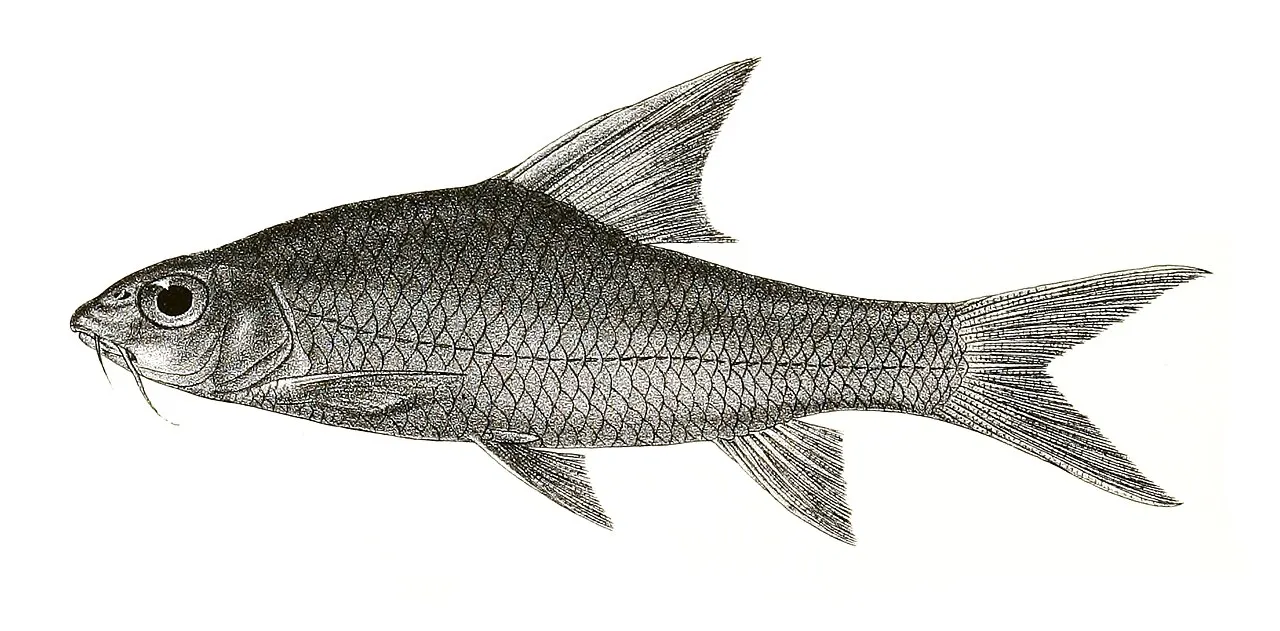
The Korhi barb, Hypselobarbus micropogon, is a large carp relative from the rivers of southern India, centred on the upper Kaveri (Cauvery) basin. The IUCN Red List lists it as Endangered (reassessed 2023), citing a shrinking habitat and many pressures on its waters.
How to recognise it
The Korhi barb is a cyprinid, a member of the carp family, in the genus Hypselobarbus. It was described by the French zoologist Achille Valenciennes in 1842. It has also been known as Barbus micropogon, Gonoproktopterus micropogon and Puntius micropogon.
It grows big. FishBase gives a maximum total length of 90 cm, an upper figure for the species. It is used as a gamefish and is fished commercially.
Where it lives
The species is restricted to peninsular India, in the headwaters of the Kaveri in the Nilgiri and Wayanad hills and in Karnataka. The IUCN lists records from Tamil Nadu, Karnataka and Kerala. A 2021 survey of Cauvery Wildlife Sanctuary in Karnataka, along a 37 km river stretch, counted it among eight fish species endemic to the Cauvery system.
It lives in the deeper parts of large streams and rivers, favouring rocky stretches and fast flow. It occurs between about 353 and 968 m above sea level, and spawns in the upper Cauvery. FishBase describes it as feeding on debris and plant matter. The IUCN counts five locations, with an area of occupancy of about 52 square kilometres.
Pins are Wikidata “endemic to” fields. Orange dots, when present, are GBIF occurrence tiles — survey bias included.
Why it is in trouble
The IUCN trend is decreasing, with a continuing decline in the area it occupies. The threats listed are many: dams, mining and quarrying, pesticides and herbicides, sewage and farm run-off, and storms and flooding. Local harvest is also a threat, both deliberate and as bycatch.
FishBase rates the species as having low resilience, with a population doubling time of 4.5 to 14 years, and high vulnerability to fishing. That makes recovery from overfishing slow.
What is being done
Some protection exists. The species occurs in at least one protected area, and conservation sites have been identified over part of its range. The 2023 assessment records no recovery plan, no monitoring scheme, no harvest management plan and no captive breeding. The IUCN lists harvest management, resource and habitat protection, and site protection as actions needed.
Sources
Written for this catalog in our own words from the sources below, checked against them on 12 November 2026. Population figures are estimates and carry the year they were made. Status and assessment year: IUCN. 2026. The IUCN Red List of Threatened Species. Version 2026-1. iucnredlist.org.