Critically Endangered
Hypselobarbus pulchellus
Hypselobarbus pulchellus
Hypselobarbus pulchellus, known locally as haragi, is a large barb from rivers of the Western Ghats in Karnataka, India. The IUCN Red List rates it Critically Endangered, possibly extinct (assessed 2011, amended 2020). A 2013 paper reported it from the Sita and Tunga rivers, and a 2014 paper described its first hatchery breeding.
How to recognise it
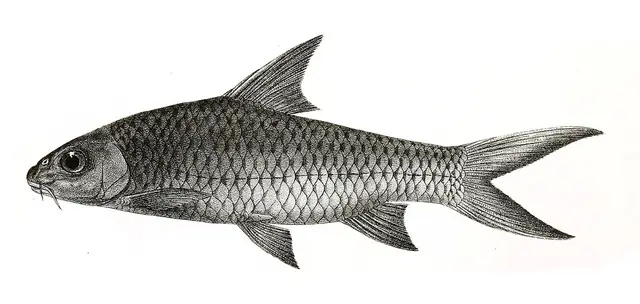
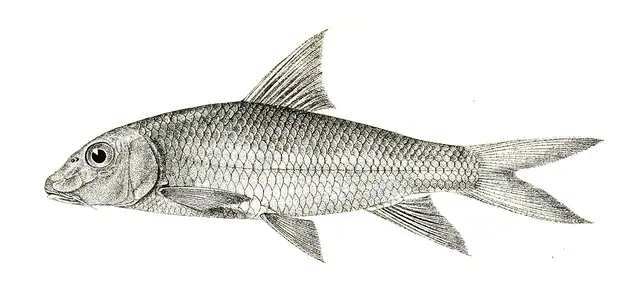
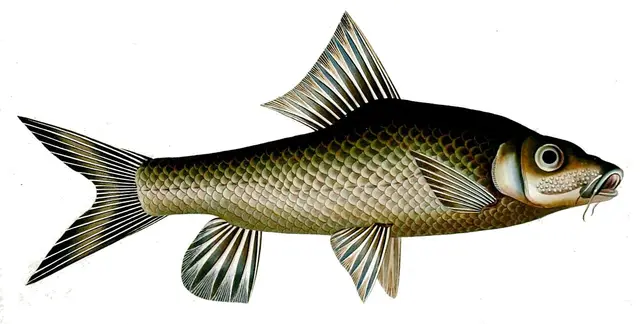
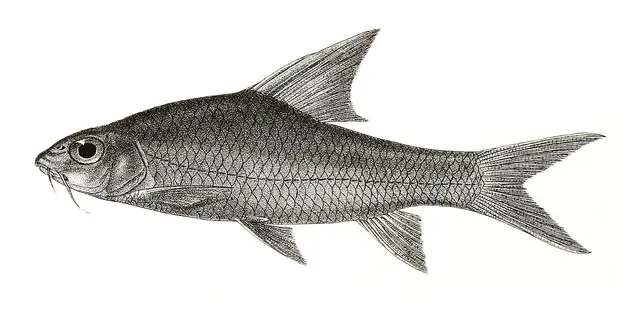
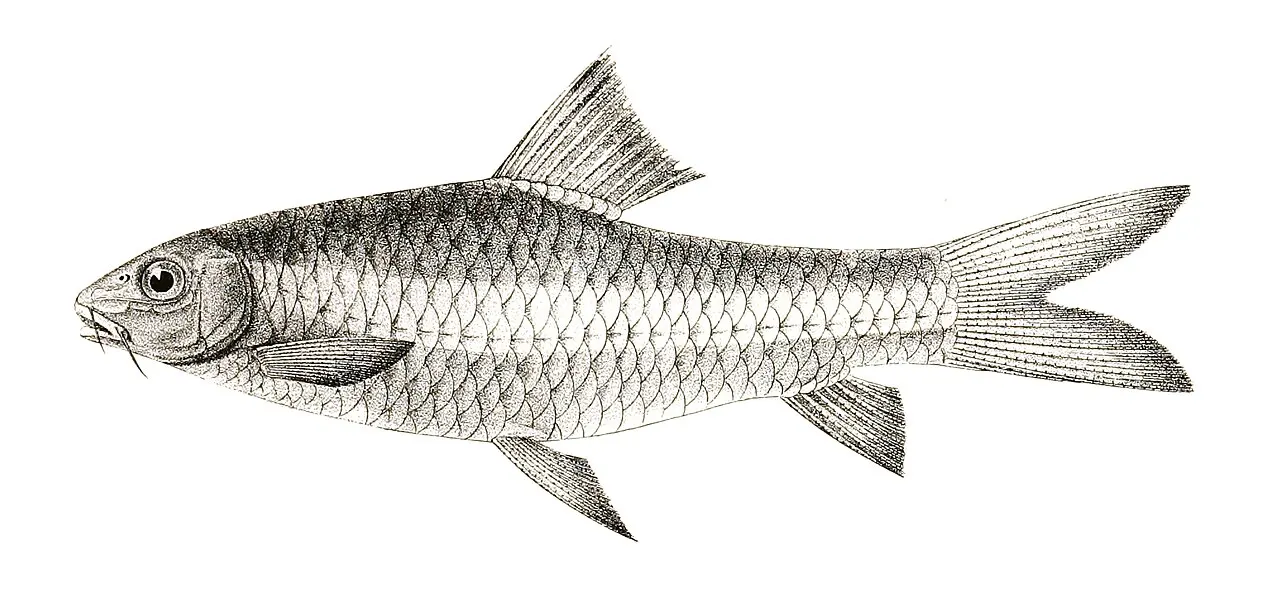
Haragi carries a silver or bronze lateral band two scales high. A 2013 rediscovery paper by Knight, Rai and D'souza separates it from two similar barbs of the region, Hypselobarbus dobsoni and H. jerdoni, by its fin tips, which lack the dark markings those species show, and by its lateral line count of 32 to 34 scales (plus 1 or 2 on the tail base), higher than either relative.
Breeding fish look different. In a 2014 hatchery study, mature males were darker, with black pelvic, pectoral and anal fins and pink tubercles on the snout that appeared from June and faded by September or October. Females were silvery white with a deep pink lateral band and red dorsal and tail fins edged in black.
The species is big. FishBase gives a maximum length of 44 cm and a maximum published weight of 8 kg, and the 2014 hatchery study also says it can reach 8 kg. The wild fish measured in 2013 were 107 to 208 mm in standard length.
Where it lives
Francis Day described the species in 1870 from a single stuffed specimen from South Canara. For well over a century afterwards it was barely recorded. Reports from the 1950s to 2008 lacked descriptions or preserved specimens, and several authors treated it as a synonym of H. jerdoni or H. dobsoni. The Red List assessment lists it as possibly extinct.
The 2013 rediscovery paper reported fish collected from the Sita River on 20 April 2013 that matched Day's species, and a specimen taken in the Tunga River near Shimoga in 1998 identified as the same. Both rivers are in the southern Western Ghats. FishBase describes the habitat as the deeper parts of large streams and rivers at the base of the ghats.
Pins are Wikidata “endemic to” fields. Orange dots, when present, are GBIF occurrence tiles — survey bias included.
How it lives
Haragi eats plants. Earlier researchers, cited in a 2014 hatchery paper, reported it eating submerged grasses, aquatic weeds, algae and water hyacinth roots. The same paper says it once formed an important fishery on the Tungabhadra River, and the IUCN lists food use. A 2020 aquaculture article calls it the only native Indian fish that eats aquatic weeds and submerged grasses.
In the 2014 study, pond-reared fish were ready to breed in June and July, and bright orange eggs were stripped from them. Eggs hatched after 48 hours and the yolk sac was used up after 8 days. Earlier work, cited in the same paper, reported breeding in natural waters from September to April.
Why it is in trouble
The IUCN names agro-industry farming and grazing, subsistence harvesting, and the unintended effects of large-scale wood harvesting as ongoing threats, each rated low impact. The 2013 rediscovery paper adds dams and hydroelectric projects, unmanaged exploitation and destructive fishing as likely causes of decline. The Red List gives no population size, and the trend is listed as unknown.
What is being done
Hatchery work is the most concrete effort. Researchers of the Central Institute of Freshwater Aquaculture caught wild fingerlings (mean length about 97 mm) from the Tunga River near Gajanur, Shimoga, and reared them in ponds for three years. Their paper, published in 2014, reported the first successful induced breeding, after efforts over the previous fifty years had failed. They saw it as a way to replenish dwindling river stocks in Karnataka. A 2020 article from the same institute describes breeding and seed production from pond-raised fish.
The Red List lists habitat protection as an action needed. It records no recovery plan, no monitoring scheme and no protected area covering the species.
Sources
Written for this catalog in our own words from the sources below, checked against them on 12 November 2026. Population figures are estimates and carry the year they were made. Status and assessment year: IUCN. 2026. The IUCN Red List of Threatened Species. Version 2026-1. iucnredlist.org.