Endangered
Curmuca Barb
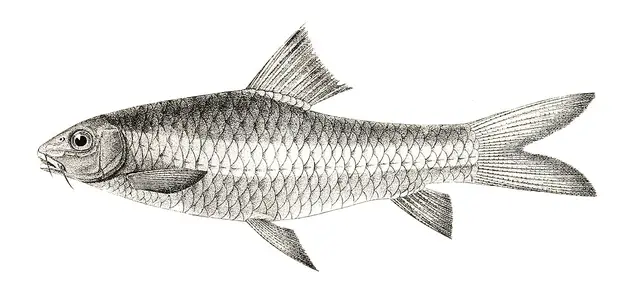
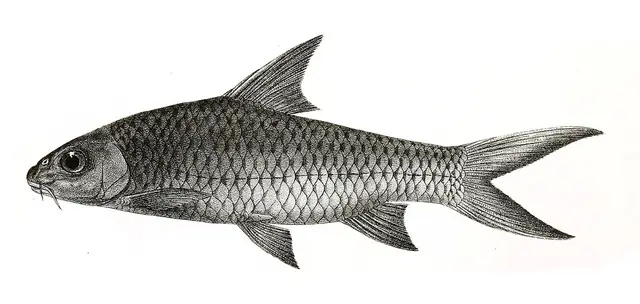
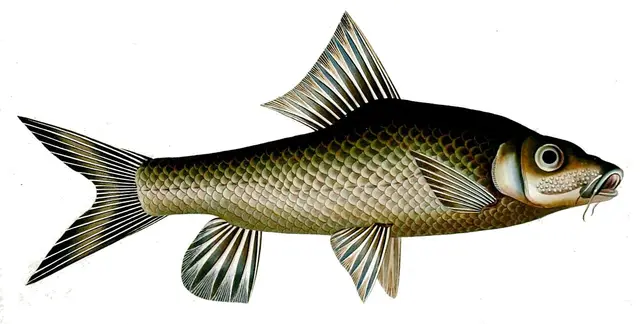
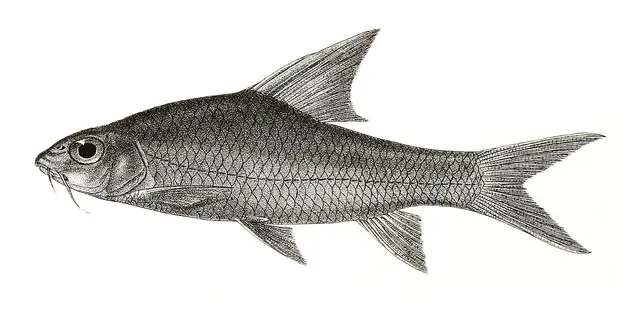
Hypselobarbus curmuca
The curmuca barb (Hypselobarbus curmuca) is a freshwater fish of the rivers and streams of southern India, recorded in Tamil Nadu, Kerala and Karnataka. It travels within river systems to breed and feed. The IUCN Red List assessed it as Endangered in 2011, after a past decline put at 50 to 60 percent.
How to recognise it
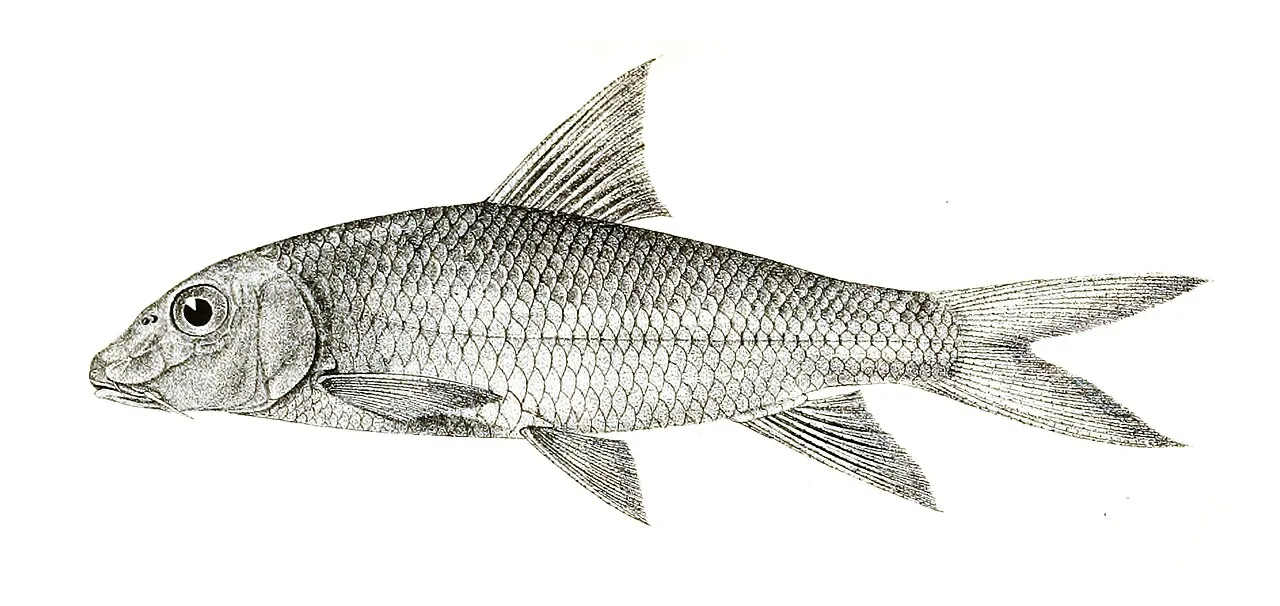
It's a carp relative with a pair of barbels at the corners of the mouth but none on the snout. The lateral line is complete, running through 41 to 43 pored scales. Young fish carry a dark bar just behind the gill cover, which fades as they mature. Fins are pale yellow, and large adults (over roughly 20 cm) show red pigment between the fin rays.
Hamilton described it in 1807 as Cyprinus curmuca, and it has been moved between several genera and given a string of synonyms since. In Malayalam it is known as kooral.
Where it lives
The species is found only in India, in upland streams and rivers of the south. The IUCN lists it from Tamil Nadu, Kerala and Karnataka, across an estimated 20 to 30 locations. Its range is large on paper (an extent of occurrence of about 410,000 square kilometres), but the area it actually occupies is put at around 8,500 square kilometres.
It can turn up in new places, though rarely. A survey of the upper Kabini catchment in Wayanad, Kerala, sampled between March 2014 and March 2020. It recorded the barb in two sub-catchments, rated it very rare (10 or fewer specimens for the effort made) and counted it as a first record for the district.
Pins are Wikidata “endemic to” fields. Orange dots, when present, are GBIF occurrence tiles — survey bias included.
How it lives
It prefers deep, shaded pools in hilly rivers, both seasonal and permanent, and the IUCN rates reservoirs as only marginal habitat. It is a migrant within river systems: it breeds in the hills, spawning in small streams with sandy, weedy beds, and drops down toward tidal reaches to feed. Most of its diet is algae, with the occasional insect larva.
Why it is in trouble
Fishing is the first problem. The IUCN lists both large-scale and small-scale harvest as ongoing threats, and the fish is caught for food and also traded as a display animal, nationally and internationally. Run-off into rivers is another listed pressure.
Introduced fish add to the pressure. The assessment names catla, common carp, Mozambique tilapia and mrigal as introduced fish that could cause its numbers to fluctuate.
What is being done
Protection is patchy. At the 2010 assessment, conservation sites had been identified over part of its range, but no recovery plan, monitoring scheme, harvest management plan or captive population existed. The actions the IUCN lists are habitat protection, site management, control of introduced species and action at state level.
Sources
Written for this catalog in our own words from the sources below, checked against them on 12 November 2026. Population figures are estimates and carry the year they were made. Status and assessment year: IUCN. 2026. The IUCN Red List of Threatened Species. Version 2026-1. iucnredlist.org.